
Park Bench
SKU: FL-PF-008
Outdoor park bench. Galvanized steel frame with wood or recycled plastic slats.
| Material | Hot-dip galvanized steel (Q235) + wood-plastic slats |
|---|---|
| Manufacturing Process | Tube bending + welding + hot-dip galvanizing |
| Surface Finish | Hot-dip galvanized frame |
| Tolerance | ±2mm |
| Dimensions | 1800×600×800mm |
| Slats | Wood-plastic composite |
| Load capacity | 300kg |
| Mounting | Floor bolt or free-standing |
| MOQ | 30 units |
| Lead Time | 25-30 days |
| Sample Time | 15-20 days |
| Sample Fee | USD 200 |
| Price Range | USD 130-220/unit |
| Applications | Parks, streets, public spaces |
| Compliance | EN 581 |
| Export Markets | USA, Germany, Australia |
How This Park Bench Is Fabricated and Checked
A park bench is a galvanized steel frame carrying slats, and the details that decide whether it survives are at the interfaces: between the slat and the frame, between two different metals, and between the bench and the ground it stands on.
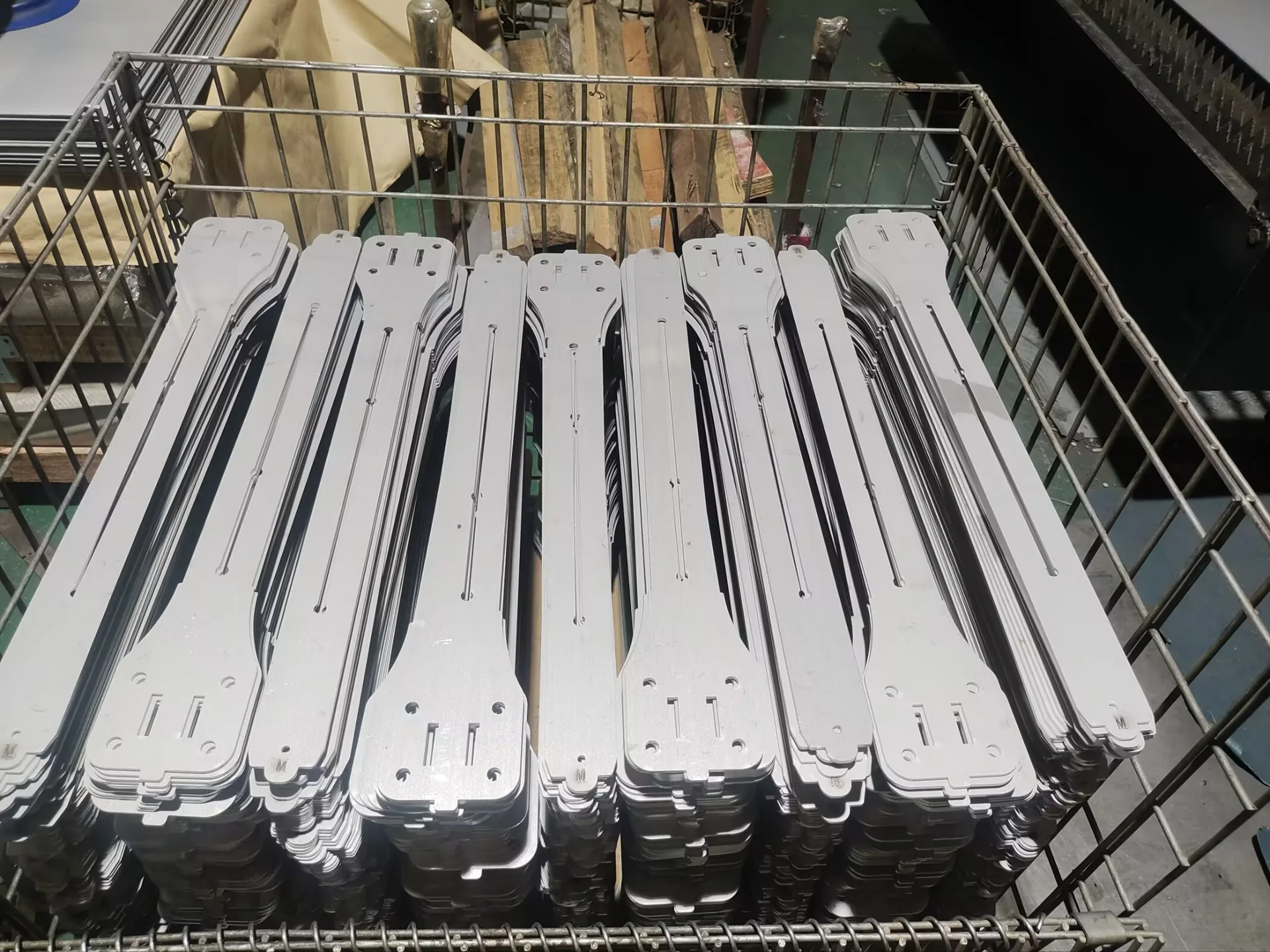
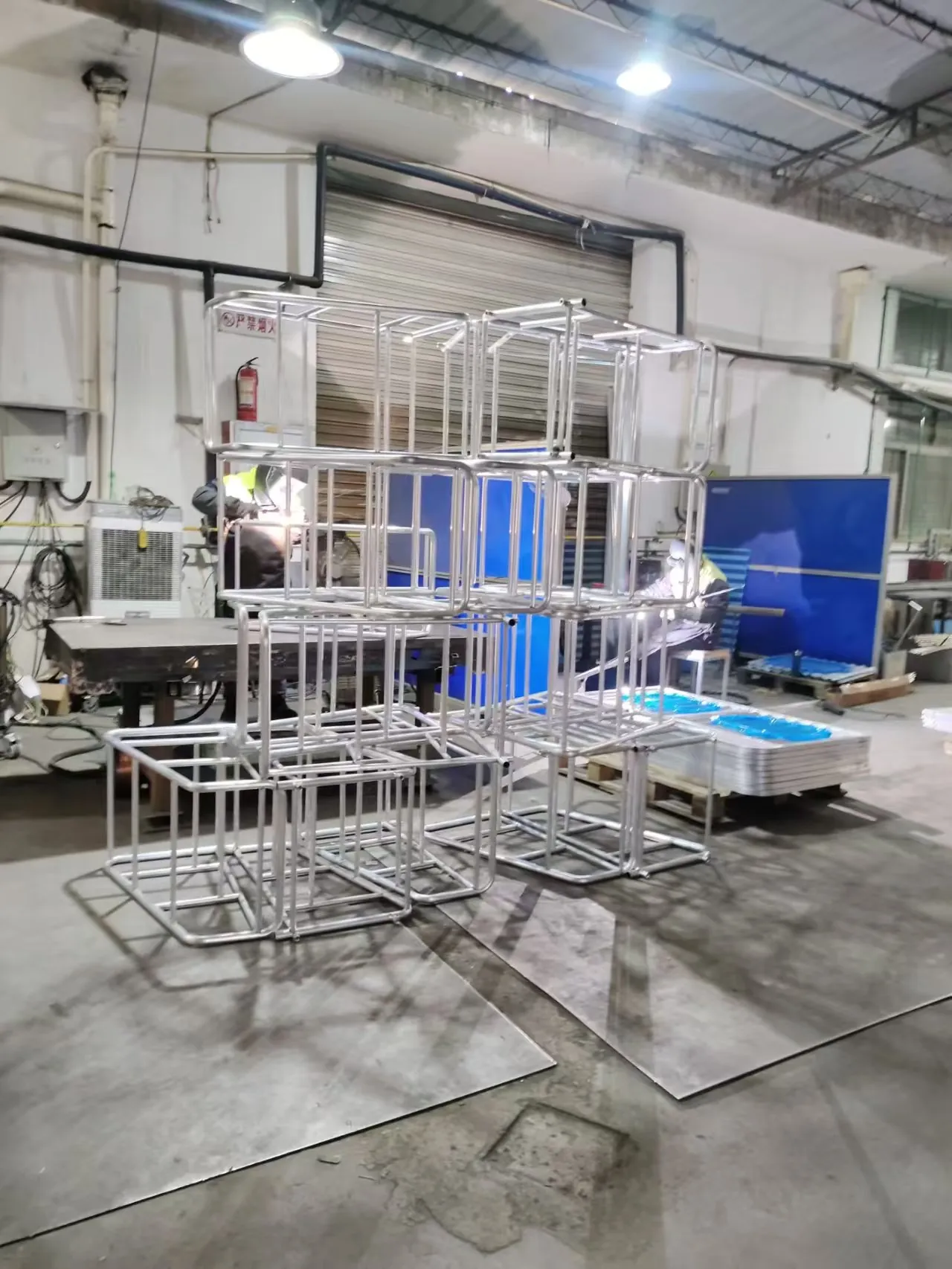
The frame is welded in a fixture before galvanizing, and the slat fixings are isolated where the two metals meet – see welding.| Stage | What happens | What is verified before the job moves on |
|---|---|---|
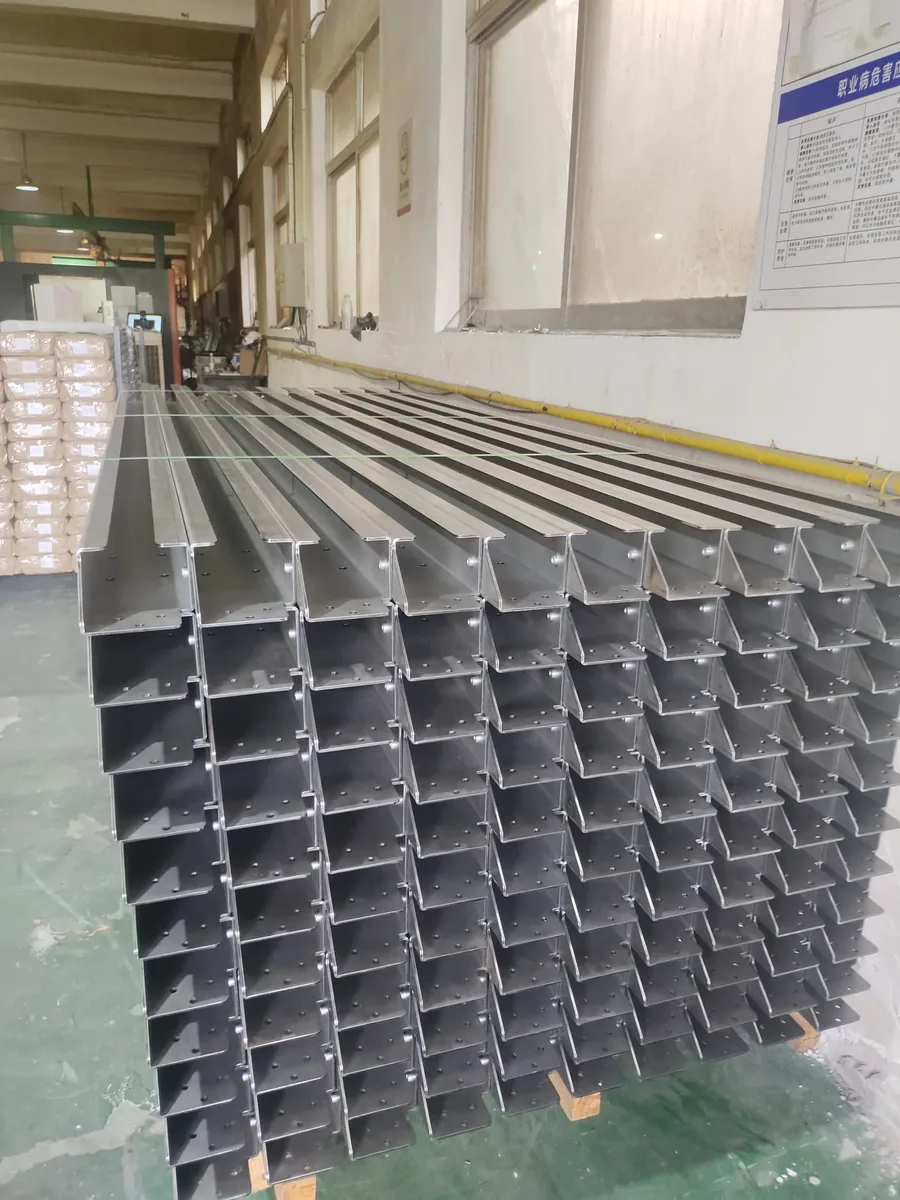
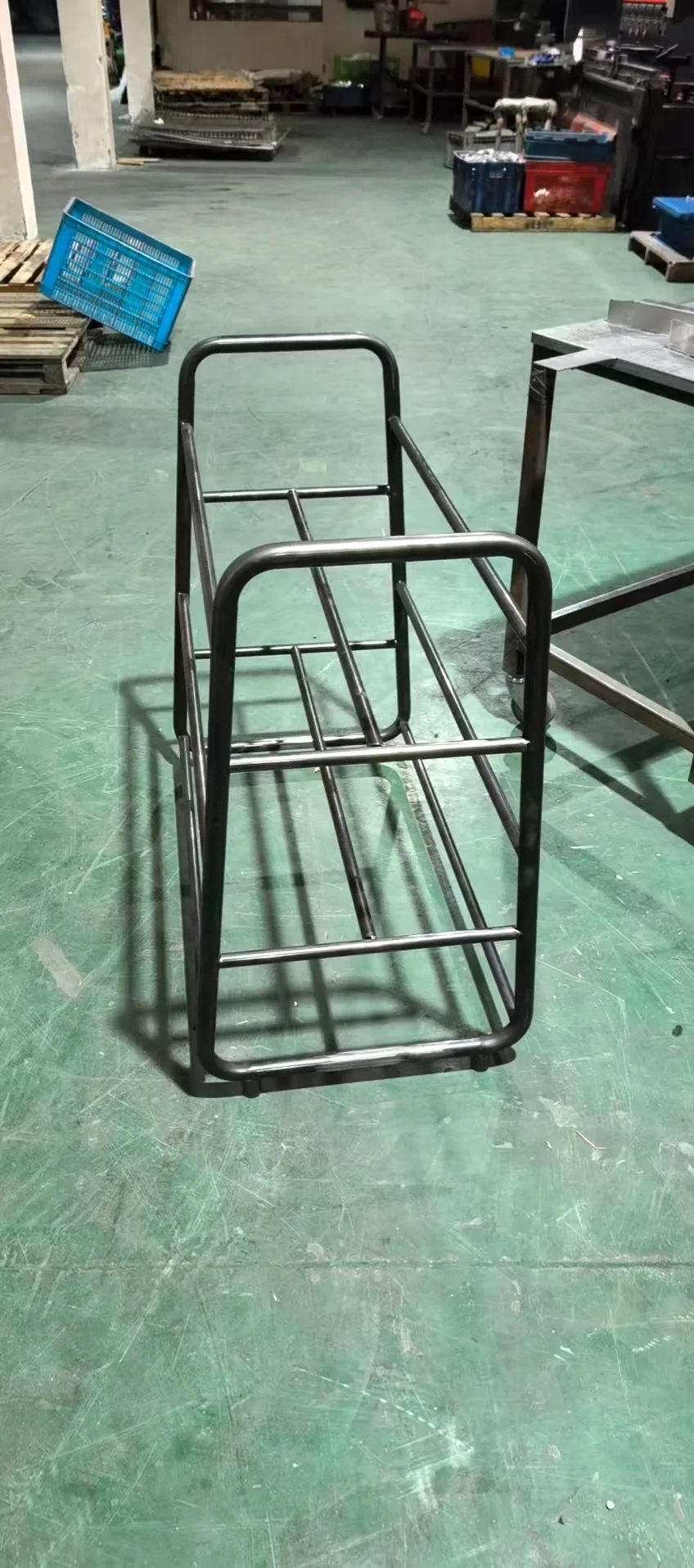
| Tube cutting and bending | Steel tube is cut and the frame members are bent for the legs and the back support. Cut lengths are set from the finished bench geometry. | Cut lengths and bend radii are checked against the drawing. On a bench the leg geometry sets the seating height and the stability, so the frame is what the rest of the product follows from. |
| Frame welding | The frame is assembled in a fixture and welded. Fixturing holds the seat and back angles, and it holds the frame flat so the bench does not rock. | The frame is checked for rock on a flat surface and for the seat angle. A bench that rocks is the defect that gets noticed first, and it comes from the frame rather than from the slats. |
| Slat fixing preparation | Fixing points for the slats are prepared. Where wood-plastic composite is used, the fixing holes are slotted rather than round. | Slot length and direction are checked. Wood-plastic composite expands and contracts with temperature, and a round hole through a slat will eventually either crack it or work the fixing loose. |
| Pre-galvanizing preparation | The frame is checked for weld spatter, sharp edges and any closed volume without a vent. | Vent holes in the tube are confirmed. Closed tube that goes into the galvanizing bath without them holds pre-treatment liquid, and the frame then rusts from inside where nobody can see it. |
| Hot-dip galvanizing | The frame is galvanized to the specified coating thickness. | Coating thickness is measured and the frame is checked for straightness and flatness afterwards. A galvanized frame that has bowed will make the bench rock. |
| Slat fitting and hardware | Slats are fitted with stainless fasteners, isolated where they meet the galvanizing. | The fixing assemblies are checked for correct isolation. Stainless fasteners in a galvanized frame are the right choice, but the two metals still need separating or the zinc will be consumed at the contact point. |
| Load check and packing | A representative bench is loaded, including an end-loaded case, then the parts are packed for shipping as a frame and a slat set. | The bench is checked for permanent set after the load is removed. Frames and slats are packed together so that the slat fixing holes stay matched to the frame they were drilled for. |
What Can Be Changed Without New Tooling
The bench is a welded frame with slats, so dimensions and slat layout are open. Changes to the material mix are the ones to discuss early.
| What can be changed | What it affects | What it does not affect |
|---|---|---|
| Length, depth and seat height | Tube cut lengths and frame geometry | The slat profile, if the fixing centres are adjusted with it |
| Number and spacing of slats | Cut layout and the slat fixing points | The frame |
| Timber, wood-plastic composite or metal slats | Fixing detail, expansion allowance and weight | The frame |
| Galvanized only, or galvanized with a colour topcoat | Whether a duplex coating is specified | The galvanized layer |
| Free-standing or floor-bolted | Whether base plates are added | The frame above them |
Frequently Asked Questions
Why wood-plastic composite rather than timber?
Wood-plastic composite does not absorb water, does not split along a fixing and does not need re-oiling or staining, which matters for a bench that will be maintained by a parks department with limited time. What it does do is move with temperature, more than timber, and it is less stiff. So the fixing has to allow for movement – slotted holes rather than round ones – and the slat spacing has to account for the fact that a composite slat will deflect more under the same load. Both of those are design details rather than problems, but they have to be designed in from the start. If your market prefers timber or aluminium, all three are workable and the fixing detail changes with the choice.
How are the slats fixed to a galvanized frame?
With stainless fasteners and a barrier between the two metals. Stainless is the right choice because it will not itself corrode at the fixing, but stainless and zinc are still a couple, and in wet conditions the zinc will sacrifice itself at the contact point and the coating will disappear around the fixing. An isolating washer or a plastic sleeve at the contact point prevents that, and it is a small cost that decides whether the fixings are still tight in five years or have become the rust spots on an otherwise sound frame.
What does the 300 kg figure cover?
It is the rated static load, and a public bench sees more than static load. In practice the demanding cases are people sitting down hard, several people arriving at once, and someone standing or jumping on one end. That last case is why the load check includes an end-loaded condition rather than only a distributed one – a load at the end of a bench puts a much higher moment into one leg and its base fixing than the same weight spread across the seat. If your specification has a requirement for a specific test method, send it and the check will be carried out that way.
Send the bench length, the seat height, the slat material you prefer and how the bench will be fixed down. Slat fixing detail and the base arrangement both follow from those answers. Send your specification for a quotation.
Frames and slats are packed together so the drilled fixing positions stay matched to the frame they belong to – see the packaging guide.