
06 / Finishing
Surface Finishing for Stainless Steel and Aluminum Parts
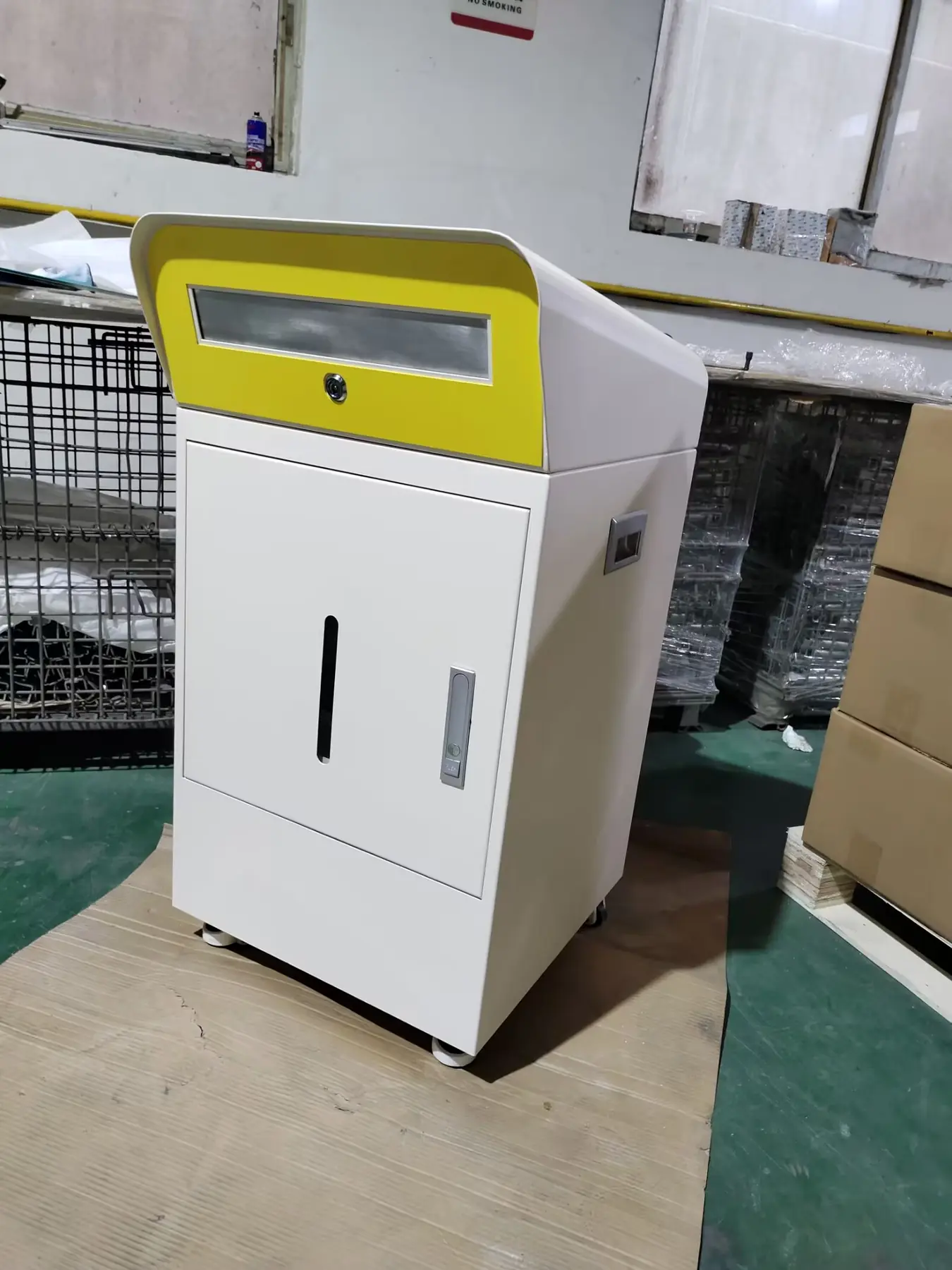
Finish planning starts with material, weld condition, cosmetic faces, corrosion exposure, colour or texture reference and the areas that must remain conductive or dimensionally controlled. The factory photo below shows a completed powder-coated cabinet used for finish and assembly acceptance, rather than an unrelated wrapping scene.
Scope
Finishing Scope: What We Run and What We Coordinate
Fulei Metal coordinates the required finish as part of the manufacturing route. Some treatments may be completed by qualified outside processing partners, depending on the project. The quotation should therefore define the required finish, acceptance evidence and responsibility instead of implying that every treatment is performed in-house.
Manufacturing route
The Finishing Route From Substrate to Packed Part
- 01
Review substrate, weld dressing and edge condition
- 02
Confirm finish specification and approved reference
- 03
Define cleaning, pretreatment and masking scope
- 04
Apply or coordinate the selected finish
- 05
Inspect appearance, protected interfaces and packaging risk
Specifications
Surface Finishing Specifications and Capabilities
| Finishing processes | Brushing and mirror polishing in our own workshop; passivation, electropolishing, anodizing, zinc plating and hot-dip galvanizing on audited partner lines |
|---|---|
| Brushing | Grain direction, grit sequence and surface finish agreed against a sample panel before production |
| Anodizing, plating and galvanizing | Class, film thickness and colour reference set on the drawing; applied on audited partner lines and checked on receipt |
| Powder coating | RAL or customer-specified colour, gloss and texture confirmed before production; applied on audited partner lines we specify and inspect |
| Preparation | Degreasing, cleaning and surface preparation before coating |
| Coating verification | Coating thickness measurement, with salt-spray testing to ISO 9227 where specified |
| Appearance standard | Colour and gloss agreed against a sample or reference for visible parts |
| Masking | Threads, mating faces and grounding points masked so the finish does not affect function |
| Protection after finishing | Handling and packing protection so coated parts arrive without marks |
| Minimum order quantity | 10 pcs (large parts) / 50 pcs (medium parts) / 1,000 pcs (small parts) |
Engineering checkpoints
Four Finishing Decisions That Change the Quote
These points are reviewed against the real part and the buyer’s acceptance requirements.
Surface preparation
Oil, oxide, weld residue and sharp edges can undermine an otherwise correct coating specification.
Coating build-up
Threads, hinges, mating faces and tight clearances may need masking or allowance in the drawing.
Appearance standard
Colour codes alone do not define gloss, texture, viewing conditions or acceptable variation.
Handling protection
Finished panels need separators and wrapping that prevent abrasion during assembly and export.
Film Build: What Coating Thickness Actually Buys You
Coating thickness is the specification most often written and least often understood, and more is not automatically better. A single powder coat for indoor service typically lands in the 60–80 µm range. That is enough to cover the substrate and give a uniform appearance, provided the edges were prepared. Going much thicker does not add protection in proportion: it adds material cost, builds up on edges and in corners, closes clearance on threaded features and tight fits, and reduces flexibility — a heavily built film is more likely to crack if the panel is formed or bent after coating. Going thinner risks incomplete coverage at edges and pinholing over pores in welded areas.
Thickness has to be measured after cure, on the faces the drawing names, with a gauge suited to the substrate: magnetic induction on steel, eddy current on aluminium. A single reading means little. What matters is the range across the part and whether the minimum falls where the drawing requires it. See powder coating standards for industrial enclosures.
Agreeing an Appearance Reference Before Production
A RAL number defines a colour. It does not define gloss, texture, orange peel, or how much variation is acceptable — and those are the properties that cause disagreements at goods-in. Gloss is a separate number, measured with a 60° gloss meter, and it needs a range rather than a single target. Texture, whether smooth, sand or structured, can only be agreed against a physical panel, because photographs under different lighting distort it.
Viewing conditions matter as much as the finish itself: a panel judged at arm’s length under office lighting passes, and the same panel judged at one metre under daylight fails. The practical arrangement is a signed reference panel retained by both sides, an agreed tolerance in ΔE, and an agreement on which faces are cosmetic. That last point saves the most argument — naming the cosmetic faces on the drawing means the back of the cabinet is not held to door-front standards. Related: steel finish selection and certification and traceability.
Buyer input
What to Send With a Powder Coating RFQ
Clear project information allows engineering questions, price and timing to be based on the same scope.
- Finish type and colour or reference sample
- Outdoor, chemical or cosmetic exposure
- Masked areas and electrical contact points
- Required coating or material documents
- Packing method and destination
FAQ
Surface Finishing Questions Buyers Ask Before Ordering
What Drawings a Surface Finishing Quote Needs
2D drawings (PDF, DWG or DXF) and 3D models (STEP, IGES or SolidWorks) both help. Please include material grade and thickness, surface finish, quantity, and any critical dimensions or inspection requirements. Where a feature is not specified on the drawing, we raise it in the DFM review instead of assuming a value.
Trial Run Before a Finishing Batch
Yes. Prototypes and repeat batches run on the same equipment, so the first article reflects real production conditions. Minimum order quantities are 10 pieces for large parts, 50 for medium parts and 1,000 for small parts, and prototypes are accepted below those levels.
Materials and Finishes We Handle
SPCC, SECC, Q235, SUS304 stainless steel, aluminium and galvanised steel, generally from 0.5 mm to 6.0 mm. Finishes include brushing and mirror polishing in our own workshop, plus passivation, electropolishing, anodizing, zinc plating, hot-dip galvanizing and powder coating on audited partner lines. We work in sheet metal and CNC processes — castings are outside our scope.
What Paperwork Comes With a Finished Batch?
Dimensional reports taken against your drawing, together with first-article, in-process and outgoing inspection records. Calipers, height gauges and gauges are used for critical dimensions, and coating thickness or salt-spray checks are added where the drawing calls for them.
Can you match a RAL colour or our own colour sample?
Yes. Give us the RAL reference or send a physical sample and we will match colour and gloss. For visible parts we agree the appearance standard before the batch is coated, so that acceptance is based on a shared reference.
How do you stop coating from filling threaded holes?
Threads, mating faces and grounding points are masked before coating. Where a specification requires coating over the whole part, we confirm the coating thickness allowance so that screws and hardware still fit after finishing.
Send your drawings to our engineering team and we will return a DFM review together with the quotation. Request a quote, or see the full range on custom sheet metal fabrication.
Discuss a real project
Send the Finish Specification With the Drawing
Send the controlled files, quantities and application context. We will identify missing information and prepare a practical basis for quotation.
Trade Terms and Delivery
We quote under the standard Incoterms your logistics team already works with, and build the packing and documentation around the one you choose.
- EXW — you collect from our Ningbo facility and run export clearance through your own forwarder.
- FOB Ningbo — we deliver to the vessel at Ningbo port and handle export clearance.
- CIF — we cover carriage and insurance to your named destination port.
- DDP — we handle carriage, insurance, import clearance and duties through to your door.
Send your destination country, target delivery date and preferred trade term together with the drawing. Request a quotation.
Payment Terms
How a project is paid for is agreed before production starts, and the structure that applies to your order is stated on the quotation and on the order confirmation, so there is no ambiguity later.
- 30% advance payment with the order and the 70% balance before shipment — our standard structure.
- 70% advance payment with the order and the 30% balance before shipment — used for some projects.
- 100% payment in advance before production starts — used for some projects.
If your finance team works to a fixed structure, say so in the first enquiry and we will confirm what applies to your order before you commit. Request a quotation.
Quotation Time
We quote from your drawings. How long that takes depends on what the part asks for:
- Simple parts — quoted within 24 hours. Laser-cut blanks and bent components, supplied with complete 2D or 3D drawings. Mon–Fri, GMT+8.
- Complex assemblies — quoted after the drawing review. Payment kiosks, multi-part welded frames, enclosures with purchased hardware, or anything needing a coating or assembly trial. We confirm a quotation date once the scope is clear.
Production lead time is quoted separately, after drawing review and process confirmation. Send your drawings.
What stands behind this quotation
- Manufacturing since 20162,500 m² Ningbo plant — 3 laser cutting machines (including newer TRUMPF), 4 CNC press brakes and 10 welding stations.
- Shipped to more than 30 export marketsEnclosures, cabinets and formed parts supplied to OEM buyers across Europe, North America and Asia.
- 123 documented product casesMedical device housings, HVAC and heat pump enclosures, agricultural and livestock equipment, industrial hydraulics, material handling trolleys and EV charging cabinets.
- Factory evidence you can checkTUV Rheinland audit reference MIC-ASI243729 and Bureau Veritas reference MIC-ASR263630 available for buyer review under NDA.
Before you send drawings: an NDA is signed on request · first-article inspection is carried out before a batch continues · pricing is staged from prototype quantity to repeat volume · pre-shipment photos and packing records are prepared when the project needs them.