
04 / Joining
Sheet Metal Welding Service
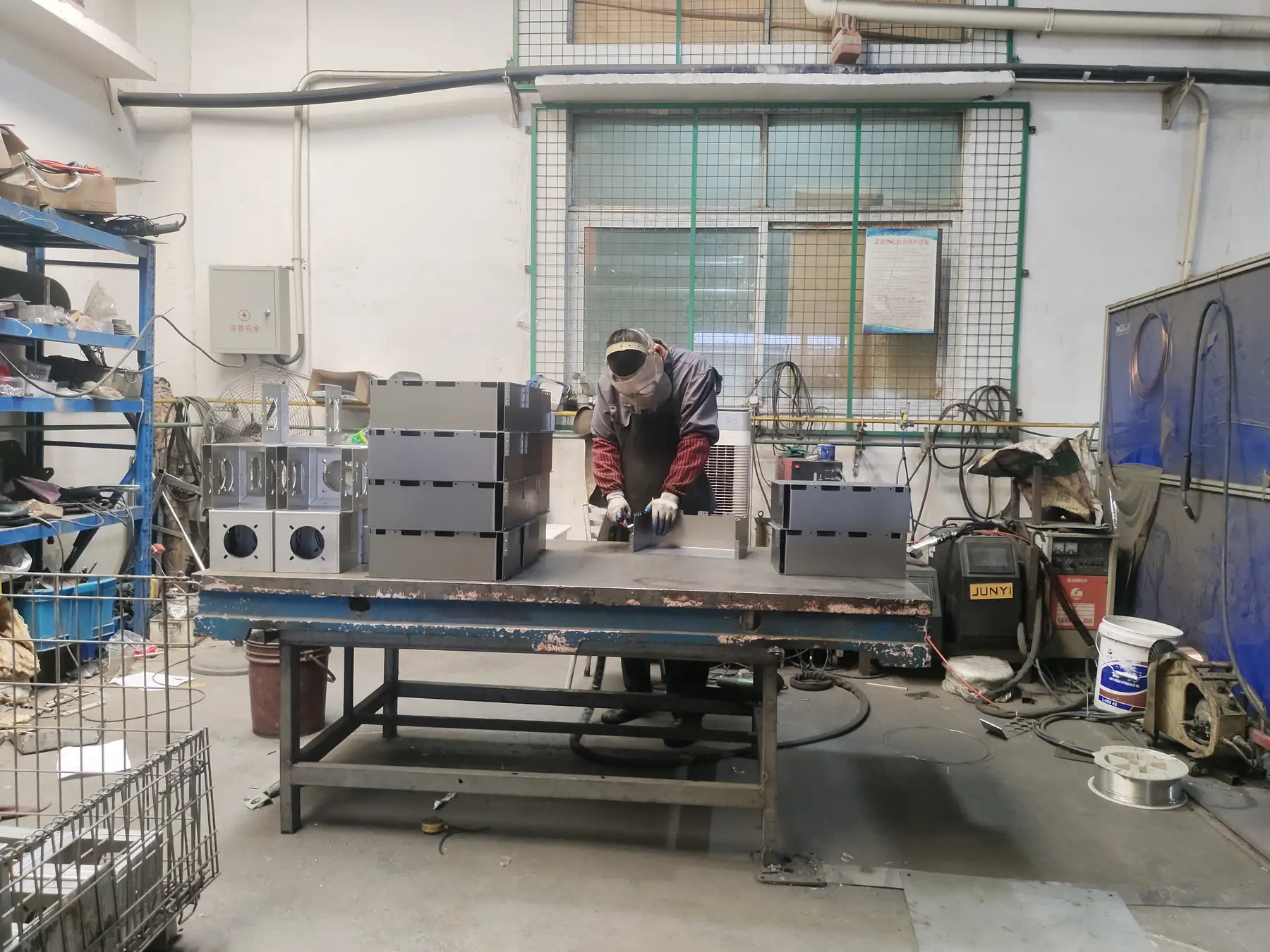
Ten welding stations support cabinet bodies, frames, brackets and fabricated assemblies. Joint access, fixture strategy, heat sequence and final appearance are planned around the drawing and batch requirement.
Scope
Deciding What Gets Welded, Fastened or Formed Instead
The right joining method depends on material, thickness, load path, appearance, corrosion environment and access. We use the drawing review to decide what should be continuously welded, intermittently welded, fastened or redesigned as a formed feature. Process selection is confirmed per project rather than promised as a universal recipe.
Real production video
Sheet Metal Welding in Production
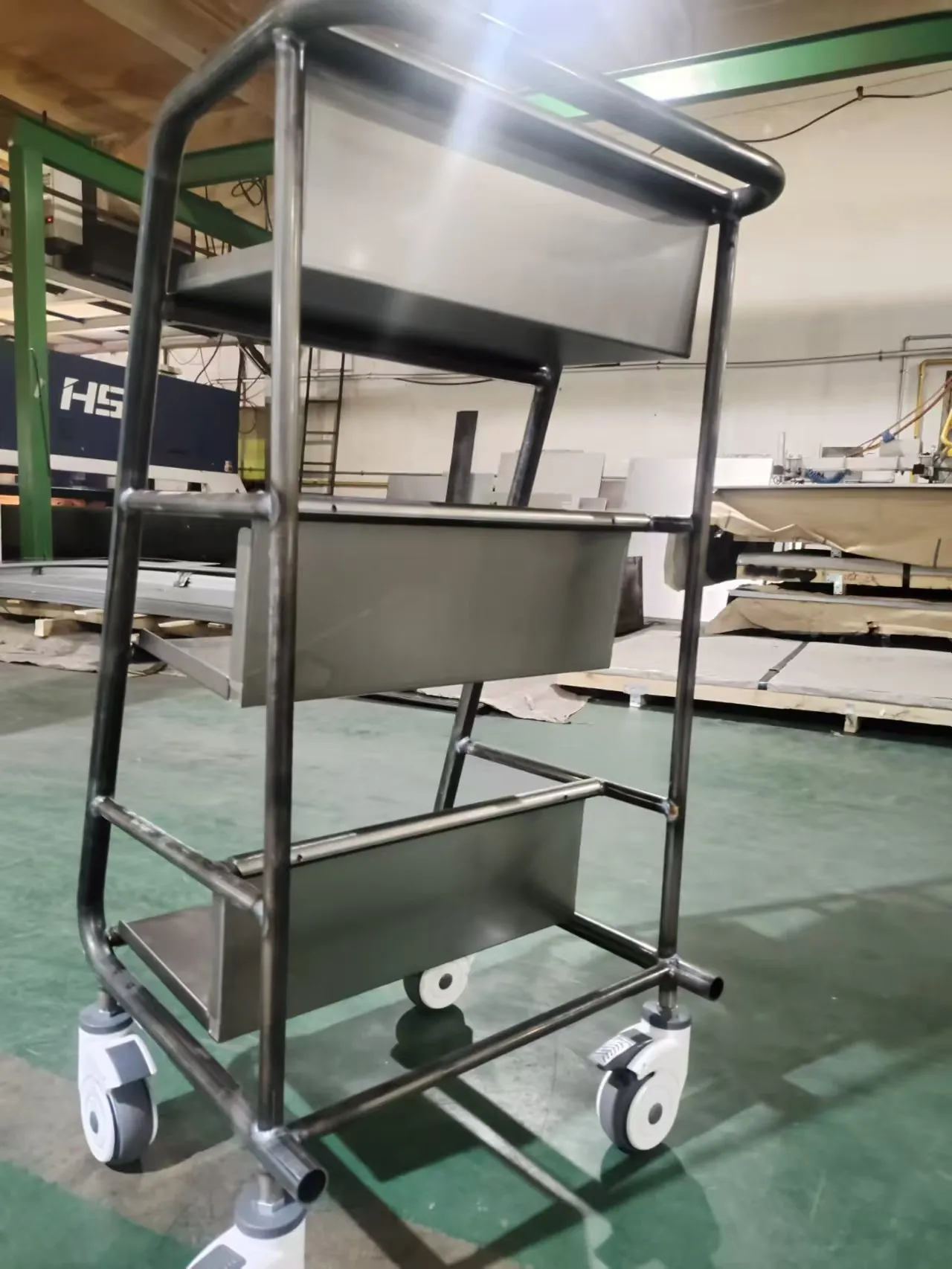
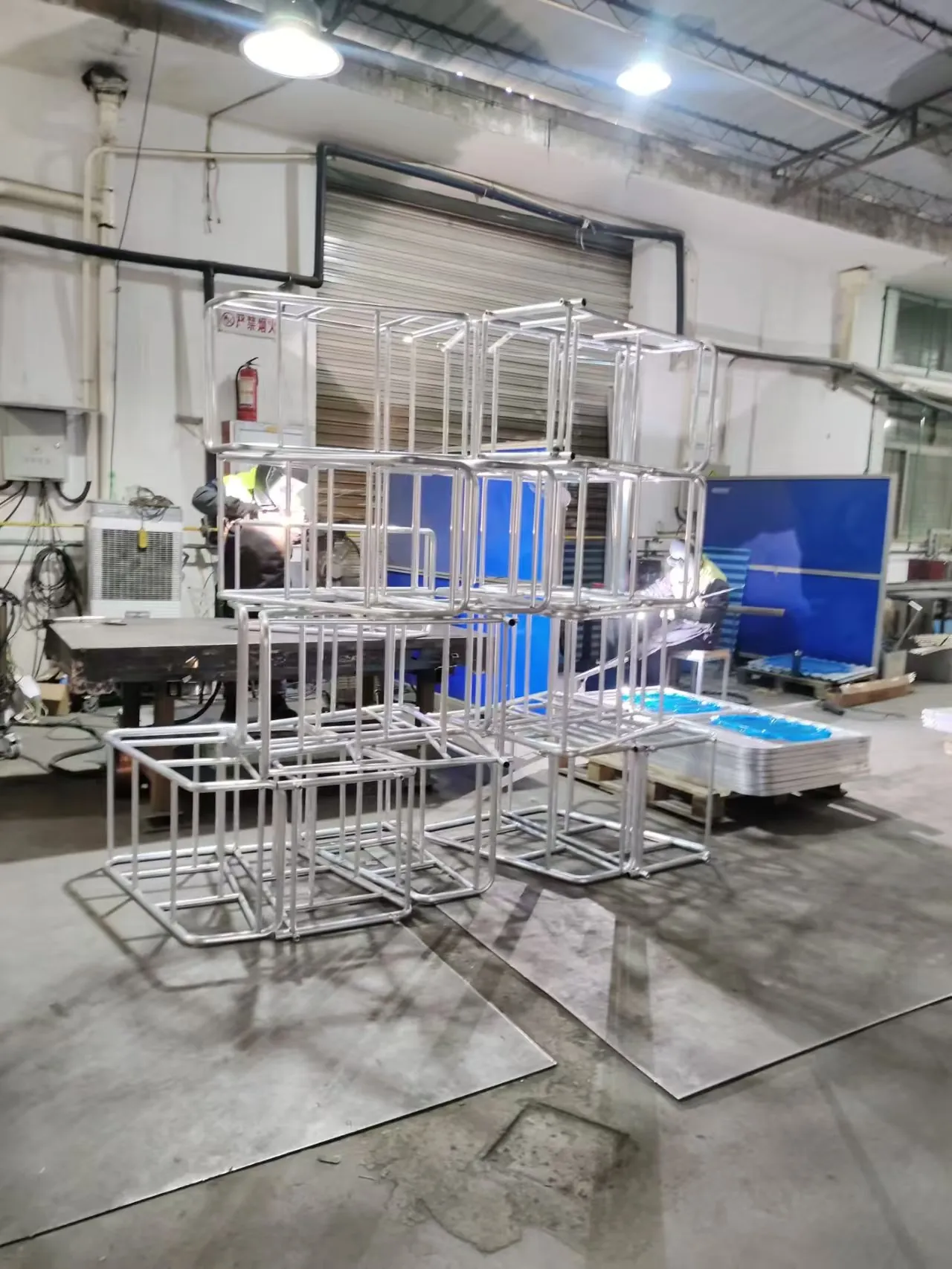
These short clips show actual work at Fulei Metal. They support the process explanation; the controlled drawing and written quotation still define the final route.
Specifications
Welding Specifications and Capabilities
| Welding processes | MIG, TIG and spot welding, selected by material and joint type |
|---|---|
| Materials | SPCC, SECC, Q235, SUS304 stainless steel, aluminium and galvanised steel |
| Sheet thickness | 0.5 mm to 6.0 mm |
| Fixtures | Jigs and fixtures used for repeat parts to hold position between operations |
| Distortion control | Weld sequence, tacking plan and cooling control agreed before batch release |
| Post-weld operations | Dressing, deburring and flattening as required before finishing |
| Drawing formats | PDF, DWG, DXF, STEP, IGES or SolidWorks, with weld symbols where applicable |
| Minimum order quantity | 10 pcs (large parts) / 50 pcs (medium parts) / 1,000 pcs (small parts) |
Process Selection
Choosing the Welding Process for the Joint
The joint, the material and the finish decide the process. We agree the symbols and the sequence before the first article, not after it.
Three processes cover almost every job that comes through the workshop, and the choice is made against the drawing rather than by habit. MIG is the default for carbon steel from about 1.5 mm upward, where the seam will be dressed and coated. TIG is used on stainless steel and on visible seams, because the bead is narrow, spatter is minimal and the heat tint can be removed before passivation. Resistance spot welding suits lap joints in thinner sheet where a continuous seam is not required — there is no filler, the heat input is short, and the result is consistent from part to part.
| Joint or requirement | Process usually chosen | Why |
|---|---|---|
| Continuous seam on carbon steel, 1.5–6.0 mm, dressed and coated | MIG | Fast deposition and deep fusion; straightforward to grind flush before coating |
| Stainless steel 0.8–3.0 mm and visible seams | TIG | Narrow bead, little spatter, and the heat tint can be removed before passivation |
| Lap joints in 0.5–2.0 mm sheet where a seal is not needed | Spot welding | No filler and short heat input, so distortion stays low and the cycle time is predictable |
| Sheet below about 1.0 mm with a visible face | TIG, or short staggered MIG with backing | Intermittent welds limit heat input and reduce the risk of burn-through |
| Galvanised or otherwise coated material | Reviewed before quotation | Zinc has to be removed at the joint and the fumes extracted; the coating is restored afterwards |
What matters as much as the process is what the drawing says. A weld symbol fixes the leg size, whether the seam is continuous or intermittent, the pitch and the required finish. Where the symbol is missing, we raise it in the engineering review rather than choose a value for you. Sequence and restraint are agreed before the first article, because that is what keeps flatness inside the tolerance you asked for — and because changing a welding sequence on one sample costs far less than changing it on a batch.
Post-weld treatment belongs to the same plan. Seams that have to disappear are ground and blended before coating, stainless is brushed and passivated, and threaded features, mating faces and grounding points are masked so that coating does not end up where it would stop the part fitting. For enclosures that have to seal, the leak or pressure test is agreed before production and the result is recorded with the batch on the inspection record. See the wider process range on custom sheet metal fabrication.
Manufacturing route
How a Welded Assembly Is Controlled Between Operations
- 01
Confirm weld symbols, access and acceptance criteria
- 02
Prepare and fixture the joint from the approved revision
- 03
Use a controlled tack and welding sequence
- 04
Inspect the joint and key assembly geometry
- 05
Complete agreed dressing before surface finishing
Engineering checkpoints
Fit-Up and Distortion Decisions Before the First Article
Each point below is settled before heat is applied, because the ones left open show up later as distortion or as a seam that has to be dressed twice.
Fit-up
Consistent gaps and contact surfaces reduce variation before heat is introduced.
Distortion
Sequence, restraint, weld length and cooling strategy are considered together with final flatness and door fit.
Cosmetic surfaces
Visible welds and ground areas must be identified because appearance changes time and cost.
Inspection basis
Visual acceptance, key dimensions and any additional project tests must be agreed before production.
Buyer input
What to Send With a Welding Enquiry
These are the items that decide the process, the sequence and the distortion plan. Everything else can follow once they are agreed.
- Weld symbols or marked joint locations
- Material, thickness and service environment
- Critical flatness, squareness and mating dimensions
- Visible surfaces and grinding expectations
- Prototype and repeat-batch quantities
FAQ
Welding Questions Buyers Ask Before Ordering
What do you need to quote a welded assembly?
Weld symbols, or the joint locations marked on the drawing, together with material, thickness and the service environment. State the critical flatness, squareness and mating dimensions, and which surfaces are visible — a dressed and coated seam and a cosmetic stainless seam are not the same job.
Will the prototype be welded the same way as the batch?
Yes. The same fixtures, tacking plan and welding sequence are used, so the prototype shows the distortion behaviour of the batch rather than a one-off result. Distortion control is agreed before batch release, not discovered on the first article.
Which materials can you weld, and which need a review first?
MIG, TIG and spot welding cover SPCC, SECC, Q235, SUS304 stainless steel, aluminium and galvanised steel from 0.5 mm to 6.0 mm. Galvanised or otherwise coated material is reviewed before quotation: the zinc has to be removed at the joint and the fumes controlled. How thin sheet is welded without burn-through is covered in our thin-sheet welding notes.
What records come with a welded assembly?
The joint and the key assembly geometry are inspected after welding, and agreed dressing is completed before surface finishing. Weld procedure or weld map information can be discussed with the quotation where the drawing calls for it. The mechanical checks we can carry out, and the ones that need a third party, are set out on our inspection service page.
Can you weld and then powder coat the assembly?
Yes. Welding, dressing and surface preparation are completed first, then powder coating or zinc plating is applied. We agree the sequence at quotation stage so that weld areas, edges and threaded features are not left bare.
How is weld quality inspected?
Weld appearance and dimensional fit are checked against the drawing. Where a joint is structural or has to seal, we agree the inspection method — for example a leak or pressure test — before production and record the result.
Send your drawings to our engineering team and we will return a DFM review together with the quotation. Request a quote, or see the full range on custom sheet metal fabrication.
Can you weld sheet as thin as 0.8 mm without burn-through?
Yes, provided the joint suits it. Thin sheet is usually welded as a lap or flanged joint with short, staggered runs and a backing bar rather than as a continuous bead on a butt joint. Send the thickness and the joint type with the RFQ and we will confirm the route before quoting, rather than discovering the problem on the first article.
Can you provide weld procedure or weld map information with the quotation?
We agree weld symbols, sequence, filler and acceptance criteria at quotation stage, and we can list them on the inspection plan for the part. Formal WPS or PQR packages and third-party weld inspection are project-specific and are quoted separately, so please state the requirement in the RFQ.
Discuss a real project
Send the Weld Symbols and the Service Environment
Send the weld symbols, the material and the service environment. We will agree the process, the sequence and what is checked on the first article, then quote from that.
Welding Is Usually the Expensive Answer on Sheet Metal, and That Is Worth Saying Out Loud
A welded joint is permanent, strong and slow, and on thin sheet it is usually slower than people expect because most of the time goes into fit-up, fixturing and distortion control rather than into the weld itself. Where the load allows it, a folded interlocking feature or a clinched joint is faster, more repeatable and does not bring distortion with it. Welding is the right answer when the joint has to be sealed, when it has to be structural, or when there is no access for a fastener – and it is worth knowing which of those three applies before specifying it.
- A sealed joint needs continuous welding and a leak path check afterwards. A structural joint needs a throat thickness that has been thought about. They are not the same weld.
- Access decides more than strength does. A joint that can only be reached from one side cannot be welded from both, and the process follows from that.
- Finish matters. A weld that will be visible on a brushed stainless assembly has a different requirement from one inside a painted enclosure.
What a Welded Assembly Needs From the Drawing Before It Can Be Quoted
The drawing usually carries the weld symbol, and the weld symbol is the least of it. What is missing more often is information about the assembly: which dimensions have to be held after welding rather than before it, which surfaces mate with something else, and what the service environment is. A weldment is quoted on the assumption that some dimensions will move, and if the drawing does not say which ones must not, the quote is built on an assumption the customer did not make.
Sequence and fixturing are planned rather than improvised, and they are planned around the datums that matter. Tell us what the assembly bolts to, because those are the features the fixture should locate from and the ones that should be held through welding. Where procedure qualification or welder qualification is required by the applicable code or by your specification, that qualification is established to the code concerned and is not something a weld symbol on a drawing confers. Lead time is quoted after drawing review and process confirmation.
Payment Terms
How a project is paid for is agreed before production starts, and the structure that applies to your order is stated on the quotation and on the order confirmation, so there is no ambiguity later.
- 30% advance payment with the order and the 70% balance before shipment — our standard structure.
- 70% advance payment with the order and the 30% balance before shipment — used for some projects.
- 100% payment in advance before production starts — used for some projects.
If your finance team works to a fixed structure, say so in the first enquiry and we will confirm what applies to your order before you commit. Request a quotation.
Questions buyers ask before sending drawings
The nine questions that come up most often before a project starts, answered the way we answer them by email.
What do you need from me to quote a part?
2D drawings as PDF, DWG or DXF, or 3D files as STEP, IGES or SolidWorks, together with material grade, sheet thickness, surface finish, quantity and destination country. If the drawing is not finished yet, send a photo, a sketch or the existing part instead — we review what can be measured from it and reply with the questions that still need answering.
How long does a quotation take?
Enquiries are answered within one business day. Quotation time depends on the part. Simple components we can price straight from the drawing — laser-cut and bent sheet metal, brackets, panels, covers, machine guards — are quoted within 24 hours. Complex work such as assembled kiosks, welded frames and multi-part structures is quoted after the drawing review and process confirmation, because the scope cannot be judged from the drawing alone; the date is confirmed in our reply.
Is there a minimum order quantity?
Prototypes are made from a single piece, and small batches of 10–50 pieces are routine. Prototype, first batch and repeat volume are quoted in one staged quotation so the numbers stay consistent as the project scales. See low MOQ sheet metal fabrication.
Can you work from a sample or a photo if I have no drawing?
Yes. Send the part itself, clear photographs with a rule or caliper in frame, or a dimensioned sketch. We measure what can be measured, list the features that are still undefined, and confirm them with you before production rather than assuming them.
Will you sign an NDA before I send drawings?
Yes. If your process requires one, say so in the first message and we will confirm what we can sign before any file is transmitted. Customer drawings are treated as confidential and used only for the project they were sent for. See our NDA page.
What payment and trade terms do you work with?
The standard structure is 30% advance payment with the order and the 70% balance before shipment. Some projects run on 70% advance payment with the 30% balance before shipment, and some on 100% payment in advance before production. Quotations are issued under EXW, FOB Ningbo, CIF or DDP, whichever your logistics team already works with.
What quality documents come with the parts?
Inspection documents are agreed with the order. Reports are provided on request, and material certificates and traceability can be supplied for the grades we purchase. Tell us in the enquiry which documents your own quality system requires, and we will confirm what we can provide before you order rather than after.
Who will handle my project?
One contact from drawing review through to shipment. Violet, our sales manager, coordinates drawings, DFM questions, quotation, samples, production updates and shipping documents, so you are not handed to a different person between quotation and delivery.
Can you scale from prototype to repeat production?
Yes. Prototype quantity and expected annual volume are quoted together, so tooling, nesting and packaging are planned once and the sample and production prices stay consistent. See prototype to production quotation and sheet metal DFM engineering review.
Trade Terms and Delivery
We quote under the standard Incoterms your logistics team already works with, and build the packing and documentation around the one you choose.
- EXW — you collect from our Ningbo facility and run export clearance through your own forwarder.
- FOB Ningbo — we deliver to the vessel at Ningbo port and handle export clearance.
- CIF — we cover carriage and insurance to your named destination port.
- DDP — we handle carriage, insurance, import clearance and duties through to your door.
Send your destination country, target delivery date and preferred trade term together with the drawing. Request a quotation.
Quotation Time
We quote from your drawings. How long that takes depends on what the part asks for:
- Simple parts — quoted within 24 hours. Laser-cut blanks and bent components, supplied with complete 2D or 3D drawings. Mon–Fri, GMT+8.
- Complex assemblies — quoted after the drawing review. Payment kiosks, multi-part welded frames, enclosures with purchased hardware, or anything needing a coating or assembly trial. We confirm a quotation date once the scope is clear.
Production lead time is quoted separately, after drawing review and process confirmation. Send your drawings.
Get a quote for this part
Send a drawing, or just the size and quantity. A sales engineer replies within 24 hours, Monday to Friday (China time).