
A single unit price is the wrong answer for a part that has never been built. The first piece and the five-hundredth piece are not the same job, and folding them into one number hides where your money actually goes.
The Two Things a First Part Has To Prove
A prototype has to prove that the geometry can be made to drawing, and that the interfaces work — that the boss positions line up, that owner-supplied hardware fits, that nothing needs to be forced. Those are different questions from the ones that matter at volume, where repeatability, cycle time and packing become the variables that decide the price.
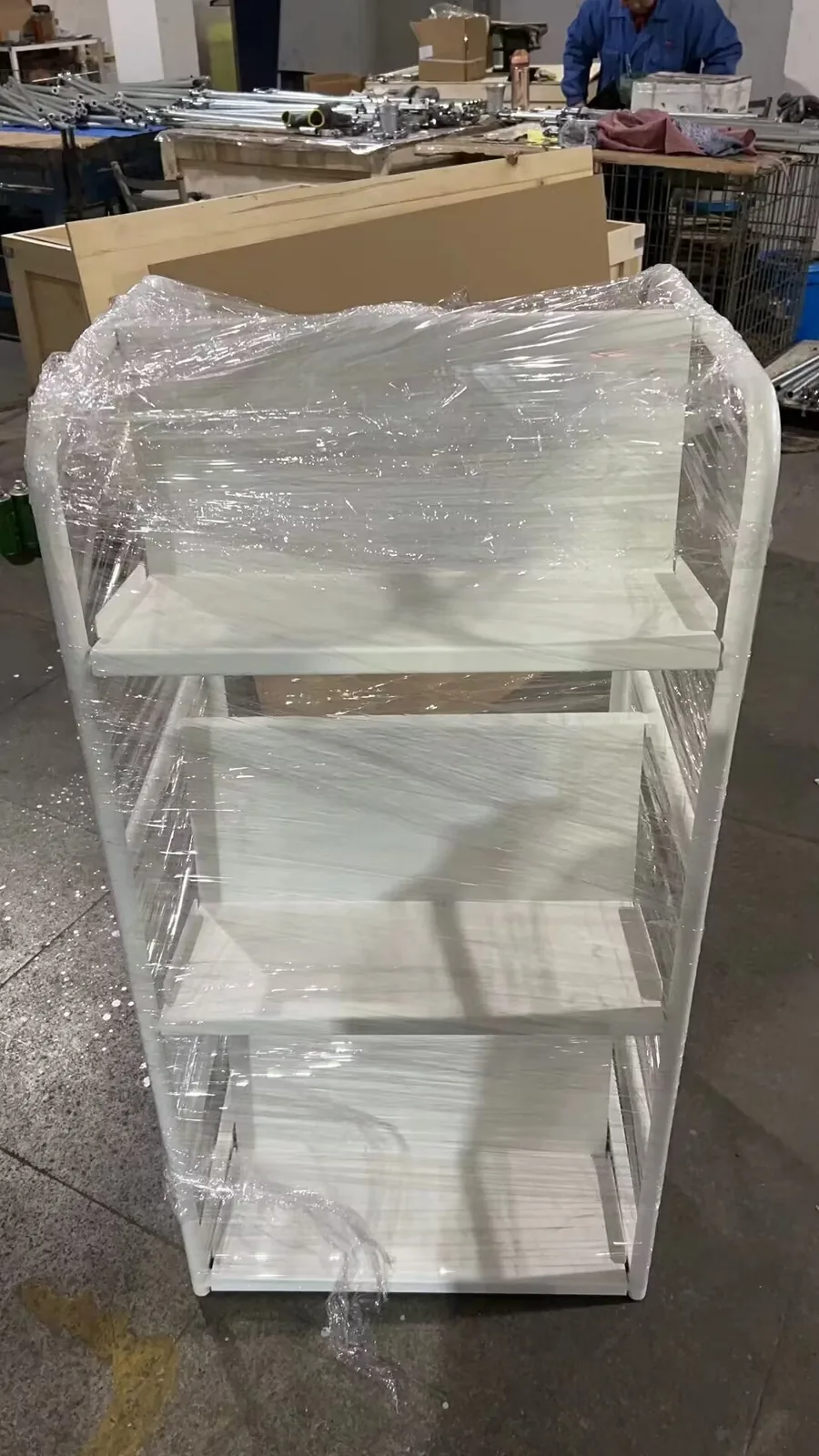
The Costs That Do Not Shrink With Quantity
Some costs are the same whether we make one piece or a hundred: programming the laser and press brake programs, thinking through how the part will be held, the first-article inspection and its record, handling time on the shop floor, and one-off export crating. Others behave badly at low count — material is bought in standard sheet or coil lots, not in the exact square metres your part needs, and off-cuts from a single large part are often too small to nest anything else.
What Each Stage Is Actually For
Prototype, one to a few pieces: prove the design works and stop before committing tooling.
Pilot, a handful to a few dozen: prove repeatability, settle the assembly sequence, test packaging and shipping.
Volume: fixtures pay back, nesting improves, inspection moves from full layout to defined check points and gauges.
Skipping straight to the third stage is where budget gets burned, because the corrections that arrive after tooling exists are far more expensive than the ones caught on the first bent piece.
Why the Stages Are Priced Separately
A staged quote normally has five lines, and none of them should be buried inside a unit price: the prototype unit itself; packing, crating and the agreed trade terms; optional tooling or fixtures; the unit price for the following batch; and a rate for later modifications such as additional cut-outs. Listing them separately means you can see what you are paying for once and what you will pay for again — and you can drop or approve any line on its own.
Frozen Interfaces and Files That Are Allowed To Move
Revision control decides most of the pain in this phase. Number every drawing issue, and keep the exported flat patterns from being rescaled — a DXF that has been scaled in transit produces parts that are consistently wrong by the same fraction. Practical split that works well: freeze every hole position and every interface face, leave internal and cosmetic features negotiable until after the first fit. And do not cut material for features that depend on a part you have not received yet.
Owner-Supplied Hardware: What You Ship Us, What We Buy
Screens, printers, certified locks, proprietary gaskets and electronic assemblies usually belong to your supply chain, not ours — they carry their own compliance responsibility and often their own lead time. We build the metal interface and hold their positions. The discipline this needs: tell us early which positions cannot move, and tell us early what to expect. If two technical questions about a bought component are still open when the panels are ready, the honest answer is to hold the material, not to cut and hope. See also how low-volume work is scheduled.
How To Ask For It
Ask for prototype, pilot and target-volume pricing on the same sheet, with one-time costs listed as their own lines. That single request gets you three pieces of information a blanket unit price hides: how much of your early spend is reusable tooling versus one-off work, where the quantity break actually lands, and what happens to the price if the drawing changes at revision B. Background reading: how MOQ affects cost and how nesting and preparation change cutting cost.
Questions We Get Asked About Staged Quoting
Can we skip the prototype and go straight to a small batch?
You can, but the first batch then becomes the prototype, with pilot pricing and any corrections applied afterwards. If the interfaces are already proven on an existing machine, skipping is reasonable. If they are new, one piece first is nearly always cheaper — the file set matters as much, see what we need in order to quote.
Why is there a separate line for tooling on a prototype quote?
Because some items are reusable and some are not, and burying them in a unit price hides the difference. A fixture built for a prototype often serves the volume order too; a one-off crate does not. The same logic applies to hardware decisions such as whether PEM fasteners are installed before or after coating, which behave differently at prototype and at volume.
What happens to the price if the drawing changes after the pilot?
It depends on what changed. Cosmetic and internal features are usually cheap to revise; anything moving a frozen interface can invalidate programs, a fixture or previously made hardware. This is why we ask you to mark which positions cannot move — see how the engineering review is structured.
Who owns freight and duty terms between the stages?
Whichever terms you choose, they are listed as their own line so the comparison between stages stays honest. Mixing freight into unit price makes the later stages look artificially better than they are.
The First Part and the Five-Hundredth Are Not the Same Job
A prototype is an exercise in finding out whether the geometry can be made and whether the process route works. The setup time, the trial bends, the first-article inspection and the inevitable one change to the drawing are all real costs, and they are all one-off costs. Production is a different job: the route is known, the settings are recorded, and the cost is in cycle time, material utilisation and handling. Folding the two into a single unit price hides both.
- Prototype pricing includes proving. That is what you are buying, and it should not be amortised silently into a production price you never order.
- Production pricing depends on what was learned. A part that changed three times during prototyping is not yet a production part.
- Quoting them separately lets you see which changes are worth making before volume, because the unit price tells you what each feature costs.
What to Freeze, and What Is Allowed to Move
Staged quoting only works if both sides know which interfaces are frozen and which are still open. The outside envelope and the mating dimensions are frozen early, because other people’s parts depend on them. Material, finish, internal feature positions and tolerances on non-critical dimensions can usually move, and moving them is where most of the cost reduction is found. A drawing that has everything marked critical has no room to improve.
What we need at each stage is different. At prototype: the model, the material, and the features that have to be right. At production: the quantity, the call-off pattern, and which dimensions are allowed to change. If you tell us the call-off pattern as well as the total, the setup can be planned rather than repeated – which is usually the largest saving available at that stage. Lead time is quoted after drawing review and process confirmation.
Related reading
What stands behind this quotation
- Manufacturing since 20162,500 m² Ningbo plant — 3 laser cutting machines (including newer TRUMPF), 4 CNC press brakes and 10 welding stations.
- Shipped to more than 30 export marketsEnclosures, cabinets and formed parts supplied to OEM buyers across Europe, North America and Asia.
- 123 documented product casesMedical device housings, HVAC and heat pump enclosures, agricultural and livestock equipment, industrial hydraulics, material handling trolleys and EV charging cabinets.
- Factory evidence you can checkTUV Rheinland audit reference MIC-ASI243729 and Bureau Veritas reference MIC-ASR263630 available for buyer review on request.
Before you send drawings: project confidentiality is default · first-article inspection is carried out before a batch continues · pricing is staged from prototype quantity to repeat volume · pre-shipment photos and packing records are prepared when the project needs them.