
Steel finish selection for buyers
Surface Treatment of Steel for OEM Enclosures
The right surface treatment for steel depends on substrate, corrosion environment, appearance, electrical contact, dimensional interfaces, production volume and packaging route. “Best finish” has no useful answer without the application.
Buyer summary
What to Decide Before Requesting a Quote
| Powder coating | Common for coloured enclosure surfaces; pretreatment and edge condition matter |
|---|---|
| Zinc-based finishes | Often selected for corrosion protection or as a coating substrate, subject to project specification |
| Plating | Useful for selected components; buildup, threads and appearance need review |
| Natural or conversion finish | Application-specific and dependent on steel type and downstream requirements |
Select by Environment and Product Architecture
Indoor control cabinets, outdoor housings, hidden brackets and frequently handled products face different exposure. The buyer should describe humidity, chemicals, abrasion, sunlight, temperature cycling and expected service life where these affect the finish.
An enclosure is a system. Cut edges, welded corners, fasteners, hinges and grounding points may behave differently from large flat panels.
Account for Finish in the Drawing
Coating or plating changes dimensions at holes, threads and mating faces. Gaskets, latches and inserted hardware may need masking or sequence changes. Cosmetic requirements should include colour, gloss, texture and a reference where consistency is important.
The responsible engineering team should identify required compliance documents or test standards. A generic claim such as “salt-spray resistant” is not a substitute for an agreed test method and duration.
Protect the Finish Through Assembly and Export
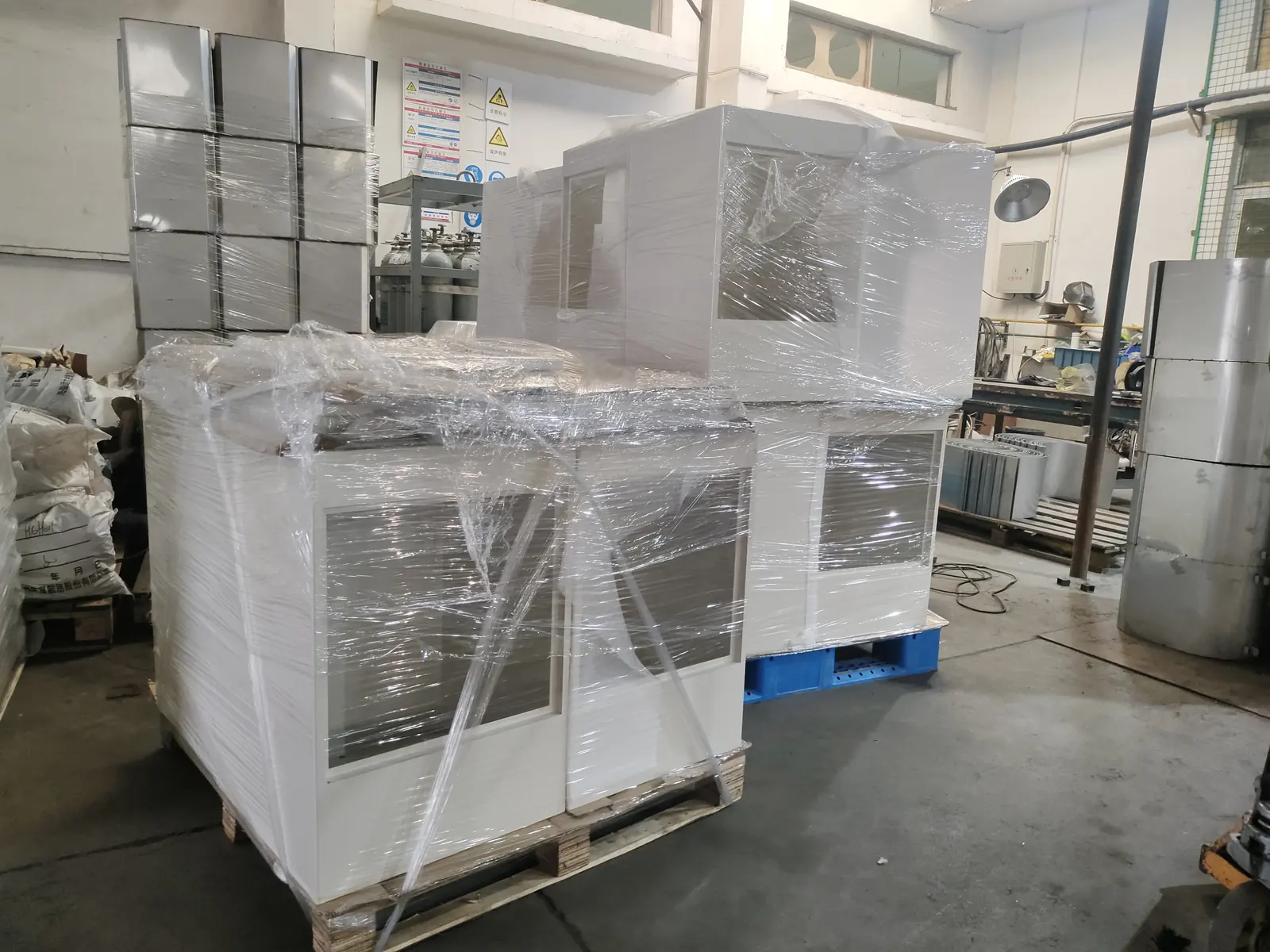
A correct finish can still fail commercially if it is scratched by hardware installation or cabinet-to-cabinet contact. Separators, clean work surfaces, protective wrapping and pallet support are part of the delivered appearance.
For recurring orders, keeping the approved colour or texture reference and packaging method with the project record helps reduce visible batch variation.
Buyer questions
Questions Procurement and Engineering Teams Usually Ask
These answers define the discussion points. Final values and acceptance criteria are confirmed against the project drawing and purchase requirements.
Which steel finish is best for an outdoor enclosure?
There is no universal answer. Steel grade, pretreatment, coating system, cut edges, joints, drainage, UV exposure and the required validation all affect the decision.
Can colour code alone define a powder-coated finish?
No. Buyers should also define gloss, texture, cosmetic zones, viewing conditions and an approved sample when visible consistency matters.
How are conductive grounding areas protected?
Grounding points and mating interfaces can be masked or prepared according to the electrical design. Their location and acceptance requirement belong on the drawing.
RFQ checklist
Information That Makes the Technical Reply Useful
- Describe service environment and target life
- Specify colour, gloss, texture and visible faces
- Mark masked and conductive contact areas
- State required documents or tests
- Include packaging and receiving constraints
Matching the Steel Finishing System to the Service Environment
Steel offers the widest choice of finishes and therefore the widest scope for over- or under-specifying. Starting from the environment category keeps the choice short.
| Service condition | System that suits it | What provides the protection | What to watch |
|---|---|---|---|
| Dry indoor, low humidity | Single powder coat, typically 60-80 µm, over a conversion pre-treatment | The coating as a barrier | Edge coverage, and damage during assembly |
| Humid indoor or occasional condensation | Powder over a more robust pre-treatment, or zinc plating with passivation | Barrier plus some sacrificial reserve at scratches | Trapped moisture in crevices and under fastener heads |
| Outdoor urban and light industrial, C3 | Two-coat system, or powder at the higher end of the normal range | Barrier plus corrosion inhibitor in the primer | Edges and fasteners, which fail before the flat areas |
| Outdoor coastal or industrial, C4 | Duplex: hot-dip galvanizing plus powder, or a zinc-rich primer with a topcoat | Sacrificial zinc under a barrier coating | Preparation of the galvanized surface before coating |
| Severe marine or industrial, C5 | Duplex or multi-coat systems at higher build, with careful detailing | Combined sacrificial and barrier protection with a service history | Design details that trap water; no coating survives a bad detail |
The pattern across those rows is that sacrificial protection becomes necessary as soon as the coating will be damaged. Indoors, a barrier is enough because the film stays intact. Outdoors, scratches, edge damage and fastener heads guarantee breaches, and a zinc layer underneath is what stops each breach from becoming a rust spot that spreads under the film.
From research to RFQ
Apply the Guidance to Your Actual Drawing
Send the current files, quantity, material, finish and assembly context. We will identify the questions needed for a practical manufacturing review.