
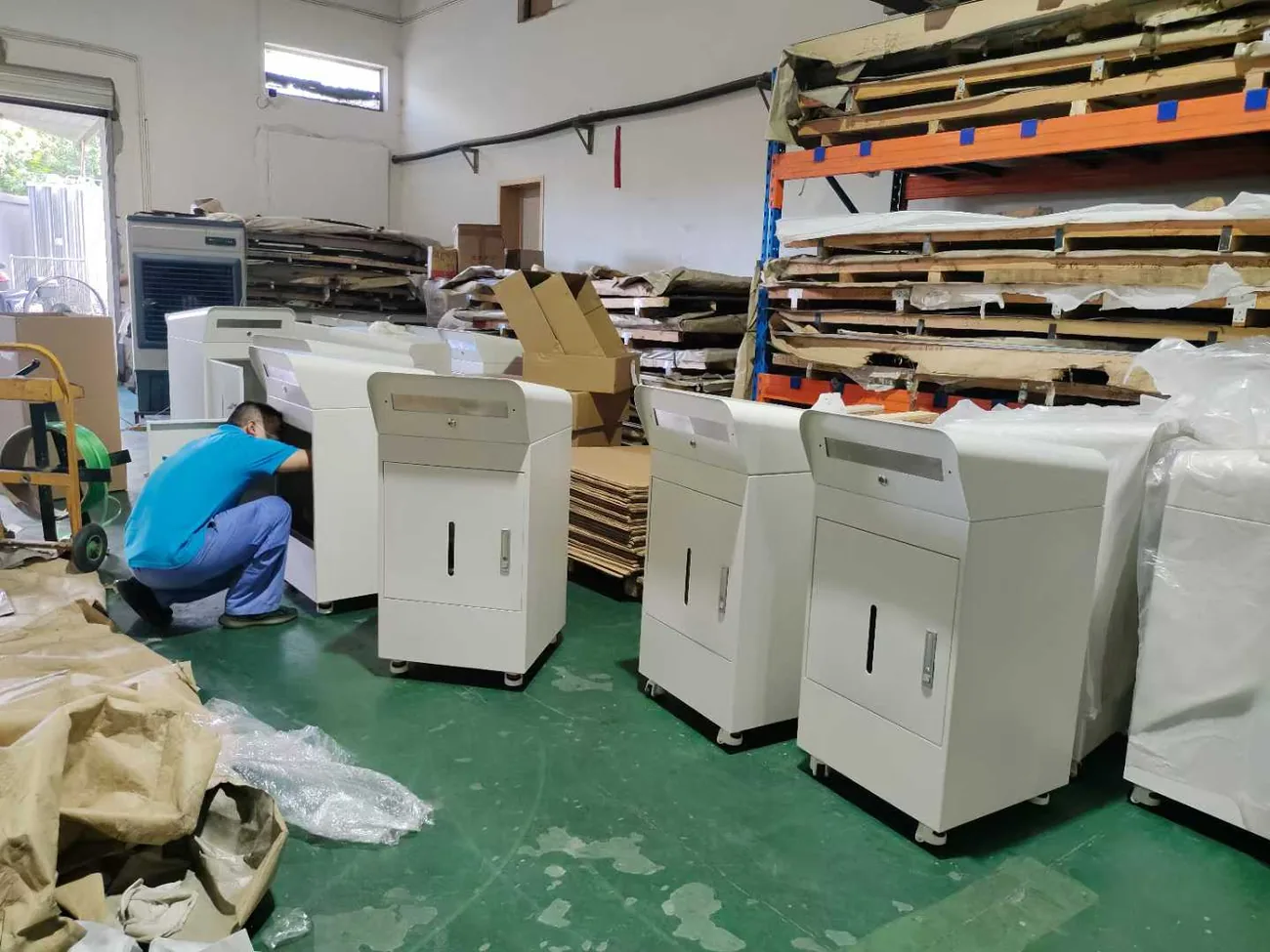
Electrical Enclosure OEM China
Electrical Enclosure Fabrication for Industrial Use
Fulei Metal provides electrical enclosure fabrication for industrial use, serving buyers who need custom sheet metal cabinets, control boxes, housings, panels and accessories from one China OEM manufacturing partner. Projects are reviewed by drawing, with material, sheet thickness, cutouts, bends, welding, finish, grounding, cable entry and assembly requirements confirmed before production.
Electrical Enclosure Fabrication Specifications
| Material Options | SPCC, SECC, galvanized steel, stainless steel 304/316 and aluminum according to drawing |
|---|---|
| Typical Structures | Wall-mounted boxes, floor-standing cabinets, control enclosures, panels, gland plates and brackets |
| Cutouts | Cable glands, connectors, fans, vents, switches, displays, mounting holes and service openings |
| Surface Finish | Powder coating, plating, passivation, brushing, silk screen or finish specified by the buyer |
| Assembly | Door hardware, hinges, locks, handles, grounding studs, mounting plates, inserts and fasteners |
| MOQ | Prototype and batch orders reviewed according to size, structure, tooling and finish |
| Lead Time | Quoted after drawing review and process confirmation |
| Files for RFQ | PDF, DWG, DXF, STEP, IGES, SolidWorks files or physical sample reference |
Industrial Electrical Housing Fabrication
Electrical enclosures used in factories, machinery, control systems and power equipment must match both the electrical layout and the mechanical installation environment. The important fabrication details are not only length, width and height. Buyers should also define cable entry locations, internal mounting holes, door clearance, sealing area, grounding points, coating surface and packing needs.
This page is built around the GSC queries already appearing for Fulei Metal, including electrical enclosures for industrial automation, electrical enclosure fabrication for industrial use and industrial electrical housing fabrication.
OEM Metal Fabrication for Electrical Projects
For OEM electrical projects, Fulei Metal can review fabricated cabinet bodies and related sheet metal accessories as a package. This helps the buyer keep the cabinet, gland plate, mounting bracket and internal panel aligned under one drawing-controlled fabrication process.
Process Flow for Electrical Enclosure
The typical route is DFM review, material cutting, laser cutting or punching, bending, welding or riveting, deburring, surface treatment, powder coating, hardware assembly and final inspection. Cabinet doors, removable panels and cable entry parts should be checked for fit before shipment.
Checking Electrical Enclosure Before Shipping
Quality checks can include first article dimensions, hole position, bend angle, weld appearance, coating color and surface review, hardware assembly, door alignment and packing condition. If the buyer requires inspection records, key dimensions should be marked on the drawing.
Cut-outs, Cable Entry and Grounding Details
Most electrical enclosure problems surface after delivery, and they are rarely in the folded shell. They are in a cut-out that does not quite match a connector, or a bonding point that was painted over. Both are decided on the drawing, so this is where a few extra notes save a return shipment.
| Connector and HMI cut-outs | Send the DXF shape or the mating component reference. An aperture is only correct if it matches the part that goes into it, not the nominal size on a data sheet. |
|---|---|
| Cable entry | Gland plate, knockouts or cut-outs in the base. A removable gland plate allows the cable layout to change later without reworking the cabinet body. |
| Grounding and bonding | Stud positions and which contact faces must stay free of coating. Paint is an insulator, so the drawing has to say where coating is not permitted. |
| Door bonding | A strap or a bare hinge contact where the door carries components. Cheap to add during build, difficult to add afterwards. |
| Hinge and lock pattern | Manufacturer reference or hole pattern. Pattern holes are the hardest feature to correct once the part has been coated. |
| Ventilation | Louvers, mesh or a filter fan aperture. Forming, welding and painting all have to be sequenced around these openings. |
Laser cutting makes cut-outs accurate and repeatable, and the shape comes straight from your file, so a connector or display aperture can be held to the same tolerance as the rest of the part. Where the component is not yet fixed, a removable plate is usually the cheaper answer: it can be re-cut without scrapping the cabinet.
Two details are worth marking on every electrical drawing. First, which faces must remain conductive — earthing studs, bonding points and mounting faces for components that need a path to earth. Second, which surfaces are cosmetic, because those are the ones that need masking and individual protection in export packing. Both are covered in the drawing review before production.
Where Electrical Enclosure Gets Used
- electrical control cabinets
- industrial automation enclosures
- EV charger power cabinets
- energy storage and PCS cabinets
- HVAC control boxes
- machinery and equipment housings
Information Needed to Quote Electrical Enclosure
- 2D drawings and 3D models, such as PDF, DWG, DXF, STEP, IGES or SolidWorks files
- Target quantity for prototype, pilot run, batch order and annual demand if available
- Material grade, sheet thickness, surface finish, color and corrosion requirement
- Critical dimensions, visible surfaces, weld requirements, inserts and assembly notes
- Destination country, packing requirement and preferred trade term
Electrical Enclosure: Common Buyer Questions
What types of electrical enclosure fabrication can you support?
We can review custom sheet metal electrical enclosures, control boxes, cabinet bodies, mounting plates, cable entry plates, brackets and assembled housings based on your drawings.
Can you manufacture electrical enclosures for industrial use?
Yes. The structure, material, thickness, finish, hardware and assembly details are confirmed by project drawings and application requirements.
Can you make outdoor electrical cabinets?
Outdoor projects can be reviewed when the drawing defines sealing, drainage, coating, hardware and corrosion requirements. IP or NEMA performance should be specified by the buyer’s engineering team.
What drawing files are needed?
PDF drawings are useful for dimensions and notes, while STEP, IGES or SolidWorks files help review bends, clearances and assembly. DXF or DWG files help with flat laser cutting.
Can you include enclosure accessories?
Yes. Related parts such as gland plates, mounting panels, DIN rail supports, hinge plates, lock plates, vents and brackets can be quoted with the cabinet body.
How do you reduce production risk before batch orders?
We review DFM, make first article checks, confirm critical dimensions and inspect assembly fit before moving to batch production when the project requires it.
Can you produce cut-outs directly from our DXF?
Yes. Send the DXF or the 3D model and we cut the apertures to the file, including display windows, connector cut-outs and ventilation patterns. Mark which dimensions are critical and which surfaces are visible, and we will review the file for edge distance, burr and coating issues before cutting.
Do you supply gland plates and internal panels as separate parts?
Yes. Gland plates, mounting panels, DIN rail brackets and internal supports can be quoted as separate line items with their own drawing and revision, which makes later changes much simpler. They can also be supplied fitted, bagged with the enclosure, or packed separately for your own assembly line.
Send Drawings for Electrical Enclosure Fabrication for Industrial Use
Send 2D drawings, 3D files, quantity, material, finish and assembly requirements. Fulei Metal will review the manufacturing route and confirm quotation details based on your project drawings.
Related Capability and Product Pages on Electrical Enclosure
- Industrial Automation Enclosures Manufacturer
- Electrical Enclosure Accessories
- Custom Metal Enclosure Manufacturer
- CNC Laser Cutting Service Sheet Metal
- Contact Fulei Metal
- Enclosures for the Transportation Industry
- SPCC vs Stainless Steel vs Aluminum Electrical Cabinets
- Outdoor Enclosure: Material, Coating and IP Rating
- Medical Device Enclosure Design to IEC 60601
- Hospital Cart and Trolley Fabrication
Payment Terms
How a project is paid for is agreed before production starts, and the structure that applies to your order is stated on the quotation and on the order confirmation, so there is no ambiguity later.
- 30% advance payment with the order and the 70% balance before shipment — our standard structure.
- 70% advance payment with the order and the 30% balance before shipment — used for some projects.
- 100% payment in advance before production starts — used for some projects.
If your finance team works to a fixed structure, say so in the first enquiry and we will confirm what applies to your order before you commit. Request a quotation.
Questions buyers ask before sending drawings
The nine questions that come up most often before a project starts, answered the way we answer them by email.
What do you need from me to quote a part?
2D drawings as PDF, DWG or DXF, or 3D files as STEP, IGES or SolidWorks, together with material grade, sheet thickness, surface finish, quantity and destination country. If the drawing is not finished yet, send a photo, a sketch or the existing part instead — we review what can be measured from it and reply with the questions that still need answering.
How long does a quotation take?
Enquiries are answered within one business day. Quotation time depends on the part. Simple components we can price straight from the drawing — laser-cut and bent sheet metal, brackets, panels, covers, machine guards — are quoted within 24 hours. Complex work such as assembled kiosks, welded frames and multi-part structures is quoted after the drawing review and process confirmation, because the scope cannot be judged from the drawing alone; the date is confirmed in our reply.
Is there a minimum order quantity?
Prototypes are made from a single piece, and small batches of 10–50 pieces are routine. Prototype, first batch and repeat volume are quoted in one staged quotation so the numbers stay consistent as the project scales. See low MOQ sheet metal fabrication.
Can you work from a sample or a photo if I have no drawing?
Yes. Send the part itself, clear photographs with a rule or caliper in frame, or a dimensioned sketch. We measure what can be measured, list the features that are still undefined, and confirm them with you before production rather than assuming them.
Will you sign an NDA before I send drawings?
Yes. If your process requires one, say so in the first message and we will confirm what we can sign before any file is transmitted. Customer drawings are treated as confidential and used only for the project they were sent for. See our NDA page.
What payment and trade terms do you work with?
The standard structure is 30% advance payment with the order and the 70% balance before shipment. Some projects run on 70% advance payment with the 30% balance before shipment, and some on 100% payment in advance before production. Quotations are issued under EXW, FOB Ningbo, CIF or DDP, whichever your logistics team already works with.
What quality documents come with the parts?
Inspection documents are agreed with the order. Reports are provided on request, and material certificates and traceability can be supplied for the grades we purchase. Tell us in the enquiry which documents your own quality system requires, and we will confirm what we can provide before you order rather than after.
Who will handle my project?
One contact from drawing review through to shipment. Violet, our sales manager, coordinates drawings, DFM questions, quotation, samples, production updates and shipping documents, so you are not handed to a different person between quotation and delivery.
Can you scale from prototype to repeat production?
Yes. Prototype quantity and expected annual volume are quoted together, so tooling, nesting and packaging are planned once and the sample and production prices stay consistent. See prototype to production quotation and sheet metal DFM engineering review.
Trade Terms and Delivery
We quote under the standard Incoterms your logistics team already works with, and build the packing and documentation around the one you choose.
- EXW — you collect from our Ningbo facility and run export clearance through your own forwarder.
- FOB Ningbo — we deliver to the vessel at Ningbo port and handle export clearance.
- CIF — we cover carriage and insurance to your named destination port.
- DDP — we handle carriage, insurance, import clearance and duties through to your door.
Send your destination country, target delivery date and preferred trade term together with the drawing. Request a quotation.
Quotation Time
We quote from your drawings. How long that takes depends on what the part asks for:
- Simple parts — quoted within 24 hours. Laser-cut blanks and bent components, supplied with complete 2D or 3D drawings. Mon–Fri, GMT+8.
- Complex assemblies — quoted after the drawing review. Payment kiosks, multi-part welded frames, enclosures with purchased hardware, or anything needing a coating or assembly trial. We confirm a quotation date once the scope is clear.
Production lead time is quoted separately, after drawing review and process confirmation. Send your drawings.
Standards, certification and inspection
These are the standards we work to and the documents we issue. If your project needs a specific standard or a test report from a named body, tell us at enquiry stage and we will confirm what we can provide before you commit.
| Standard / document | What it means for your order |
|---|---|
| ISO 9001 | Quality management system certified. Certificate available on request. |
| TÜV Rheinland | Certificate no. MIC-ASI243729. Test report available. |
| IEC 62208 | Empty enclosures for low-voltage switchgear — the standard we work to for general-purpose housings. |
| IEC 61439 | Type-tested assemblies where the enclosure forms part of a switchgear or controlgear assembly. |
| EN 62368 | Safety standard applied where the enclosure houses IT, audio/video or similar electronic equipment. |
| IP ratings | IP54 to IP65 verified on request, depending on gasket, cable entry and door design. |
| IK ratings | IK08 to IK10 for enclosures in public or vandal-exposed locations. |
| Material certs | EN 10204 3.1 material certificates supplied with every production batch. |
| First article | FAI / ISIR report issued before production release, covering the drawing characteristics. |
Certificates and test reports are issued with the shipment or earlier on request. Copies of current certificates are available before you place an order.
For US projects
Working to US drawings, NEMA types and gauge callouts
Most of our enclosure work is quoted from inch drawings with NEMA and gauge callouts. These are the conversions and the boundaries we work to — send us the drawing the way it is and we will confirm every number on the drawing review sheet before quoting.
Gauge converted to millimetres, by material
A gauge number is not the same thickness in every metal. Carbon steel follows the Manufacturers’ Standard Gauge, stainless the US Standard Gauge and aluminum the Brown & Sharpe gauge, so 14 ga is 1.90 mm in steel but 1.63 mm in aluminum. We convert on the material your drawing calls for, not on a single table.
| Gauge | Carbon steel | Stainless | Aluminum |
|---|---|---|---|
| 20 ga | 0.91 mm | 0.95 mm | 0.81 mm |
| 18 ga | 1.21 mm | 1.27 mm | 1.02 mm |
| 16 ga | 1.52 mm | 1.59 mm | 1.29 mm |
| 14 ga | 1.90 mm | 1.98 mm | 1.63 mm |
| 12 ga | 2.66 mm | 2.78 mm | 2.05 mm |
| 11 ga | 3.04 mm | 3.18 mm | 2.30 mm |
| 10 ga | 3.42 mm | 3.57 mm | 2.59 mm |
NEMA types and where they are used
NEMA 250 and IEC 60529 overlap but are not interchangeable: NEMA also covers corrosion resistance, icing and construction, which IP codes do not. The IP column below is the working equivalent we quote to, not a certifiable conversion.
| NEMA type | What it covers | Working IP equivalent | Typical use |
|---|---|---|---|
| NEMA 3R | Outdoor, rain and sleet, ice resistant | commonly taken as IP24 | Roadside cabinets, meter and service enclosures |
| NEMA 4 | Indoor or outdoor, windblown dust and hose-directed water | commonly taken as IP66 | Washdown areas, exposed plant equipment |
| NEMA 4X | Type 4 plus corrosion resistance | IP66 for ingress; corrosion is not covered by IP | Coastal, chemical and food-plant siting in 316 or 4X constructions |
| NEMA 12 | Indoor, dust and dripping non-corrosive liquids | commonly taken as IP54 | Factory-floor control panels and machine housings |
| NEMA 13 | Indoor, dust plus oil and coolant seepage | commonly taken as IP54 | Machine tool cabinets and coolant-exposed panels |
| NEMA 6 / 6P | Temporary or prolonged submersion | commonly taken as IP67 / IP68 | Pits, tunnels and below-grade installations |
Materials, certificates and the UL question
We work to the specification you put on the drawing: stainless to ASTM A240 in 304, 316 and 430, aluminum to ASTM B209 in 5052-H32, 5754, 6061-T6 and 3003-H14, carbon steel to ASTM A1008 or A1011. Material certificates and inspection records ship with the order.
On UL: we do not hold a UL or cUL listing, and no enclosure fabricator does — the listing is issued on the finished assembly with the equipment installed inside it. What we supply is the enclosure built to the NEMA type, the material and the hardware you specify, documented so that your own listing process has the paperwork it needs. If your drawing calls out a welding code — AWS D1.1 for carbon steel, D1.6 for stainless, D1.2 for aluminum — send it with the enquiry and we will confirm procedure and inspection before quoting.
Drawings accepted in STEP, DWG, DXF, PDF and SolidWorks, inch or metric, under NDA on request. Lead times are quoted after drawing review, not pulled from a table.