
03 / Forming
Sheet Metal Bending Service
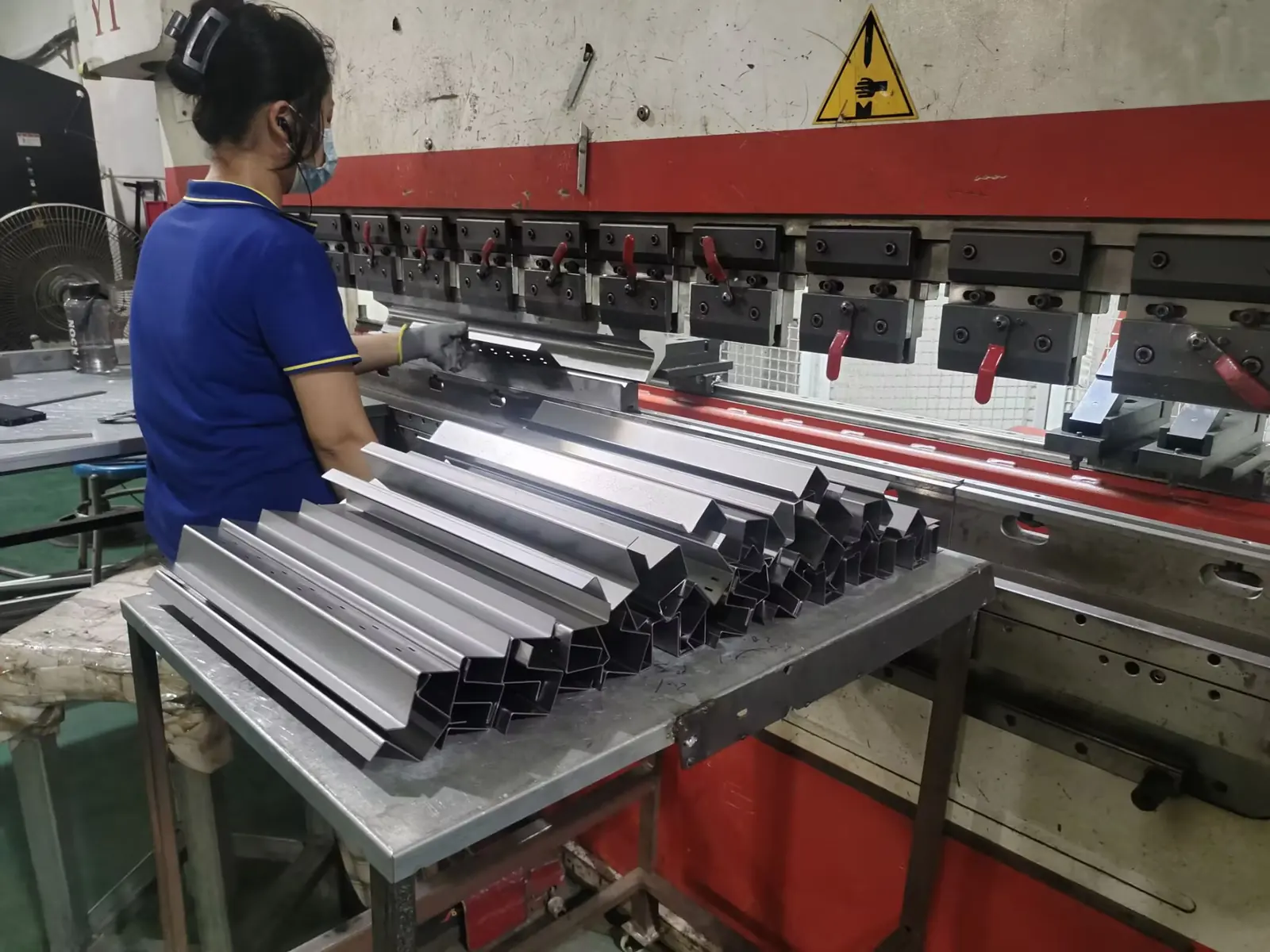
Four CNC press brakes — including a 3,000 mm bed — form panels, doors, brackets and cabinet structures from 0.5 mm to 6.0 mm. The bend sequence, V-die selection and springback allowance are set from your drawing before the first piece is formed.
Scope
Why Most Dimensional Complaints Start at the Press Brake
Bending is the step that turns a flat laser-cut or stamped blank into a three-dimensional part, and it is where most dimensional complaints actually originate. A cut blank can be perfect and still assemble badly if the flange length is short for the die, if a hole sits inside the deformation zone, or if six individually in-tolerance bends stack into a door that will not close.
We run V-bends, U-channels, Z-offsets, returns, hems and multi-step forming on four CNC press brakes, with a 3,000 mm bed available for long panels. Standard and special tooling is selected for the flange length and tool clearance your geometry needs rather than for whatever happens to be on the machine. Because forming sits between cutting and joining in the same building, sequence decisions — bend before or after welding, form before or after coating — are made with the people who run those steps, not in isolation.
Real production video
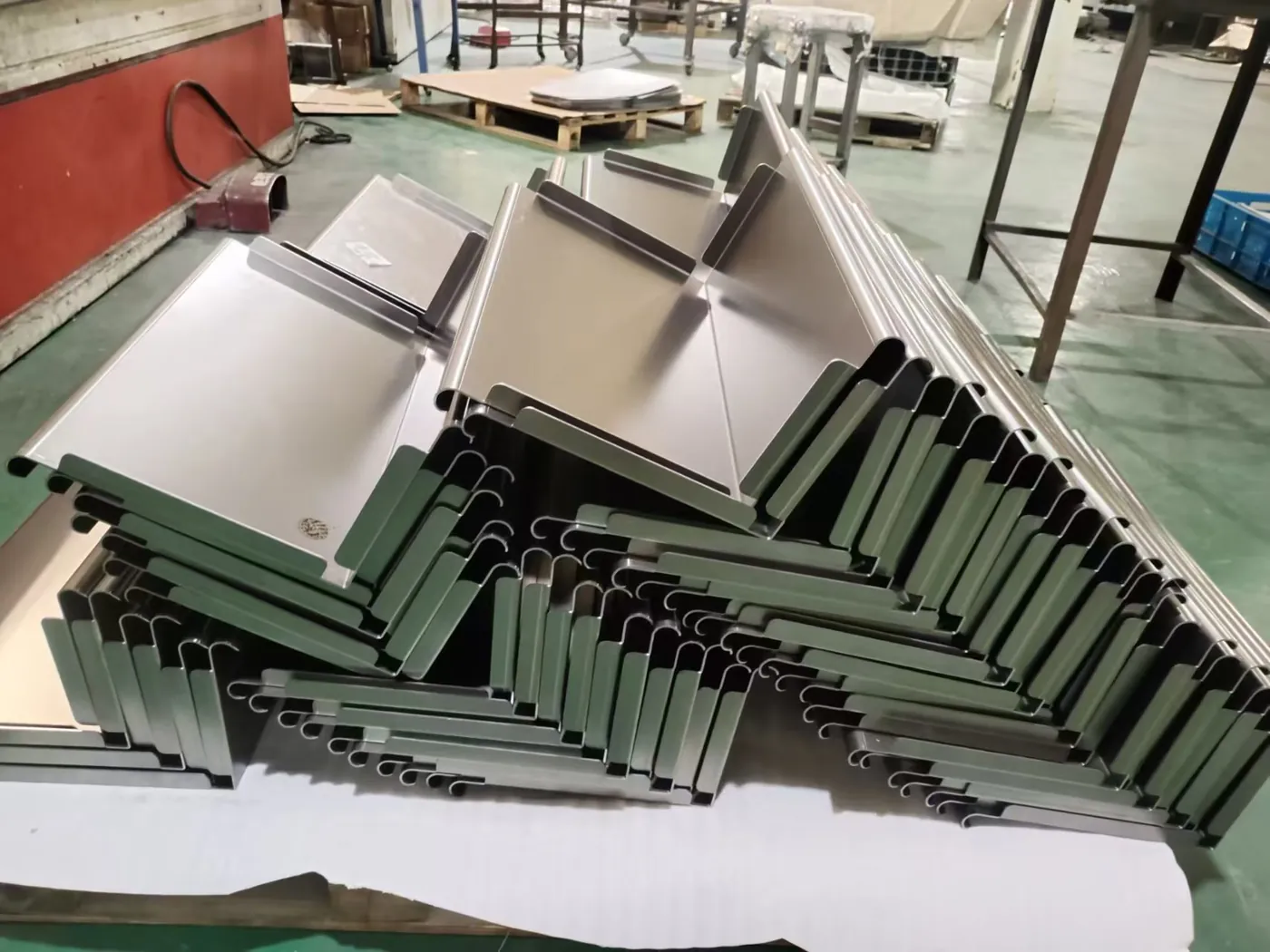
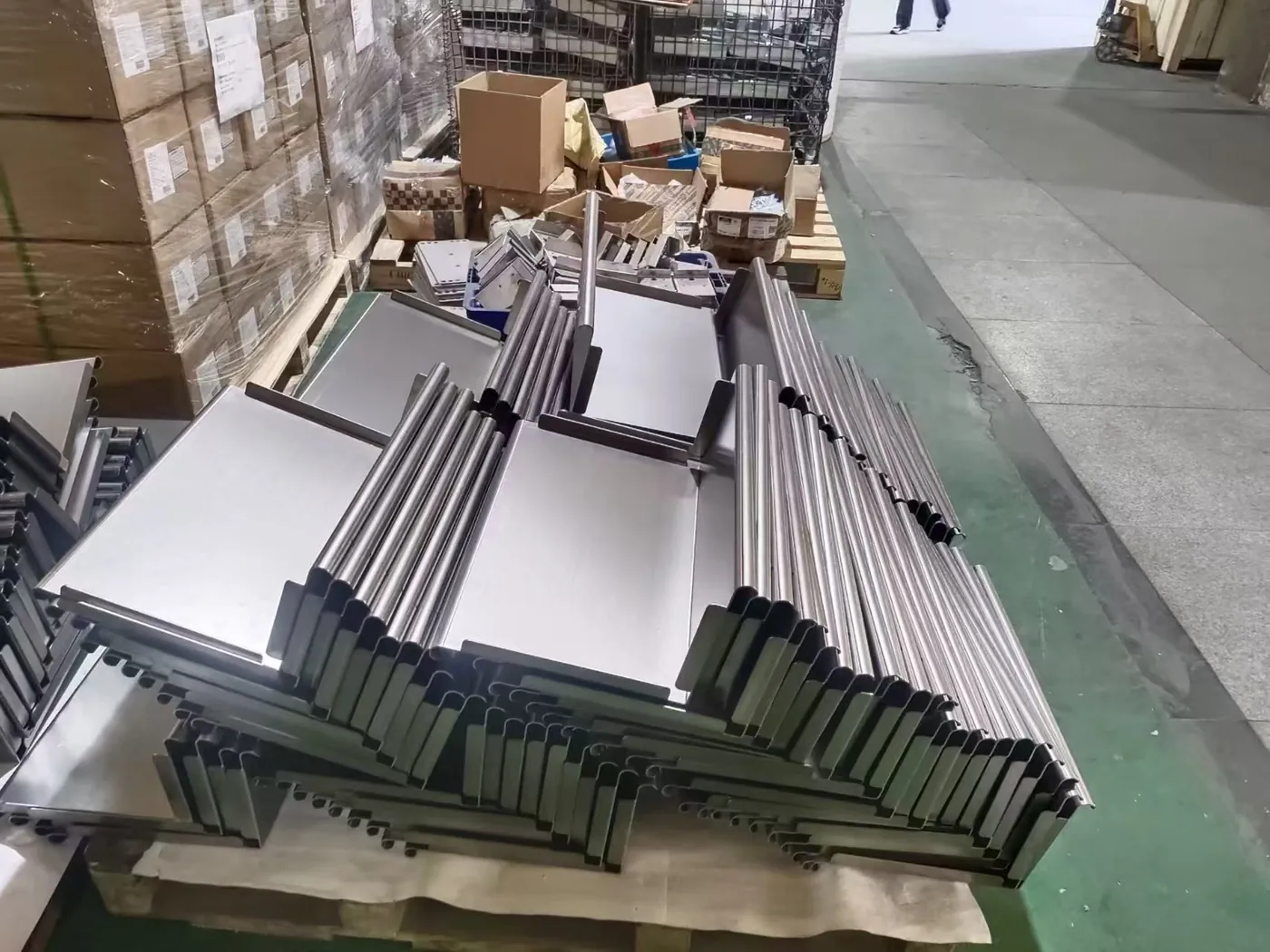
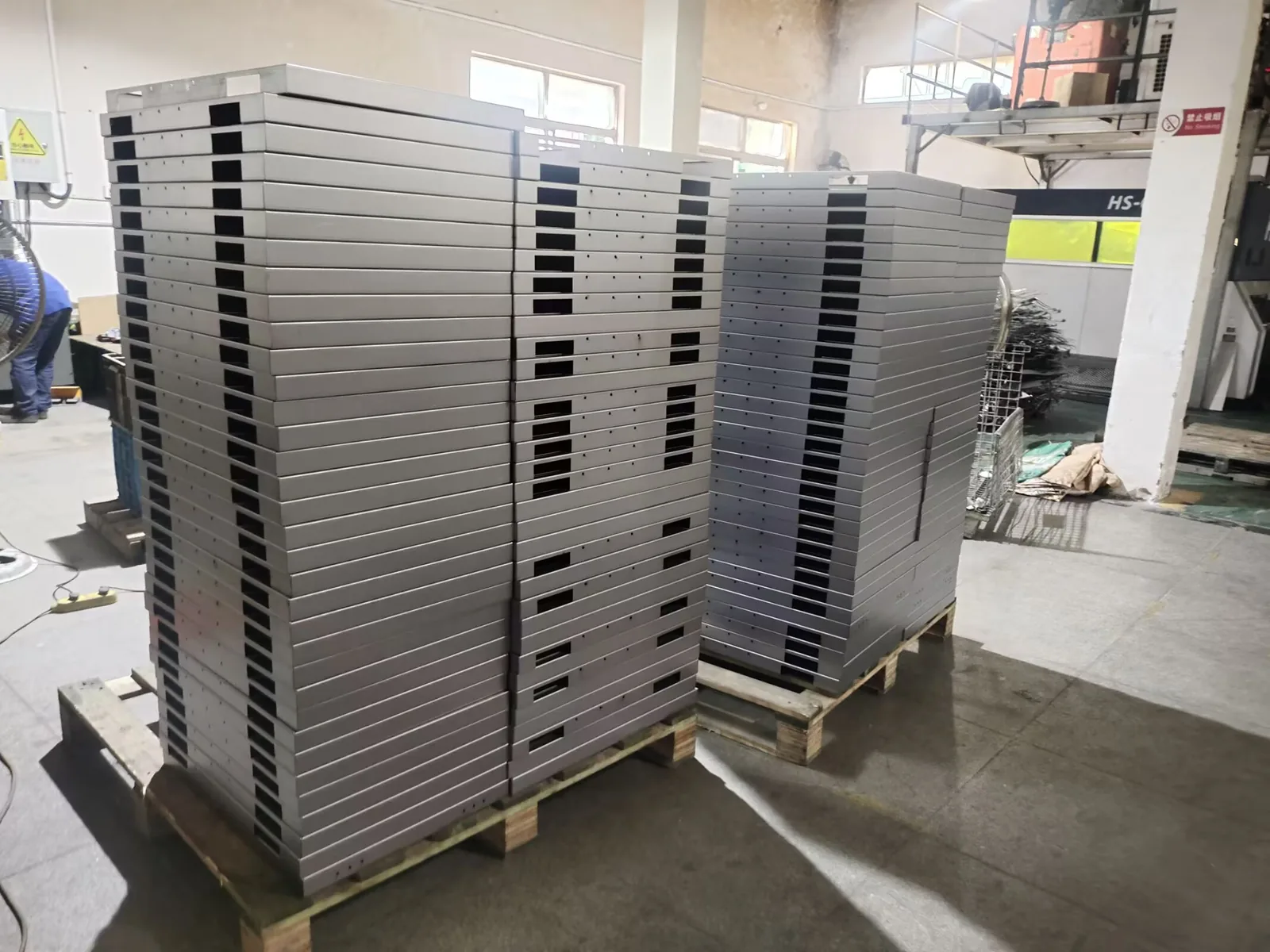
Press Brake Forming on Our Shop Floor
These short clips show actual work at Fulei Metal. They support the process explanation; the controlled drawing and written quotation still define the final route.
Process parameters
The Six Parameters That Decide Whether a Bend Works
These are the values we fix before releasing a job. Most bending problems trace back to one of them being left to the operator instead of being decided on the drawing.
| Parameter | Practical rule | Why it matters |
|---|---|---|
| V-die opening | Commonly around 8× material thickness, adjusted for radius and tonnage | Sets the inside radius, the required tonnage and the shortest flange you can form |
| Inside radius | Formed radius scales with the V-opening; nominally near 1× thickness for annealed steel, larger for hard tempers | Too small a radius cracks the outside face; too large changes mating dimensions |
| Minimum flange | Short flanges need a narrower V or a special tool — roughly 2.5 to 4× thickness as a starting point | A flange shorter than the die support simply falls into the opening instead of bending |
| Hole-to-bend distance | Keep holes outside the deformation zone as a rule of thumb, or add relief slots | Holes inside the zone stretch into ovals and lose positional accuracy |
| Springback allowance | Verified on the actual material lot; stainless springs back more than carbon steel | Grade and temper change the amount, so a fixed compensation angle drifts across batches |
| Bend sequence | Inner features first, then outer; check punch clearance on every station | A later bend can collide with a flange already formed, or trap the part on the tool |
Specifications
Bending Specifications and Capabilities
| Forming equipment | Four CNC press brakes, including a 3,000 mm bed |
|---|---|
| Maximum bend length | Up to 3,000 mm |
| Sheet thickness | 0.5 mm to 6.0 mm, depending on material and bend radius |
| Bending tolerance | ±0.1 mm on critical dimensions; accumulated bends confirmed per drawing |
| Angle control | Angles verified on the first piece and re-checked through the run; critical angles held against the drawing rather than a default |
| Bend types | V-bends, U-channels, Z-offsets, returns, hems and multi-step forming |
| Tooling | Standard and special tooling selected for flange length and tool clearance |
| Materials formed | SPCC, SECC, Q235, SUS304 stainless steel, aluminium and galvanised steel |
| Drawing formats | PDF, DWG, DXF, STEP, IGES or SolidWorks, with 3D preferred for formed parts |
| Minimum order quantity | 10 pcs (large parts) / 50 pcs (medium parts) / 1,000 pcs (small parts) |
Defect prevention
Common Bend Defects and What Actually Causes Them
Every one of these is a design or tooling decision, not a machine fault. Spotting them in the DFM review is far cheaper than finding them in a finished batch.
| What you see | Real cause | How we prevent it |
|---|---|---|
| Cracking on the outside of the bend | Inside radius too small for the grade and temper, often with the bend running across the grain | Open the radius, set bend direction against the grain, or change the specified material condition |
| Angle drifts through the batch | Springback varies with material lot, thickness tolerance and tooling wear | Verify on the actual lot, re-check at intervals, not a one-off first-piece setup |
| Holes near a bend come out oval | Hole sits inside the deformation zone | Move the hole, add relief slots, or pierce after forming |
| Visible tool marks on a cosmetic face | Die marks or lack of film protection on the visible surface | Protective film, urethane or non-marking tooling, and transfer discipline |
| Long narrow parts twist | Asymmetric bend layout on a slender blank | Change sequence, add a stiffening feature, or split the part |
| Flange too short to form | V-opening wider than the flange can support | Narrower V, special tooling, or a revised flange length on the drawing |
Manufacturing route
How a Bend Job Is Released and Controlled
- 01
Review the flat pattern against the finished dimensions and confirm which datums the assembly actually uses
- 02
Select the V-die, bend sequence and tooling route, checking punch clearance at every station
- 03
Form the first piece and measure critical angles and distances against the drawing
- 04
Adjust only against the controlled drawing and the approved sample, then re-check through the run
- 05
Protect cosmetic surfaces through transfer, welding and assembly, and record outgoing checks
Engineering checkpoints
Bend Decisions That Belong on the Drawing, Not on the Floor
Each point below is checked against the actual flat pattern and the finished dimensions, not against a default machine setup. They are also the four items most often missing from an incoming RFQ package.
Bend relief
Corners and bend terminations need enough room for material to move without tearing or bulging. A relief that is too short splits the corner; one that is too wide leaves a visible notch on a cosmetic face.
Feature spacing
Holes and slots near bends distort. Whether to relocate the feature, add relief, or pierce after forming depends on what the hole has to do in the assembly — a clearance hole and a threaded hole do not get the same answer.
Springback
Different grades and conditions respond differently, so critical angles are verified on the actual material. Where a batch spans two material lots, the angle is re-verified rather than assumed identical.
Tolerance stack
Six acceptable bends can still produce an unacceptable door gap or mounting offset if the assembly datum is unclear. We ask which dimension the assembly actually controls, then hold that one.
Choosing the route
When Bending Is Not the Constraint
Forming rarely decides a project on its own — the cutting route and the joining route usually set cost and lead time first. If you are still deciding how to produce the blank, these two comparisons are the ones buyers ask us about most:
How the blank is cut
Laser cutting carries no tooling cost and suits prototypes and low volumes; stamping cuts the piece price sharply once a die is amortised. The break-even point is a calculation, not a guess.
What happens after forming
Most formed parts are welded, assembled or coated. Weld sequence and distortion control matter more to final fit than the bend tolerance itself on large enclosures.
Cutting and inspection detail
Tolerance expectations set on the flat blank carry into the formed part. Check what each route realistically holds before specifying a single number across the whole drawing.
Buyer input
What to Send With a Bending Enquiry
Send these with the enquiry and the bend sequence, the tooling and the angle checks can be decided before the first piece is formed. Missing items are raised in the DFM review rather than assumed.
- Finished-part drawing and 3D model
- Critical angles, datums and mating dimensions — and which one the assembly controls
- Material grade, thickness and grain direction if relevant
- Cosmetic surfaces and protection requirements
- Assembly drawing for multi-panel enclosures
- Quantity per order and estimated annual volume, so tooling and sequence are quoted realistically
FAQ
Bending Questions Buyers Ask Before Ordering
What do you need from us before a bend job can be quoted?
The finished-part drawing or the flat pattern, plus the 3D model where the formed shape matters. We also need the material grade, thickness and condition, the critical angles and the datums your assembly actually locates from. Tell us which face is cosmetic — that decides whether the part is formed with film, urethane or non-marking tooling.
Can a prototype be formed on the same press brake as the batch?
Yes. Prototypes run on the same CNC press brakes as repeat batches, so the first article reflects real production conditions rather than a special setup. Minimum quantities are 10 pieces for large parts, 50 for medium parts and 1,000 for small parts, and prototypes are accepted below those levels.
Which materials bend without cracking in your tooling?
SPCC, SECC, Q235, SUS304 stainless steel, aluminium and galvanised steel, generally from 0.5 mm to 6.0 mm. Hard tempers and work-hardened stainless need a larger inside radius than annealed material, and a bend running with the grain cracks sooner than one running across it. Finishes are applied after forming; the finishing route is agreed before the first piece because coating adds thickness to every mating face.
What inside radius can you bend to?
The formed radius scales with the V-die opening and depends on material grade, temper and thickness rather than one fixed figure. We confirm the radius your tooling allowance supports during the DFM review, and hold the critical formed dimensions to ±0.1 mm where they are identified on the drawing.
How do you stop holes near a bend from distorting?
By keeping the feature outside the deformation zone. Where the drawing does not allow that, we add relief slots, relocate the hole, or pierce after forming — the right choice depends on whether the hole is clearance, threaded or cosmetic.
Can you form pre-coated or pre-painted sheet?
Yes, with protective film on the visible face and tooling selected to avoid marking. Where a coating is applied after forming, we agree the sequence so that bend lines and edges are covered.
Do you bend and weld in the same facility?
Yes — forming, welding and assembly run in the same Ningbo plant, with ten welding stations downstream of the press brakes. That removes the transport damage and finger-pointing that appear when forming and joining sit with two different suppliers.
How are bend angles recorded through a batch?
Critical angles are measured on the first piece and re-checked at intervals through the run, because springback varies with material lot, thickness tolerance and tooling wear. The angle is held against the drawing rather than a default value, and the numbers behind the flat pattern we release are explained separately.
Send your drawings to our engineering team and we will return a DFM review together with the quotation. Request a quote, or see the full range on custom sheet metal fabrication.
The numbers behind the flat pattern we release with each program are explained in the bend allowance and bend deduction guide.
Discuss a real project
Send the Flat Pattern and the Finished Dimensions
Send the finished-part drawing, the material and the quantities. We will check the flat pattern, the bend sequence and what has to be measured on the first piece, then quote from that basis.
Payment Terms
How a project is paid for is agreed before production starts, and the structure that applies to your order is stated on the quotation and on the order confirmation, so there is no ambiguity later.
- 30% advance payment with the order and the 70% balance before shipment — our standard structure.
- 70% advance payment with the order and the 30% balance before shipment — used for some projects.
- 100% payment in advance before production starts — used for some projects.
If your finance team works to a fixed structure, say so in the first enquiry and we will confirm what applies to your order before you commit. Request a quotation.
Questions buyers ask before sending drawings
The nine questions that come up most often before a project starts, answered the way we answer them by email.
What do you need from me to quote a part?
2D drawings as PDF, DWG or DXF, or 3D files as STEP, IGES or SolidWorks, together with material grade, sheet thickness, surface finish, quantity and destination country. If the drawing is not finished yet, send a photo, a sketch or the existing part instead — we review what can be measured from it and reply with the questions that still need answering.
How long does a quotation take?
Enquiries are answered within one business day. Quotation time depends on the part. Simple components we can price straight from the drawing — laser-cut and bent sheet metal, brackets, panels, covers, machine guards — are quoted within 24 hours. Complex work such as assembled kiosks, welded frames and multi-part structures is quoted after the drawing review and process confirmation, because the scope cannot be judged from the drawing alone; the date is confirmed in our reply.
Is there a minimum order quantity?
Prototypes are made from a single piece, and small batches of 10–50 pieces are routine. Prototype, first batch and repeat volume are quoted in one staged quotation so the numbers stay consistent as the project scales. See low MOQ sheet metal fabrication.
Can you work from a sample or a photo if I have no drawing?
Yes. Send the part itself, clear photographs with a rule or caliper in frame, or a dimensioned sketch. We measure what can be measured, list the features that are still undefined, and confirm them with you before production rather than assuming them.
Will you sign an NDA before I send drawings?
Yes. If your process requires one, say so in the first message and we will confirm what we can sign before any file is transmitted. Customer drawings are treated as confidential and used only for the project they were sent for. See our NDA page.
What payment and trade terms do you work with?
The standard structure is 30% advance payment with the order and the 70% balance before shipment. Some projects run on 70% advance payment with the 30% balance before shipment, and some on 100% payment in advance before production. Quotations are issued under EXW, FOB Ningbo, CIF or DDP, whichever your logistics team already works with.
What quality documents come with the parts?
Inspection documents are agreed with the order. Reports are provided on request, and material certificates and traceability can be supplied for the grades we purchase. Tell us in the enquiry which documents your own quality system requires, and we will confirm what we can provide before you order rather than after.
Who will handle my project?
One contact from drawing review through to shipment. Violet, our sales manager, coordinates drawings, DFM questions, quotation, samples, production updates and shipping documents, so you are not handed to a different person between quotation and delivery.
Can you scale from prototype to repeat production?
Yes. Prototype quantity and expected annual volume are quoted together, so tooling, nesting and packaging are planned once and the sample and production prices stay consistent. See prototype to production quotation and sheet metal DFM engineering review.
Trade Terms and Delivery
We quote under the standard Incoterms your logistics team already works with, and build the packing and documentation around the one you choose.
- EXW — you collect from our Ningbo facility and run export clearance through your own forwarder.
- FOB Ningbo — we deliver to the vessel at Ningbo port and handle export clearance.
- CIF — we cover carriage and insurance to your named destination port.
- DDP — we handle carriage, insurance, import clearance and duties through to your door.
Send your destination country, target delivery date and preferred trade term together with the drawing. Request a quotation.
Quotation Time
We quote from your drawings. How long that takes depends on what the part asks for:
- Simple parts — quoted within 24 hours. Laser-cut blanks and bent components, supplied with complete 2D or 3D drawings. Mon–Fri, GMT+8.
- Complex assemblies — quoted after the drawing review. Payment kiosks, multi-part welded frames, enclosures with purchased hardware, or anything needing a coating or assembly trial. We confirm a quotation date once the scope is clear.
Production lead time is quoted separately, after drawing review and process confirmation. Send your drawings.