
The Short Answer
Choose laser cutting when your annual volume is below roughly 3,000–5,000 pieces, or when the design is still changing. There is no tooling to pay for, first parts arrive in days, and a drawing revision costs nothing.
Choose progressive die stamping when the design is frozen and volume is high enough to amortise a die. At 10,000+ pieces a stamped part typically costs 60–80% less per unit, but you commit $3,000–$50,000+ in tooling up front and give up the freedom to change the geometry cheaply.
The switch-over point is not a fixed number. It is a calculation:
Worked example: a bracket costs $8.00 laser-cut and $2.00 stamped, and the die costs $12,000. Break-even is 12,000 ÷ 6.00 = 2,000 pieces. Below 2,000, laser is cheaper in total cash. Above it, stamping wins — and every piece after that widens the gap.
Procurement teams sourcing from China hit this decision constantly, usually framed as a simple unit-price question. It is not. The wrong choice either locks tens of thousands of dollars into a die that never pays itself back, or leaves you paying a per-piece premium for years on a part that should have been tooled. This guide breaks the decision into the five variables that actually move the answer: volume, tooling budget, tolerance, lead time, and how likely your design is to change.
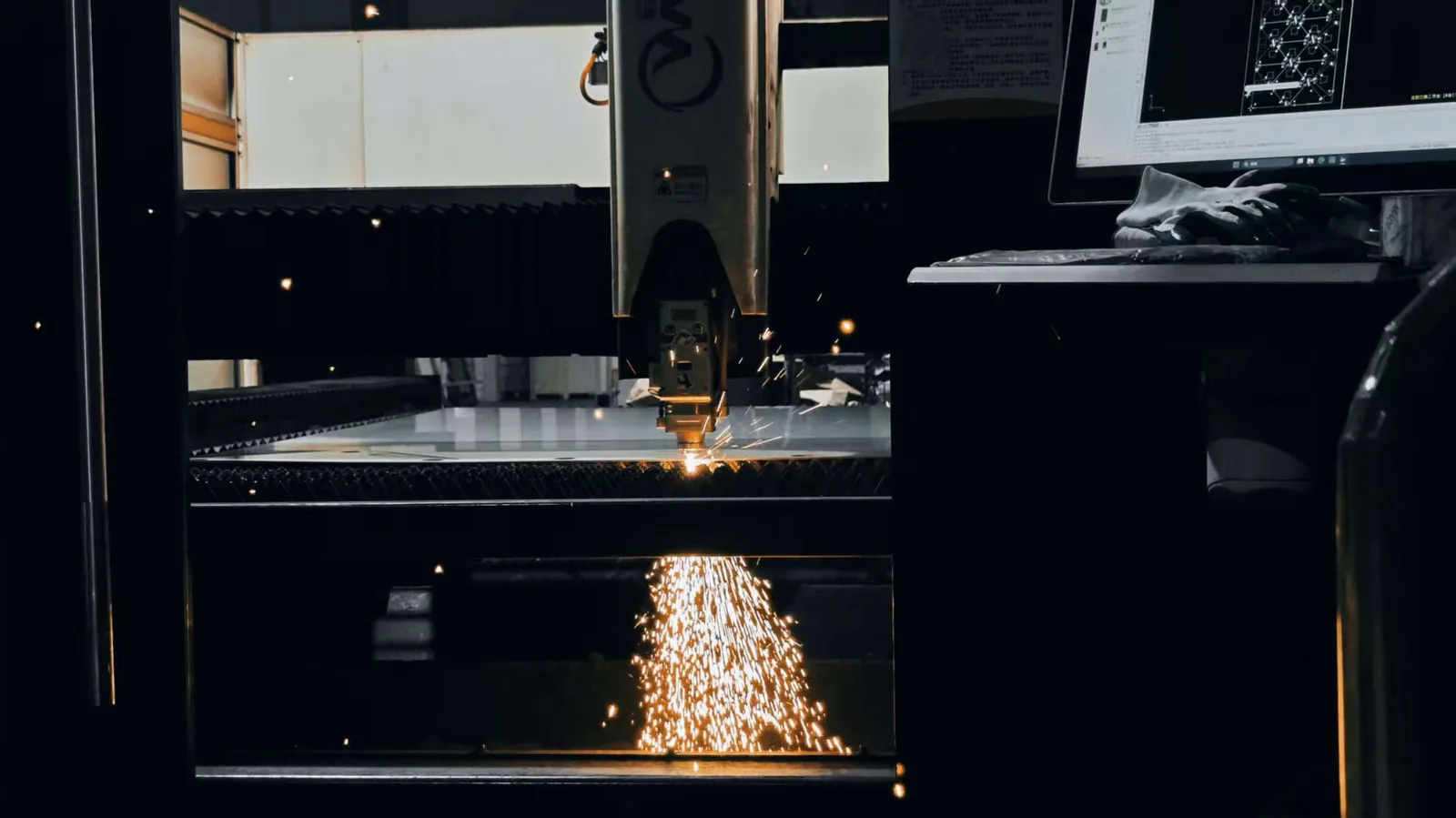
Side-by-Side Comparison
Figures below are typical industry ranges for 1.0–3.0 mm carbon and stainless sheet. Your actual numbers depend on part geometry, material grade and hole density — treat them as orientation, not a quotation.
| Factor | Laser cutting + forming | Progressive die stamping |
|---|---|---|
| Tooling investment | $0 — universal nozzles, V-dies and press brake tooling | $3,000–$50,000+ per die set, depending on stations and precision class |
| Economic volume | 1 to ~5,000 pcs/year | 10,000 to 1,000,000+ pcs/year |
| Piece price at high volume | Reference baseline | Typically 60–80% lower once tooling is amortised |
| First-part lead time | Quoted after drawing review and process confirmation | 4–8 weeks typical for die build and T1 approval (Fulei tooling samples: quoted after drawing review and process confirmation) |
| Design revision | Edit the CAD file; the next part reflects it | Die rework, wire EDM or new inserts — typically 3–4 weeks and a re-tooling charge |
| Contour tolerance | ±0.05–0.10 mm on 2D profiles | ±0.02–0.05 mm on hole position and form features |
| Edge character | Square, smooth, minimal burr with nitrogen assist; heat-affected zone 0.05–0.15 mm | Four-zone sheared edge: rollover, burnish band, fracture zone, burr. Burnish is 30–40% of thickness in conventional stamping, 85–90% in fineblanking |
| Workpiece thickness | Broad range, including plate well beyond stamping limits | Practical sweet spot ≤3.0 mm (Fulei stamping range: 0.3–3.0 mm) |
| Material utilisation | ~78–82% — nesting places parts 2–3 mm apart with a 0.2 mm kerf | ~65–70% — coil stock needs a web width of 1.5–2× material thickness between parts |
| Speed on hole arrays | Slower — every hole is a pierce cycle | 15–20× faster on dense micro-hole patterns under 3.0 mm |
| Typical parts | Enclosures, cabinets, chassis, formed brackets, welded assemblies, prototypes | Clips, terminals, washers, shims, high-volume brackets, small formed hardware |
How Each Process Actually Removes Material
Laser cutting: thermal, digital, force-free
A focused fiber laser beam melts the material while a coaxial gas jet — oxygen for carbon steel, nitrogen for stainless and aluminium — ejects the molten metal. Nothing touches the sheet mechanically, so there is no cutting force to clamp against and no tool to wear out. The part profile comes straight from a vector file; changing the geometry means editing that file.
The trade-off is heat. A narrow heat-affected zone forms along the cut, and on carbon steel cut with oxygen a thin oxide layer appears on the edge that usually needs removal before powder coating. Cut with nitrogen on stainless, the edge comes out bright and oxide-free — which is why nitrogen-cut stainless often skips the deburring step that stamped parts always require.
Stamping: mechanical shear through a hardened die
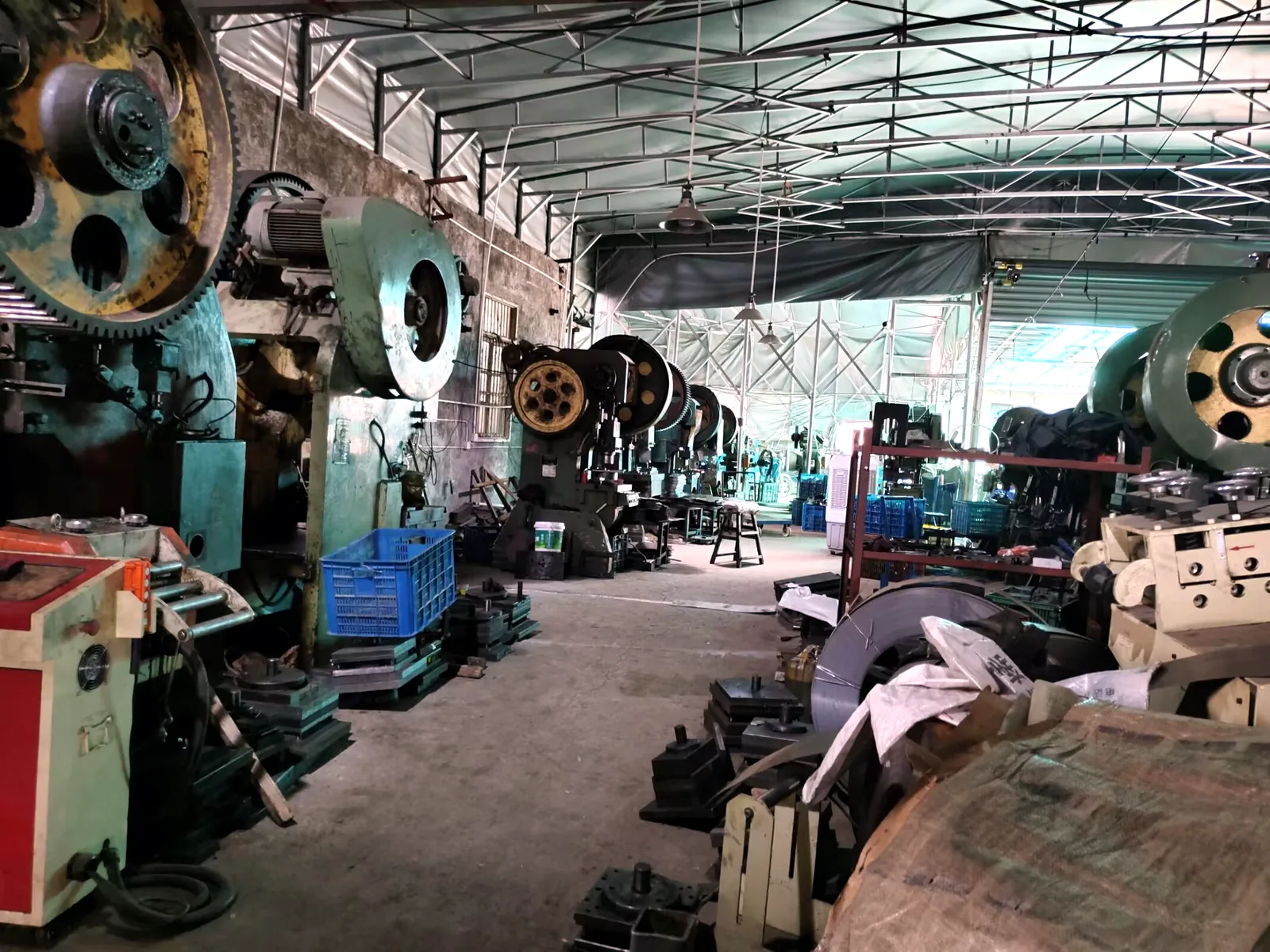
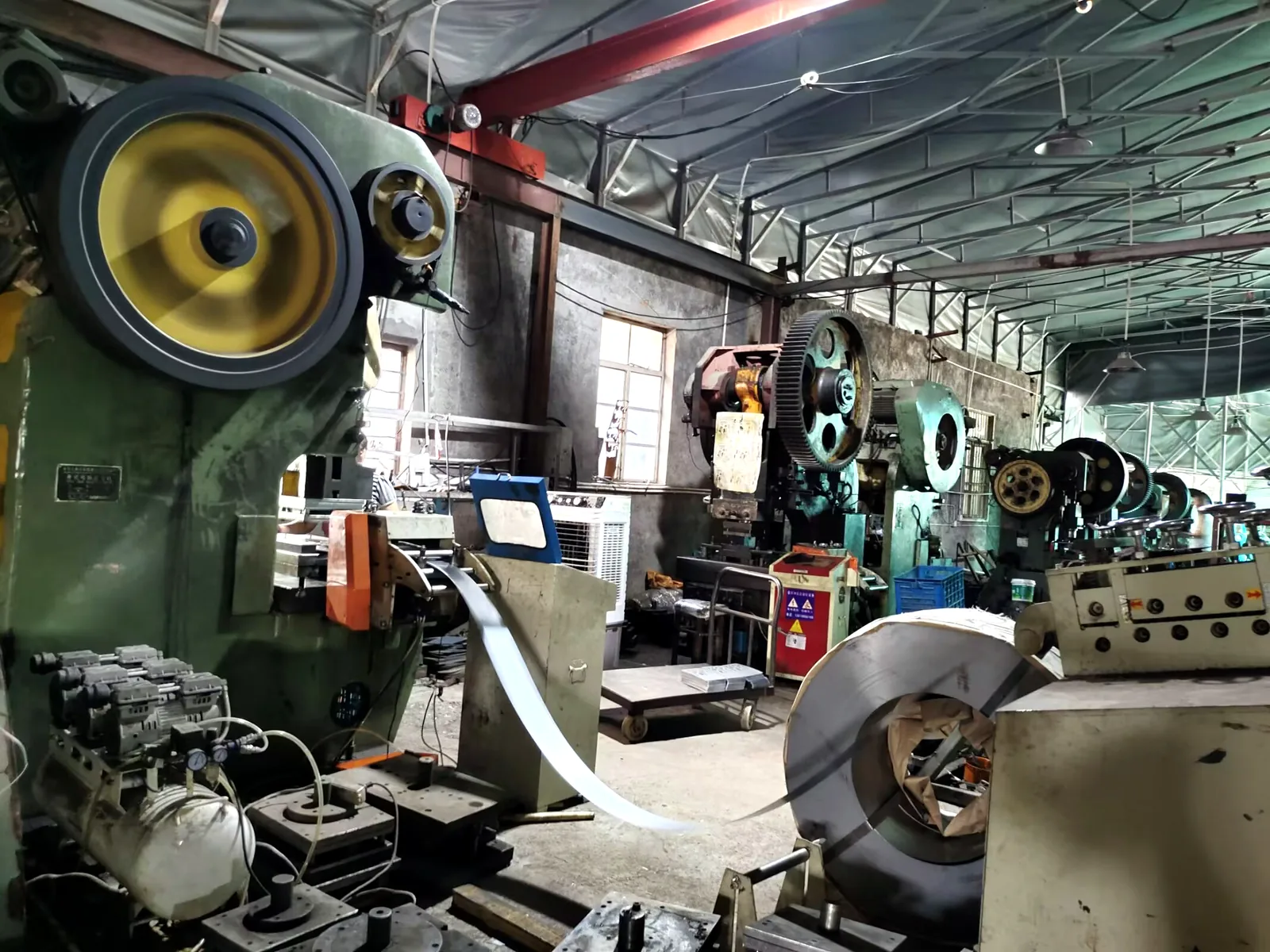
A progressive die is a sequence of stations mounted in a press. Coil stock feeds through, and each stroke pierces, blanks, forms or coins one feature. By the last station a finished part drops out at 30–120 strokes per minute. Once the die is proven, output is extremely fast and extremely repeatable — the die is the tolerance.
But the edge is a sheared, not a melted, one. Look at a stamped cross-section under magnification and you see four distinct zones: a rounded rollover where the punch first contacts the sheet, a smooth burnish band, a rough fracture zone, and a burr at the breakout side. That burr is why stamped parts almost always carry a secondary deburring or tumbling operation, and why stamped parts that must seal flat against another surface often need a shaving station.
Where buyers get surprised
A stamped edge is not dimensionally identical to a laser edge even at the same nominal tolerance. If your part welds, seals, or slides against another component, specify which edge condition you need — not just the number. We have re-quoted projects where a “±0.05 mm” callout on a stamped part was met perfectly and the assembly still failed because of burr height.
The Cost Structure: Where the Money Actually Goes
Comparing only the quoted piece price is the single most common sourcing error in this decision. The two processes have completely different cost shapes.
| Cost element | Laser route | Stamping route |
|---|---|---|
| Up-front | None | Die design, tool steel, CNC machining, wire EDM, tryout |
| Per piece | Machine hourly rate + assist gas + pierce time | Coil material + press stroke time (very low) |
| Secondary ops | Often none with nitrogen-cut stainless; deburr if oxygen-cut | Deburring or tumbling essentially always; shaving for tight edges |
| Scrap | 15–22% — nesting skeleton | 30–35% — coil web and carrier strip |
| Ongoing | None | Die sharpening every ~50,000 strokes; storage and maintenance |
| Change cost | ≈ $0 — new program | Die rework; inserts or new stations |
Reading the break-even honestly
Industry data puts the crossover for typical 1.0–2.5 mm sheet metal parts somewhere between 3,500 and 5,000 pieces — but that average hides enormous spread. Three variables move it hard:
- Die complexity. A simple blanked washer might tool for $3,000 and break even at 1,500 pieces. A part needing coining, a tight-tolerance shaving station, or complex forming can run $20,000+ and push break-even past 25,000 pieces.
- Material utilisation. Laser nesting yields 10–20 percentage points more usable material than coil stamping on thin sheet. On expensive material — 316L, titanium, copper — that gap alone can push the crossover up by several thousand pieces.
- Expected design churn. If you anticipate more than one geometry revision per year, add the re-tooling cost to the stamping side before comparing. Teams that revise twice a year frequently stay on laser well past 20,000 pieces, and are right to.
For a deeper look at how quantity tiers change unit economics on the fabrication side, see our guide on how MOQ affects custom sheet metal fabrication cost.
Tolerance and Edge Quality
Both processes can hold tight numbers, but they hold different numbers well.
- Laser cutting holds ±0.05–0.10 mm on a two-dimensional contour reliably, with no mechanical stress induced in the part. It is the better choice when flatness matters and when the edge must not be work-hardened — for example on parts that will be formed afterwards, where a stamped, strain-hardened edge can crack at the bend line.
- Stamping holds ±0.02–0.05 mm on hole position and form features once the die is proven, and holds it with far less piece-to-piece variation than any thermal process. It wins decisively on features that repeat thousands of times and must locate precisely every time.
Practical rule: if the critical dimension is a profile, laser competes well. If the critical dimension is a repeating feature — hole-to-hole pitch, tab height, contact geometry — stamping is the more stable route, provided volume justifies the die.
Our sheet metal fabrication tolerance guide covers how to mark which dimensions genuinely need controlling, which is usually the highest-leverage thing a buyer can do before either quote.
Lead Time and Design-Change Risk
This is where the decision is often really made, even when the spreadsheet says otherwise.
A laser-cut first article ships in days because there is nothing to build first. A stamped first article waits on die design, tool steel machining, wire EDM, assembly and tryout — four to eight weeks is normal across the industry. (At Fulei our tooling sample turnaround for standard progressive dies is quoted after drawing review and process confirmation, which is fast, but it is still a queue that laser does not have.)
The asymmetry gets worse after launch. A laser program absorbs a revision the same day the drawing changes. A die needs physical rework. If your product is in its first year, or your customer is still specifying, that flexibility is usually worth more than the per-piece saving — and it is the reason many programmes deliberately stay on laser through pilot production and only tool up once the design is frozen at revision C.
Thickness and Geometry Limits
- Stamping is a thin-gauge process. Our stamping range runs 0.3–3.0 mm in SPCC, SUS304 and copper. Above roughly 3 mm the required press tonnage and die wear climb steeply, and laser becomes the practical answer regardless of volume.
- Laser spans a far wider thickness band, including plate that no press in this class would touch.
- Dense hole patterns favour stamping heavily. On micro-hole arrays under 3.0 mm, punching runs 15–20× faster than piercing each hole with a laser. If your part is mostly holes, that speed difference alone can justify a die at volumes well below the usual crossover.
- Deep formed features — deep draws, coining, embossed stiffening ribs — generally need stamping. Laser cuts flat profiles; it does not create them.
A Practical Way to Decide
- Fix your real annual volume, not the first order size. Include the likely second and third year. Tooling pays back across the whole programme.
- Ask for both quotes — laser piece price and stamped piece price plus die cost. You cannot run the break-even without both numbers.
- Run the formula: die cost ÷ (laser price − stamped price) = break-even quantity. Compare it to your real volume.
- Add change risk. If the design is not frozen, add expected revision cost to the stamping side, or simply stay on laser until it is.
- Check the edge requirement — welding, sealing, sliding contact or cosmetic faces — and make sure the chosen process delivers that condition without an expensive secondary operation.
What Fulei Metal Runs
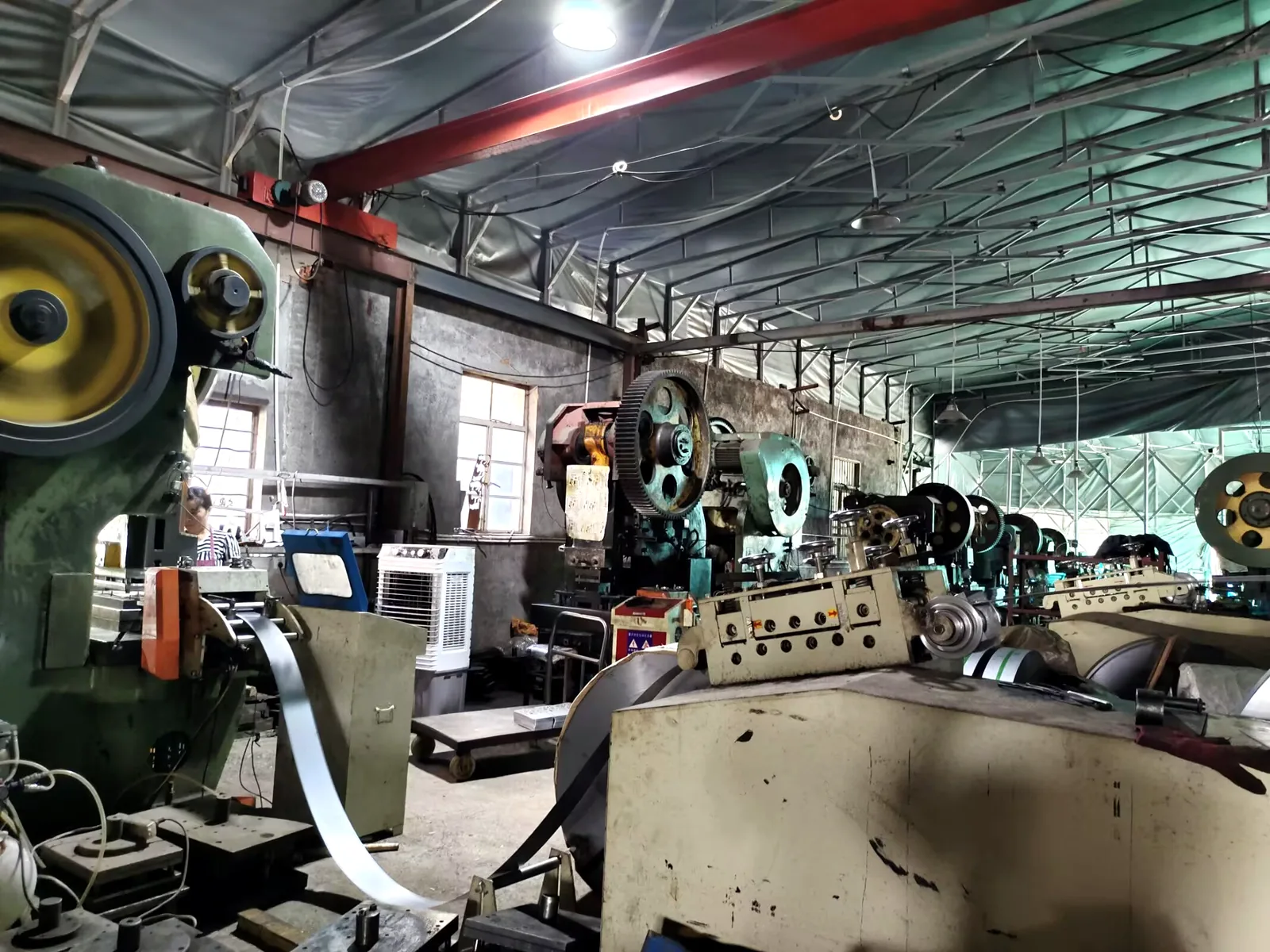
We operate both routes, which matters more than it sounds: a supplier who only owns laser machines will always recommend laser, and a stamping house will always recommend a die. We would rather quote you the honest answer and keep the programme.
| Capability | Specification |
|---|---|
| Factory | Established 2016, 2,500 m² facility in Ningbo, China |
| Laser cutting + forming | 3 laser cutters, 4 CNC press brakes, 10 welding stations |
| Stamping | Progressive die stamping, tapping and riveting |
| Stamping materials | SPCC / SUS304 / copper |
| Stamping thickness | 0.3–3.0 mm |
| Typical tolerance | ±0.05 mm |
| Stamping MOQ | 500 pcs minimum |
| Tooling sample lead time | Quoted after drawing review and process confirmation |
| Drawing formats | PDF, DWG, DXF, STEP, IGES, SolidWorks |
| Trade terms | FOB Ningbo, EXW, CIF, or project-specific terms |
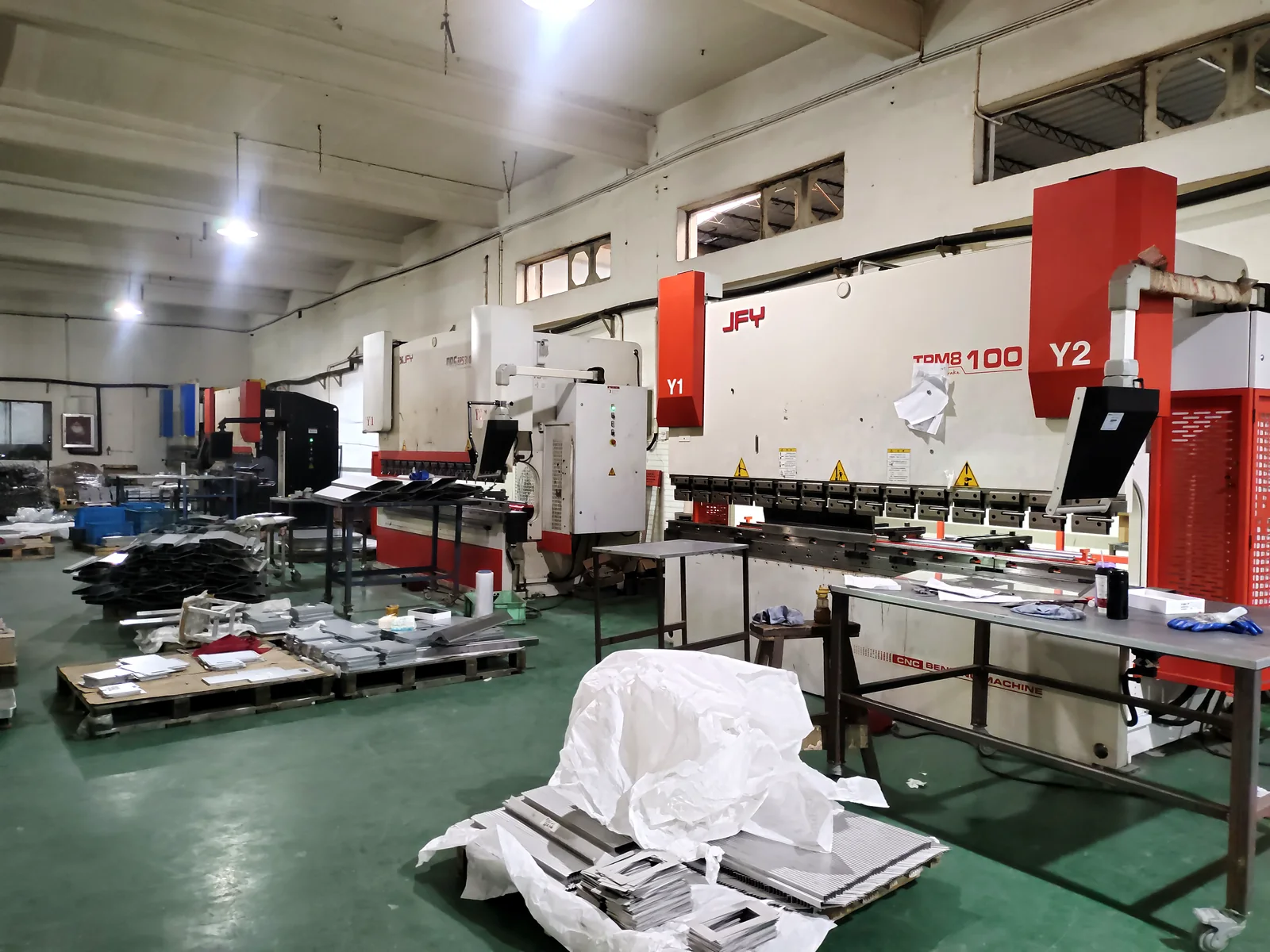
Because both routes sit in the same facility, we can also run the common real-world path: prototype and pilot on laser, then transition to a die once volume justifies it — with the same engineering team carrying the DFM knowledge across, instead of re-learning the part at a new supplier. Details on each route: our CNC laser cutting service and custom metal stamping parts pages.
Mistakes We See Repeatedly
- Tooling too early. A die built on revision A that never pays back because the design changed twice. Laser through pilot production is cheap insurance.
- Deciding on piece price alone. A $2.00 stamped part beats a $8.00 laser part only after 2,000 pieces in the example above. Below that, you overpaid in total cash.
- Ignoring secondary operations. Stamped parts nearly always need deburring; oxygen-cut steel usually needs edge prep before coating. Both belong in the comparison.
- No burr-height callout. Stamping meets the dimensional tolerance and the assembly still fails. Specify edge condition, not just size.
- Comparing quotes from different assumptions. Make sure both suppliers quoted the same material grade, thickness, finish and quantity — otherwise the comparison is meaningless.
Questions Buyers Ask About Laser Cutting vs Stamping
At what quantity does stamping become cheaper than laser cutting?
Industry data puts the typical crossover for 1.0–2.5 mm parts between 3,500 and 5,000 pieces, but the honest answer is part-specific. Use die cost ÷ (laser piece price − stamped piece price). Simple parts with a cheap die can break even below 2,000; complex parts needing shaving or coining may not break even until 25,000+.
Is laser cutting or stamping more accurate?
Different strengths. Laser holds ±0.05–0.10 mm on a profile with no mechanical stress. Stamping holds ±0.02–0.05 mm on hole position and formed features, with better piece-to-piece repeatability once the die is proven. For profile accuracy laser competes well; for repeating feature accuracy stamping is more stable.
Can I prototype with laser and move to stamping later?
Yes, and it is usually the best path. Laser has no tooling cost, so early revisions are free. Once the design is frozen and volume justifies the die, the same part transitions to stamping — ideally with the same supplier carrying the DFM knowledge forward.
How long does stamping tooling take?
Typically 4–8 weeks industry-wide for die design, tool steel machining, wire EDM and T1 sample approval. At Fulei Metal, tooling samples for standard progressive dies are scheduled after drawing review and process confirmation.
What is the minimum order for stamping?
Our stamping MOQ is 500 pieces. Below that, tooling cost per part is usually prohibitive — laser cutting is almost always the right answer.
What thickness can you stamp?
0.3–3.0 mm in SPCC, SUS304 and copper. Above roughly 3 mm, press tonnage and die wear rise sharply and laser cutting becomes the practical route.
Do stamped parts need deburring?
Almost always. A sheared edge leaves a burr on the breakout side, so stamped parts typically go through tumbling or vibratory deburring. Laser-cut stainless using nitrogen assist often needs no secondary edge work at all — a real cost difference worth including in your comparison.
Which is better for parts that will be bent afterwards?
Laser, generally. A stamped edge is work-hardened by the shearing action and can crack at the bend line, particularly on thicker or higher-strength material. If a stamped part must be formed, discuss edge condition and bend direction before tooling.
What drawings do you need to quote both options?
2D drawings with critical dimensions and tolerances, plus a 3D file (STEP, IGES or SolidWorks) when bends, clearances or assemblies need review. PDF and DWG/DXF are fine for flat cutting detail. See what drawings are needed for a sheet metal fabrication quote.
Can you quote if I only have a sample part and no drawings?
We can work from a physical sample for early discussion — we measure it and reverse-engineer a model. Accurate production quoting still needs confirmed drawings, because tolerance and finish responsibility has to be defined before either route is released.
Not Sure Which Route Fits Your Part?
Send the drawing, material, thickness and your realistic annual volume. We will quote both routes with the break-even worked out, and tell you plainly which one we would choose and why.
Request a QuoteThe Decision Is Really About Whether the Design Is Finished
Process comparisons usually start with quantity, and quantity matters, but the question that decides it first is whether the design is going to change. A progressive die is a commitment to a geometry; every revision after it is made costs tooling, and some revisions cannot be made at all without starting again. A laser program is a file. If there is any realistic chance of the part changing, that flexibility is worth more than the unit-cost difference, and it is why the volume threshold is never the whole answer.
- A design that is still changing should be laser cut even at volumes where stamping would be cheaper per part.
- A design that is frozen and repeated should be stamped, and the question is only when the amortisation works out.
- The break-even depends on how much of the tooling cost is amortised in one run versus across several years of orders. Those are different calculations with different answers.
What Stamping Buys Beyond Unit Cost, and What It Takes Away
The obvious benefit of stamping is a lower unit cost at volume, and the less obvious one is consistency: a die produces the same part every time, including features that are slow or awkward to cut – forms, embosses, coining, and holes pierced in the same operation. It also removes some operations entirely, because a part that comes out of a die already formed does not need a brake. What it takes away is flexibility, and it adds a lead time at the start that no amount of urgency shortens.
On the laser side, the advantage beyond flexibility is that there is no tooling risk: the first part and the thousandth are made the same way, and a drawing change is a new program. Edge quality and tolerance differ between the two processes in ways that matter on some features and not on others, and it is worth saying which features actually have a tight tolerance rather than applying one across the drawing. Send the part with the expected annual quantity and the expected design stability, and the comparison is made on both rather than on quantity alone. Lead time is quoted after drawing review and process confirmation.
What stands behind this quotation
- Manufacturing since 20162,500 m² Ningbo plant — 3 laser cutting machines (including newer TRUMPF), 4 CNC press brakes and 10 welding stations.
- Shipped to more than 30 export marketsEnclosures, cabinets and formed parts supplied to OEM buyers across Europe, North America and Asia.
- 123 documented product casesMedical device housings, HVAC and heat pump enclosures, agricultural and livestock equipment, industrial hydraulics, material handling trolleys and EV charging cabinets.
- Factory evidence you can checkTUV Rheinland audit reference MIC-ASI243729 and Bureau Veritas reference MIC-ASR263630 available for buyer review under NDA.
Before you send drawings: an NDA is signed on request · first-article inspection is carried out before a batch continues · pricing is staged from prototype quantity to repeat volume · pre-shipment photos and packing records are prepared when the project needs them.