
An enclosure rarely arrives complete from a laser cutter. Locks, hinges, seals, displays, readers and printers appear somewhere between the flat sheet and the finished unit, and somebody has to source them. Deciding who that somebody is — early, and in writing — removes a category of delay that has nothing to do with either party’s competence. This is how we see the line fall most often, and what it costs when nobody draws it.
Three Ways to Split Procurement
Every assembly project lands somewhere on a short spectrum:
The fabricator buys everything. One purchase order, one party accountable, and the simplest version for everyone. It works well when the parts are standard catalogue items with no brand or firmware attached. It adds margin handling and requires someone else to judge which equivalent is acceptable.
The buyer free-issues some parts. You purchase certain items and ship them to us before assembly. Usual for anything branded, licensed, security-relevant or expensive enough that your procurement terms beat ours.
Mixed, split by category. Most OEM programmes end up here. Consumable assembly hardware comes from us; the items carrying your identity or your firmware come from you.
None of these is the right answer in general. What matters is agreeing which one applies before anyone orders anything, because the two failure modes are different: if we buy something you wanted to control, you get a substitution you did not choose; if you intended to send something we assumed we were buying, assembly waits. The scope we work to for built-up units is set out on our enclosure assembly service page, and it starts from the same conversation.

What Usually Stays With the Buyer
Some categories rarely migrate to the fabricator, and for sensible reasons:
- Anything carrying your brand or user experience — branded handles, badge readers, touch displays, payment devices. Substituting an equivalent is not really an equivalent.
- Anything with firmware or configuration — small computers, networked controllers, printers. These need loading and testing by someone who owns the software.
- Anything carrying its own certification — a component that is certified as a product stays that supplier’s responsibility, and mixing that boundary creates ambiguity nobody benefits from.
- Security-critical items — locks where key control is yours, cylinders under your own suiteing.
- High-value items where your purchasing terms win — if you buy the same part in volume elsewhere, your price is probably better and your control is better.
The common thread is not price. It is whether a substitution is acceptable. If the answer is no, the part generally belongs with whoever owns the consequence.
What Belongs With the Fabricator
The reverse category is less about ownership and more about tolerance. Parts whose position or fit depends on the sheet metal should be our responsibility, because the drawing that defines them is the drawing we hold.
Inserted fasteners, studs and standoffs fall here: they are set into specific hole sizes in specific material thickness, and getting that pairing wrong is a fabrication error rather than a purchasing error. Our hardware installation page covers how those decisions are made before the first hole is cut.
Seals, gaskets and edge trim belong here for the same reason — their profile has to suit the folded geometry, and a gasket that arrives 2 mm different from what the flanges were designed around leaves a seam nobody can fix on site. If traceability matters for any of these items, our traceability page explains what documentation we keep and what we can pass on.
General-purpose assembly fasteners belong here too. Free-issuing boxes of screws is close to always a net loss: they cost little, they consume receiving and counting effort, and running out mid-build stops work for want of a part worth very little.
The Costs Nobody Puts on the Purchase Order
Free-issued parts are rarely free. They carry their own schedule, and the schedule is the expensive part:
Kitting. Assembly starts when the last part is on the bench, not when the first one arrives. A single missing bracket can hold up an order that is otherwise complete.
Incoming checks. Received parts get counted, visually checked and — where dimensions matter — sampled. That effort exists whether or not anybody writes it down, and it is worth deciding whose it is.
Damage and loss. A plated handle scratched in transit, a threaded insert from a batch with inconsistent plating: these need an owner before they happen, not after.
Fit failures. If a supplied part does not fit the metalwork, someone has to change something. Usually that something is our part, because the sheet is already cut — which makes it chargeable work for a problem neither party predicted.
This is why we ask for free-issue items to arrive complete, identified, and with a named contact for anything missing. It is also why we recommend keeping the free-issue list short: each line is another thing that can arrive late.
Freezing the Interface Before Anyone Orders Anything
There is one rule that prevents most of the above. Decide which dimensions cannot move, mark them on the drawing, and treat that set as frozen.
For a self-service or access-controlled unit, the frozen set is usually: door openings and their centres, lock preparation position and handing, fixing patterns for anything customer-supplied, and service access clearances. If a display has to sit behind a cut-out, that cut-out position and its relationship to the door and hinges should be agreed before the sheet is programmed, not after.
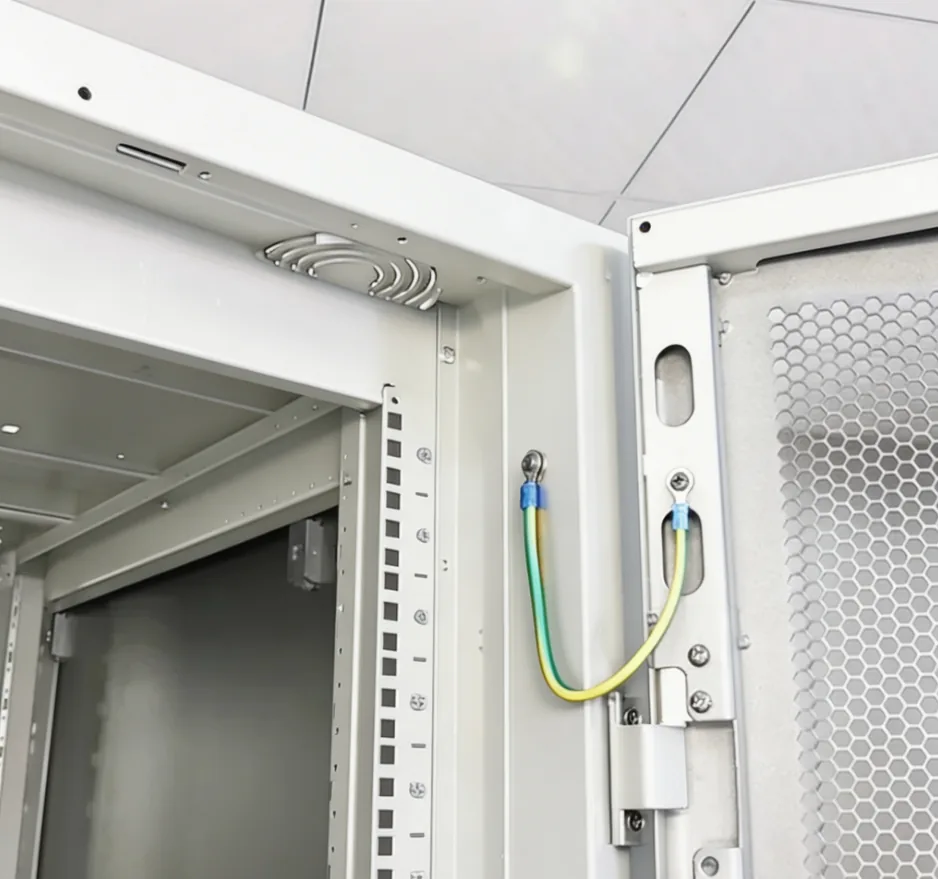
The practical effect is that later changes become visible as changes. Someone proposing to move a lock preparation sees immediately that it affects door swing, seal run and internal clearance. Without the frozen set, the same change looks like a small edit and arrives as a surprise at assembly.
Why Scale Must Never Change in the DXF
One specific habit causes more quiet grief than its size suggests. A DXF that has been scaled — usually to fit a different unit system — carries every dimension wrong by the same factor, and nothing about it looks wrong on screen. Holes land close enough to be plausible and far enough to reject every interface.
We check for this and will ask before quoting, but catching it at your end is faster. Send DXF files at true scale, state the units explicitly, and if the file has been converted, measure one known distance before sending. Our tolerance guide goes into how dimensions are verified against drawings.
The same care applies to revisions. If interface dimensions changed between revisions, say so rather than relying on the file — we cannot assume which version any given partner is working from, and a mid-job discovery means rework that nobody budgeted.
Scheduling Assembly Around Part Arrival
Assembly slot planning works backwards from two dates: when the metalwork is ready and when the free-issue parts are on the bench. Assembly begins on the later of the two, and it is nearly always the second.
This means lead time quoted from drawing approval assumes everything else is present. Where customer-supplied items have long lead times, tell us early and we can build and hold the metalwork while they arrive — useful, but it changes how the job is scheduled, so we need to know rather than discover it.
For programmes that repeat, the usual improvement is simple: agree the list once, keep it identical between orders, and let both sides plan around something stable. Our repeat assembly work described on this page depends on exactly that stability.
Questions We Get Asked About Supplied Parts
Can we send everything and you just assemble it?
Yes, and for branded or firmware items that is usually right. We ask that the list stays short and that everything arrives kitted before the assembly slot, because assembly starts when the last part arrives rather than the first.
Do you charge for fitting parts we supply?
Fitting is part of the assembly quote. What can be chargeable is rework: if a supplied part does not fit the metalwork, the sheet metal usually has to change, and that is additional work beyond the quoted assembly.
What happens if a part arrives damaged?
We photograph it, set it aside and ask you to decide: replacement or proceed. We do not install visibly damaged parts onto a finished unit without approval, because the finished appearance becomes our problem once it leaves.
Can you source the lock or display for us?
Sometimes, for standard items, when an equivalent is acceptable. Anything branded, certified or security-controlled generally sits better with you, since substitution is not really available.
How do we mark what cannot move on the drawing?
A short note listing the frozen dimensions and features, plus tolerances where they differ from the general note. If a revision later moves anything on that list, flag it explicitly rather than relying on the file alone.
Does free-issuing parts reduce the quoted price much?
Usually less than expected. The parts are a modest share of the total; the scheduling exposure is where the real cost sits, and it rises with the number of supplied lines rather than their value.
The Interface Has to Be Frozen Before Anyone Orders Anything
Splitting procurement between buyer and fabricator works well until someone changes one side of the interface. A lock that is sourced by the buyer and a door cut to a slightly different cut-out are both correct to their own drawings and do not fit together. The failure is never dramatic – it is discovered at assembly, by which time both parties have committed. The prevention is to freeze the interface dimensions in writing before either side places an order, and to name who owns the drawing that defines them.
- The cut-out belongs to whoever supplies the part that goes into it. The panel belongs to whoever supplies the panel. They have to be the same document, or one has to reference the other by revision.
- A part number is not a specification. A hinge described by part number from a supplier that has revised it is a different hinge.
- Sample parts should be measured, not copied. A hole pattern taken off a physical sample carries the sample’s own tolerance.
Supplied Parts Arrive Late, and That Is a Scheduling Fact Rather Than a Complaint
An assembly schedule built on the assumption that customer-supplied hardware will arrive when it is needed is a schedule that will slip. The parts that are supplied rather than bought are almost always the ones with the longest and least controllable lead times – locks, seals, displays, specialised fasteners – and they sit on the critical path of an otherwise straightforward build. Saying this early is not criticism of anyone’s purchasing, it is what the schedule has to be built around.
The practical arrangement is to kit by unit rather than by part type, so a short delivery affects fewer units rather than all of them, and to confirm the arrival date against the build date rather than against the order date. Tell us what you intend to supply and we will tell you what has to be on the bench and by when for the assembly to run, and we will say so before the schedule is agreed rather than after it slips. Lead time is quoted after drawing review and process confirmation.
What stands behind this quotation
- Manufacturing since 20162,500 m² Ningbo plant — 3 laser cutting machines (including newer TRUMPF), 4 CNC press brakes and 10 welding stations.
- Shipped to more than 30 export marketsEnclosures, cabinets and formed parts supplied to OEM buyers across Europe, North America and Asia.
- 123 documented product casesMedical device housings, HVAC and heat pump enclosures, agricultural and livestock equipment, industrial hydraulics, material handling trolleys and EV charging cabinets.
- Factory evidence you can checkTUV Rheinland audit reference MIC-ASI243729 and Bureau Veritas reference MIC-ASR263630 available for buyer review under NDA.
Before you send drawings: an NDA is signed on request · first-article inspection is carried out before a batch continues · pricing is staged from prototype quantity to repeat volume · pre-shipment photos and packing records are prepared when the project needs them.