


Industrial LED Light Housing
SKU: FL-IN-017
Aluminum LED light housing for industrial high-bay fixtures. IP65.
| Material | Aluminum 6063 (extrusion + sheet metal) |
|---|---|
| Manufacturing Process | Extrusion + CNC machining + anodizing |
| Surface Finish | Anodized (silver/black) |
| Tolerance | ±0.2mm |
| Dimensions | Custom (typical 300×200×100mm) |
| IP rating | IP65 |
| Heat dissipation | Optimized fin design |
| Wattage | 100-300W compatible |
| MOQ | 100 units |
| Lead Time | Quoted after drawing review and process confirmation |
| Sample Time | Quoted after drawing review and process confirmation |
| Sample Fee | USD 180 |
| Price Range | USD 35-75/unit |
| Applications | Industrial lighting, warehouses, factories |
| Compliance | UL 1598, IEC 60598 |
| Export Markets | USA, Germany, Middle East |
How This Industrial LED Light Housing Is Fabricated and Checked
A light housing is a heat and sealing part as much as a sheet metal one. The LED engine is sensitive to both, and the housing geometry decides how well the fixture survives.
| Stage | What happens | What is verified before the job moves on |
|---|---|---|
| Housing and cover forming | Body and cover formed, with reflector surfaces formed where specified | Form and flatness, since a cover that does not seat evenly will not compress its gasket |
| Heat management provision | Heat sink interface, mounting face or thermal path formed as designed | Flatness against the heat sink or thermal interface. A gap there becomes a hot spot in service |
| Seam welding | Body seams welded, or folded and sealed where the design allows | Weld quality at the sealing land, and that no bead sits where the gasket seats |
| Gasket and diffuser fitting | Gasket and diffuser fitted as designed | That the gasket sits without tension and the diffuser is clear along its full length |
| Entry and cable provision | Cable entries and glands fitted | Entry position and thread condition. An over-tightened gland on a thin wall cracks the wall |
| Surface preparation and coating | Degrease, phosphate and powder coat, or mill finish, to the specification | Film thickness, and that no coating sits on a thermal interface that has to conduct |
| Assembly and function check | LED engine and driver fitted where in scope; function and earthing checked | That the fixture runs, the earth path is continuous, and the diffuser is not loaded |
| Packing | Individually protected, with the diffuser kept clear of contact | That diffusers and covers arrive unbowed, which is the most common transit damage |
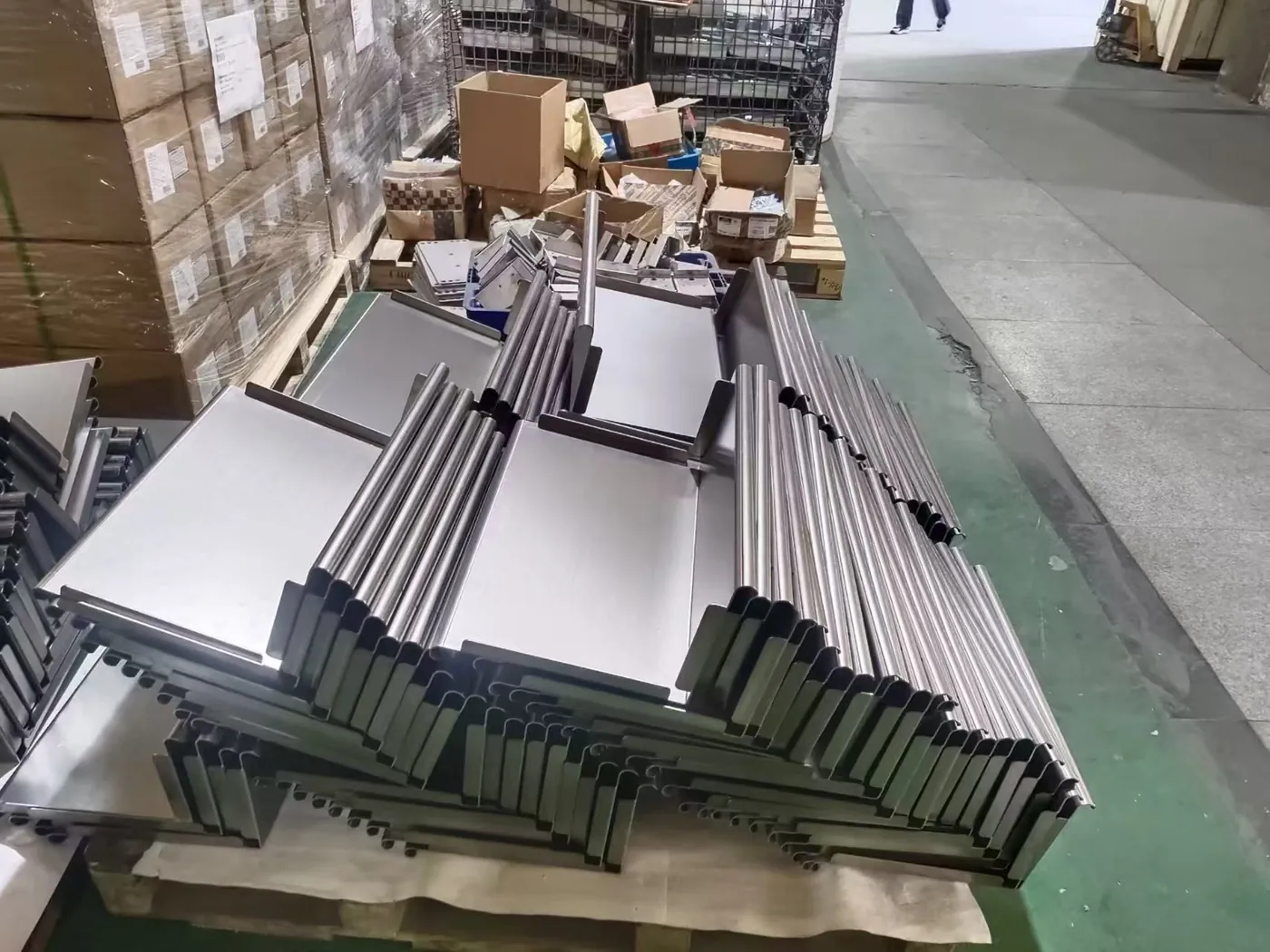
Revisions That Skip New Tooling on Industrial LED Light Housing
Section, diffuser and thermal interface are the three decisions that carry the rest of the fixture.
| What can be changed | What it affects | What it does not affect |
|---|---|---|
| Fixture length and section | Body development and diffuser length | The thermal concept, provided the surface area stays adequate |
| Diffuser type: flat, prismatic or impact-rated | Gasket design and cover stiffness | The body |
| Ingress protection | Gasket specification, sealing land and entry treatment | The external size |
| Heat sink and thermal interface | Flatness requirement and whether surfaces are masked | The housing geometry |
| Mounting: bracket, pendant or recessed | Mounting provision and the fixing pattern | The body |
| Finish and colour | Specification and appearance | Nothing structural |
What Buyers Usually Ask About Industrial LED Light Housing
Why does flatness matter against a heat sink?
Because the thermal path depends on contact. A gap or a bow at that interface concentrates heat away from the sink, and the failure appears as reduced life rather than as an immediate fault. That is why thermal interfaces are masked and checked before assembly.
Can the housing be sealed and still be serviceable?
Yes, with a sealing land that lets the cover be removed and refitted without replacing the gasket each time, and with entries that stay accessible. It is a decision made at the sealing land rather than something added afterwards.
What finishes are used on light housings?
Powder coat for indoor and general use, and mill stainless or a specific marine-grade treatment for corrosive environments. The site decides the requirement, and the finish also affects how the housing dissipates heat, so the two are considered together.
Sealing and heat are the two failure modes on a light fixture, and both are decided in the housing. Send the LED load and the environment through the RFQ form so the section and the finish are chosen against them. Related: surface finishing, CNC bending and metal enclosure manufacturing.
Heat Is the Design Problem, Not the Finish
An LED housing is a thermal component. The light engine’s life is set by how hot the junction runs, and the junction temperature is set by how well the housing moves heat into the air. That makes the housing’s job finning, mass and contact with the LED board – and it makes flatness of the mounting face critical, because an air gap under the board is thermal insulation. We hold that face flat and specify the surface contact the drawing calls for, and we will say when a proposed section has too little mass for the dissipation figure.
- The LED mounting face is machined or flattened to the figure on the drawing, not left as-cut.
- Fins or convection area are sized to the dissipation, with the orientation of the fitting considered.
- Thermal interface material and the mounting torque are part of the assembly instruction, not site choices.
Sealing, Glazing and Optical Parts
Beyond heat, the housing has to keep water and dust out and hold the optical parts in alignment. Gasket lands need to be continuous and compressed evenly, which means the door or lens frame needs enough stiffness to compress rather than bow – a common failure on large fittings. Lens and reflector location is a dimensional question: a reflector that sits a millimetre out of position changes the beam, so the locating features are made in the tooling rather than adjusted at assembly.
Photometric performance, ingress rating and the safety certification of the finished luminaire are established by testing the assembled fitting, and that testing belongs to the luminaire manufacturer and the body they appoint. We supply the housing to the drawing with the dimensional and material checks it specifies. Lead time is quoted after drawing review and process confirmation.
Payment Terms
How a project is paid for is agreed before production starts, and the structure that applies to your order is stated on the quotation and on the order confirmation, so there is no ambiguity later.
- 30% advance payment with the order and the 70% balance before shipment — our standard structure.
- 70% advance payment with the order and the 30% balance before shipment — used for some projects.
- 100% payment in advance before production starts — used for some projects.
If your finance team works to a fixed structure, say so in the first enquiry and we will confirm what applies to your order before you commit. Request a quotation.
Questions buyers ask before sending drawings
The questions that come up most often before a project starts, answered the way we answer them by email.
What do you need from me to quote Industrial LED Light Housing?
2D drawings as PDF, DWG or DXF, or 3D files as STEP, IGES or SolidWorks, together with material grade, sheet thickness, surface finish, quantity and destination country. If the drawing is not finished yet, send a photo, a sketch or the existing part instead — we review what can be measured from it and reply with the questions that still need answering.
How long does a quotation take?
Enquiries are answered within one business day. Simple laser-cut and bent parts are quoted within 24 hours. Welded frames, assembled units and multi-part structures are quoted after the drawing review and process confirmation, and the date is confirmed in our reply.
Is there a minimum order quantity?
Prototypes are made from a single piece and small batches of 10–50 pieces are routine. Prototype, first batch and repeat volume are quoted together so the numbers stay consistent as the project scales.
Can you work from a sample or a photo if I have no drawing?
Yes. Send the part itself, clear photographs with a rule or caliper in frame, or a dimensioned sketch. We measure what can be measured, list what is still undefined, and confirm it with you before production.
Need a Similar Part?
Most enquiries that start on a page like this are not an order for Industrial LED Light Housing — they are a search for a factory that can make something like it. Send us your drawing, 3D model or sample and we will review the manufacturing process and the quotation requirements, then come back with a process plan, a price and a lead time.
We work from 2D drawings, STEP / DWG / DXF / PDF files, or a physical sample if that is all you have.
No complete drawings yet? Describe the part, send photos or a sketch, or send a sample — we can start from there. Discuss your project.
Trade Terms and Delivery
We quote under the standard Incoterms your logistics team already works with, and build the packing and documentation around the one you choose.
- EXW — you collect from our Ningbo facility and run export clearance through your own forwarder.
- FOB Ningbo — we deliver to the vessel at Ningbo port and handle export clearance.
- CIF — we cover carriage and insurance to your named destination port.
- DDP — we handle carriage, insurance, import clearance and duties through to your door.
Send your destination country, target delivery date and preferred trade term together with the drawing. Request a quotation.
Quotation Time
We quote from your drawings. How long that takes depends on what the part asks for:
- Simple parts — quoted within 24 hours. Laser-cut blanks and bent components, supplied with complete 2D or 3D drawings. Mon–Fri, GMT+8.
- Complex assemblies — quoted after the drawing review. Payment kiosks, multi-part welded frames, enclosures with purchased hardware, or anything needing a coating or assembly trial. We confirm a quotation date once the scope is clear.
Production lead time is quoted separately, after drawing review and process confirmation. Send your drawings.
What stands behind this quotation
- Manufacturing since 20162,500 m² Ningbo plant — 3 laser cutting machines (including newer TRUMPF), 4 CNC press brakes and 10 welding stations.
- Shipped to more than 30 export marketsEnclosures, cabinets and formed parts supplied to OEM buyers across Europe, North America and Asia.
- 123 documented product casesMedical device housings, HVAC and heat pump enclosures, agricultural and livestock equipment, industrial hydraulics, material handling trolleys and EV charging cabinets.
- Factory evidence you can checkTUV Rheinland audit reference MIC-ASI243729 and Bureau Veritas reference MIC-ASR263630 available for buyer review under NDA.
Before you send drawings: an NDA is signed on request · first-article inspection is carried out before a batch continues · pricing is staged from prototype quantity to repeat volume · pre-shipment photos and packing records are prepared when the project needs them.