

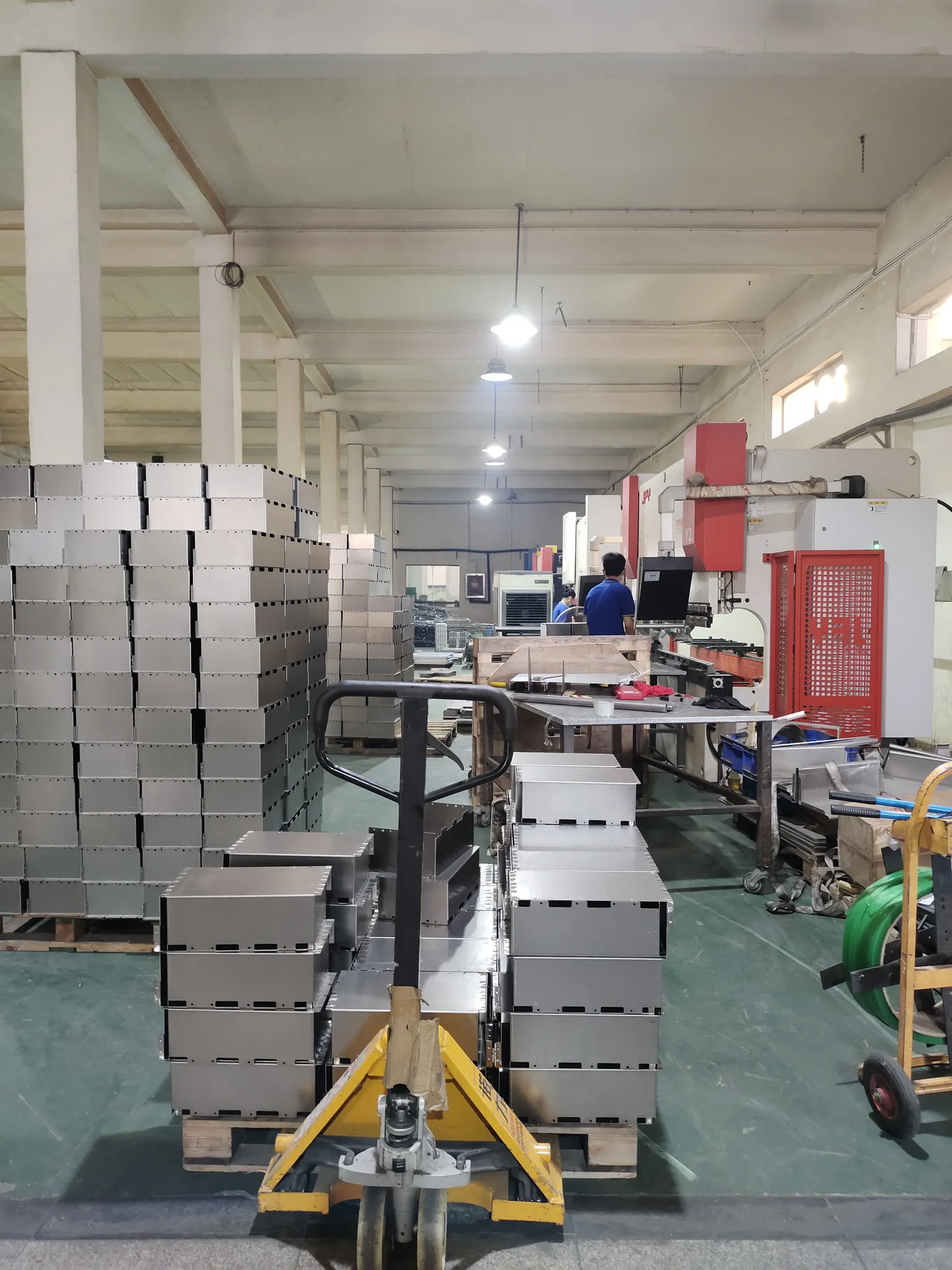
Wall-Mount Tissue Holder
SKU: FL-HO-009
SUS 304 stainless wall-mount tissue holder. Waterproof.
| Material | SUS 304 stainless steel (1.0mm) |
|---|---|
| Manufacturing Process | Laser cutting + bending + TIG welding + brushing |
| Surface Finish | Brushed stainless |
| Tolerance | ±0.3mm |
| Dimensions | 250×120×80mm |
| Capacity | 1 standard tissue box |
| Mounting | Wall screws |
| MOQ | 200 units |
| Lead Time | Quoted after drawing review and process confirmation |
| Sample Time | Quoted after drawing review and process confirmation |
| Sample Fee | USD 60 |
| Price Range | USD 15-28/unit |
| Applications | Bathrooms, kitchens, offices |
| Compliance | FDA, REACH |
| Export Markets | USA, Germany, Japan |
How This Wall-Mount Tissue Holder Is Fabricated and Checked
A wall-mounted tissue holder is one of the smallest parts in a range and one of the most revealing to make. It is a folded stainless shell with an opening, it lives in a wet room, and it is handled every day. The three things that decide whether it feels like a quality product are edge condition, the alignment between the opening and the box inside, and the fixing.
The brushing is a controlled operation with a single grain direction, described under surface finishing.| Stage | What happens | What is verified before the job moves on |
|---|---|---|
| Cutting | 304 stainless at 1.0 mm is laser cut. The opening, the wrap-around shell and the mounting holes are cut in one operation. | The opening is checked against the drawing. Its size and position are set by the cut, and it is the dimension that decides whether the tissue feeds cleanly or tears. |
| Bending | The shell is folded. Cut edges that a hand will touch are folded into a hem rather than left as a cut edge. | The hem is checked for a consistent roll and for tightness. A 1.0 mm cut edge left exposed is the most common complaint on this type of product, and a hem is the answer to it. |
| Welding | TIG welding closes the shell where a hem is not practical, typically the end returns. | Weld beads are checked on the inside faces. A bead sitting proud on the inside can foul the tissue box as it is loaded. |
| Weld cleaning and passivation | Heat tint is removed and the surface is treated to restore the passive layer. | Tint removal is inspected visually under the same lighting used for the final check, so a pale tint is not passed simply because it is hard to see. |
| Brushing | Visible faces are brushed in a single direction. | Grain direction is checked against the reference part. On a small part a change of direction across a fold is immediately visible when light rakes across it. |
| Assembly check and packing | A sample box is loaded to confirm the fit, then the part is wrapped and packed. | A standard tissue box is loaded into the finished part as the last check. Parts are packed so the hem is protected and the shell cannot be pushed out of shape in transit. |
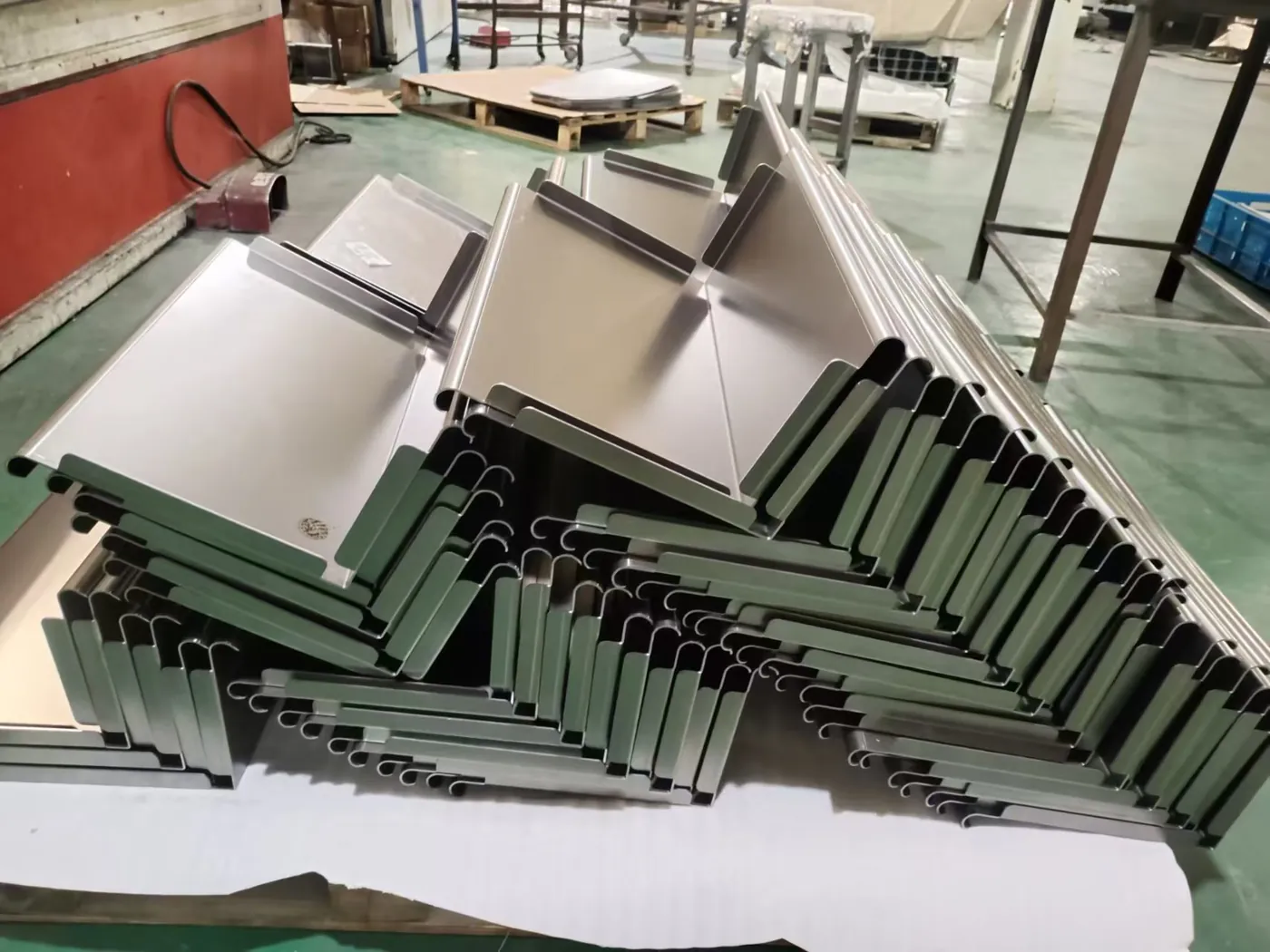
Adjusting Wall Mount Tissue Holder Without New Tooling
The holder is cut and folded from flat sheet, so size and layout changes are open. What needs deciding early is the fixing, because it is cut into the same blank.
| What can be changed | What it affects | What it does not affect |
|---|---|---|
| Overall size of the shell | Flat pattern and the hem allowance | The thickness of material used |
| Size and position of the opening | Cut file only | The folded form of the shell |
| Mounting hole pattern and spacing | Site fixing and the wall surface | The shell geometry |
| Open front or a lid | Additional folding and a hinge or clip detail | The wall fixing |
| Finish – brushed stainless or a coated finish | Surface treatment route | Any of the folded dimensions |
Wall Mount Tissue Holder Questions, Answered
Can it be sized for a different tissue box?
Yes, but the three dimensions have to move together: the internal cavity, the opening, and the clearance between the opening and the point where the box feeds. Enlarging the cavity on its own is the common mistake – the box then shifts while it is being used and the sheet tears. Send one sample box of the type you intend to supply and the cavity and opening will be set from it.
How do you stop the edges from being sharp?
The edges along the opening are folded into a hem rather than deburred. Deburring removes the burr but leaves a square 1.0 mm edge, which is still uncomfortable and still cuts. A hem rolls the edge back on itself, so what the hand meets is a radius. On this product it is a design feature rather than a finishing step, which is why it has to be allowed for in the flat pattern.
Why specify 304 stainless rather than coated steel?
A bathroom is a permanently damp environment that also gets cleaned with aggressive products. On coated steel, any break in the coating becomes a corrosion site and the damage spreads under the coating edge. Stainless has no coating to break. The one thing to watch is chlorides: some household cleaners contain them and 304 can pit under repeated exposure, so if the environment is heavily chlorinated, say so and we will discuss whether a different grade is worth the cost.
Send the tissue box you intend to use, or its dimensions, plus the wall construction. The opening and the fixing pattern are both set at the cut stage, and both are much easier to agree before the first batch than to correct afterwards. Request a quotation.
Hand-checked details like the hem are recorded on the batch record – see quality inspection for how that works.
A Bathroom Bracket Fails at the Fixing, Not in the Steel
A wall-mount tissue holder is a small stainless part holding a consumable that gets pulled at several times a day, one-handed, often by someone not looking at it. The 1.0 mm SUS 304 body is far stronger than it needs to be for the load. What decides whether the holder is still on the wall in two years is the fixing and the wall behind it – a bracket that is perfectly adequate on a stud partition will work loose in tile over plasterboard, and it will pull out of a hollow wall unless the fixing is specified for that substrate.
- The pull on a tissue holder is sideways and downward at the same time, which is a worse case than a straight vertical load. Fixings should be specified for the combined direction.
- Standing the body off the wall by a small amount lets the area behind it dry. A bracket fixed flat against a tiled wall in a bathroom holds moisture behind it permanently.
- Brushed finish is specified because it hides fingerprints and water spotting. Polished stainless in a bathroom shows every touch, which is why the same part is sold both ways and why one of them gets returned more often.
1.0 mm Stainless: What TIG Welding Does to a Thin Section
At 1.0 mm the material is thinner than most people expect, and the welding is the risky part of the job rather than the cutting. TIG gives a clean, controllable bead on a section this light, but it also puts heat into a small area, and heat on thin stainless is what causes distortion and what leaves heat tint behind. Heat tint is not cosmetic – it is an oxide layer with different corrosion behaviour from the surrounding surface, and on a part that lives in a wet room it is where staining starts.
We weld these with a controlled heat input and dress the weld so the finish runs across it, and we hold the 0.3 mm tolerance on the fixing centres because that is the dimension that has to line up with holes someone drilled in a wall. If your installation uses a concealed fixing rather than a face-fixed one, send the backplate detail – it changes the forming, not the material. Lead time is quoted after drawing review and process confirmation.
Payment Terms
How a project is paid for is agreed before production starts, and the structure that applies to your order is stated on the quotation and on the order confirmation, so there is no ambiguity later.
- 30% advance payment with the order and the 70% balance before shipment — our standard structure.
- 70% advance payment with the order and the 30% balance before shipment — used for some projects.
- 100% payment in advance before production starts — used for some projects.
If your finance team works to a fixed structure, say so in the first enquiry and we will confirm what applies to your order before you commit. Request a quotation.
Questions buyers ask before sending drawings
The questions that come up most often before a project starts, answered the way we answer them by email.
What do you need from me to quote Wall-Mount Tissue Holder?
2D drawings as PDF, DWG or DXF, or 3D files as STEP, IGES or SolidWorks, together with material grade, sheet thickness, surface finish, quantity and destination country. If the drawing is not finished yet, send a photo, a sketch or the existing part instead — we review what can be measured from it and reply with the questions that still need answering.
How long does a quotation take?
Enquiries are answered within one business day. Simple laser-cut and bent parts are quoted within 24 hours. Welded frames, assembled units and multi-part structures are quoted after the drawing review and process confirmation, and the date is confirmed in our reply.
Is there a minimum order quantity?
Prototypes are made from a single piece and small batches of 10–50 pieces are routine. Prototype, first batch and repeat volume are quoted together so the numbers stay consistent as the project scales.
Can you work from a sample or a photo if I have no drawing?
Yes. Send the part itself, clear photographs with a rule or caliper in frame, or a dimensioned sketch. We measure what can be measured, list what is still undefined, and confirm it with you before production.
Need a Similar Part?
Most enquiries that start on a page like this are not an order for Wall-Mount Tissue Holder — they are a search for a factory that can make something like it. Send us your drawing, 3D model or sample and we will review the manufacturing process and the quotation requirements, then come back with a process plan, a price and a lead time.
We work from 2D drawings, STEP / DWG / DXF / PDF files, or a physical sample if that is all you have.
No complete drawings yet? Describe the part, send photos or a sketch, or send a sample — we can start from there. Discuss your project.
Trade Terms and Delivery
We quote under the standard Incoterms your logistics team already works with, and build the packing and documentation around the one you choose.
- EXW — you collect from our Ningbo facility and run export clearance through your own forwarder.
- FOB Ningbo — we deliver to the vessel at Ningbo port and handle export clearance.
- CIF — we cover carriage and insurance to your named destination port.
- DDP — we handle carriage, insurance, import clearance and duties through to your door.
Send your destination country, target delivery date and preferred trade term together with the drawing. Request a quotation.
Quotation Time
We quote from your drawings. How long that takes depends on what the part asks for:
- Simple parts — quoted within 24 hours. Laser-cut blanks and bent components, supplied with complete 2D or 3D drawings. Mon–Fri, GMT+8.
- Complex assemblies — quoted after the drawing review. Payment kiosks, multi-part welded frames, enclosures with purchased hardware, or anything needing a coating or assembly trial. We confirm a quotation date once the scope is clear.
Production lead time is quoted separately, after drawing review and process confirmation. Send your drawings.
What stands behind this quotation
- Manufacturing since 20162,500 m² Ningbo plant — 3 laser cutting machines (including newer TRUMPF), 4 CNC press brakes and 10 welding stations.
- Shipped to more than 30 export marketsEnclosures, cabinets and formed parts supplied to OEM buyers across Europe, North America and Asia.
- 123 documented product casesMedical device housings, HVAC and heat pump enclosures, agricultural and livestock equipment, industrial hydraulics, material handling trolleys and EV charging cabinets.
- Factory evidence you can checkTUV Rheinland audit reference MIC-ASI243729 and Bureau Veritas reference MIC-ASR263630 available for buyer review under NDA.
Before you send drawings: an NDA is signed on request · first-article inspection is carried out before a batch continues · pricing is staged from prototype quantity to repeat volume · pre-shipment photos and packing records are prepared when the project needs them.