
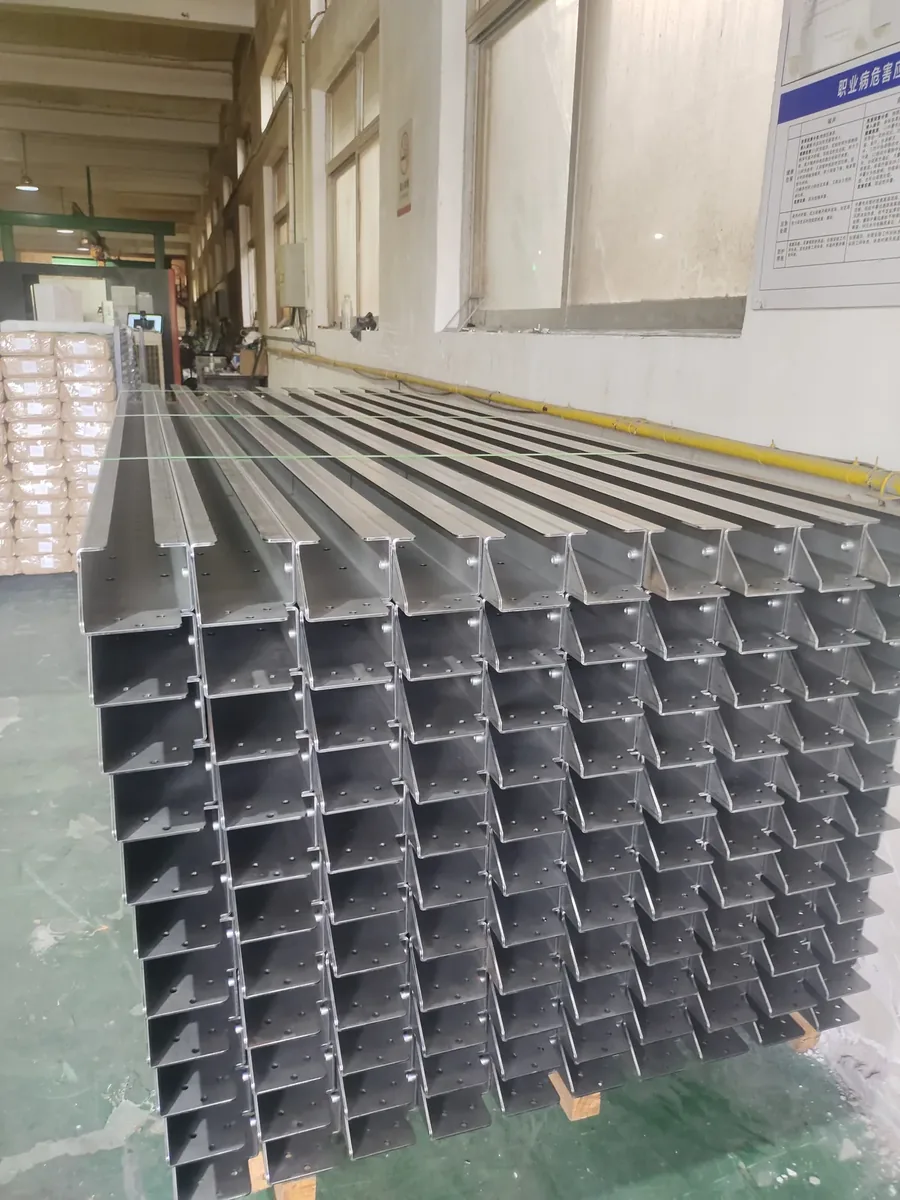
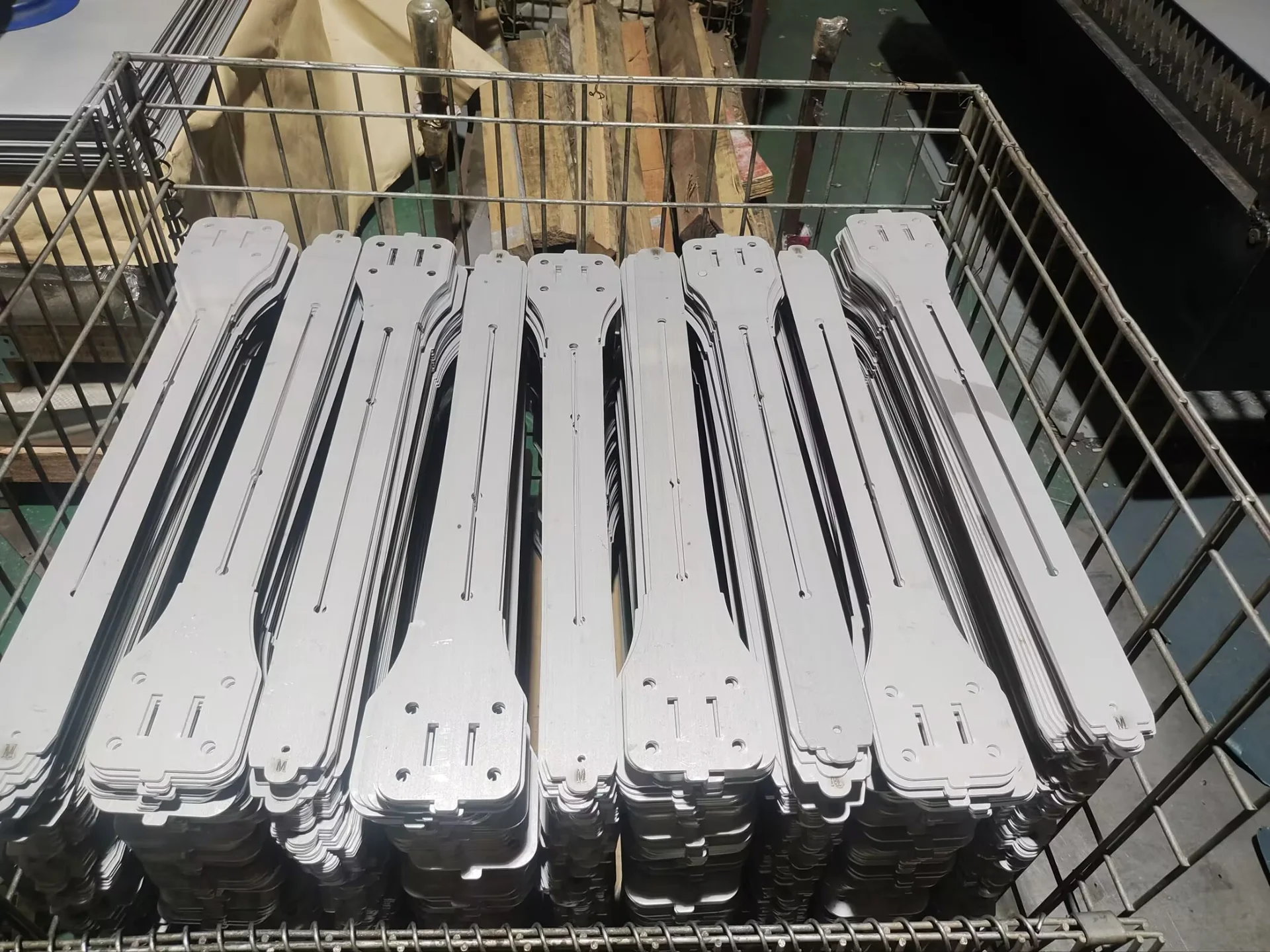
Bearing Block
SKU: FL-MA-008
Custom bearing block housing. Cast iron or fabricated steel.
| Material | Cast iron / fabricated steel |
|---|---|
| Manufacturing Process | Casting or laser cutting + welding |
| Surface Finish | Machined / painted |
| Tolerance | ±0.05mm (machined surfaces) |
| Dimensions | Custom |
| Bore precision | ±0.05mm |
| Mounting | Bolt-on |
| Static load | Up to 500kN |
| MOQ | 30 units |
| Lead Time | Quoted after drawing review and process confirmation |
| Sample Time | Quoted after drawing review and process confirmation |
| Sample Fee | USD 150 |
| Price Range | USD 60-250/unit |
| Applications | Industrial machinery, conveyors |
| Compliance | ISO 15, JIS B 1511 |
| Export Markets | USA, Germany, Japan |
Bearing blocks support shaft bearings in rotating equipment, maintaining shaft alignment and supporting radial and axial loads. These components must provide precise bearing positioning while withstanding operational loads and vibration.
Bearing Block Types
Pillow block supports mount bearings on horizontal surfaces with split housing. Flange block supports mount bearings on vertical surfaces. Take-up block supports allow bearing position adjustment for belt tensioning. Hanger block supports suspend bearings from overhead structures. Stepped block supports accommodate different shaft heights. Multi-shaft block supports support multiple shafts in a single block.
Cast Iron or Fabricated Steel for Bearing Blocks
Cast iron is traditional for bearing blocks, but sheet metal fabrication provides alternatives for specific applications. Cold-rolled steel (3.0 to 6.0 mm) provides supports for medium-duty applications. Stainless steel (grade 304) provides supports for food processing and corrosive environments. For heavy-duty applications, thicker steel (6.0 to 10.0 mm) provides necessary strength. Powder coating provides corrosion protection and appearance.
Design Considerations for Bearing Alignment
Blocks must maintain bearing alignment under load without deflection. Bearing mounting surfaces must be flat and parallel for proper bearing installation. Mounting holes must match standard bearing housing dimensions. Blocks must resist vibration-induced loosening. All edges must be smooth for safety. Blocks must accommodate shaft rotation without interference. Lubrication access must be provided for bearing maintenance. Designs must be compatible with standard bearing dimensions and housing configurations.
How Bearing Blocks Are Machined
Our TRUMPF fiber laser cuts block blanks, mounting plates, and reinforcement gussets from flat sheet stock with precise bearing mounting hole patterns. CNC press brake machines form block profiles, mounting flanges, and reinforcement bends. Some designs incorporate welded tube or bar sections for additional strength. Component assembly uses MIG welding for steel and TIG welding for stainless steel, with mounting surfaces ground flat. Surface treatments include powder coating and galvanizing.
Field Notes: Bearing Blocks and Support Components
A bearing block is a locating part, so the dimensions that matter are the ones that set the position and fit of the bearing rather than the outside size of the block. The bore is machined after forming rather than formed and left, because welding and folding move a part slightly and a bearing seat cannot move at all. The bore has to be round and true to the mounting face, not just to size – a bearing pressed into a slightly oval bore will run tight and fail early, and the fault will appear as a bearing problem rather than a housing problem. Two further details matter on support components of this type: the mounting holes are positioned from the bore rather than from the outside of the block, and the block is checked for flatness on its mounting face, since a block that rocks when it is bolted down will distort the bore by clamping it.
A bearing block is a small part with a tight job: hold a shaft in position under load, keep that position while the machine runs, and let the bearing be replaced when it eventually wears. Everything on the drawing is in service of those three things.
What a Bearing Block Has to Hold
The parts on this page are produced in cast iron or as a fabricated steel weldment, with the machined surfaces held to ±0.05 mm. That figure applies to the bore and to the machined mounting face, and it is worth being explicit about which is which on the drawing — a block can be bored accurately and still misalign a shaft if the bore axis is not square to the face it bolts against.
Static loads up to 500 kN are quoted for this part type. Load capacity is not the interesting constraint on a fabricated block; the interesting constraint is stiffness at the bolted joint. A block that deflects under load changes the bearing’s internal clearance, and the bearing fails early even though nothing on the block has broken.
Choosing Between Cast Iron and a Fabricated Weldment
- Volume and design stability — casting costs a pattern and pays it back over quantity. A weldment costs nothing up front and accommodates changes between batches.
- Damping — cast iron damps vibration better than a steel fabrication. Where the machine is noisy or the bearing is running near a resonant condition, that matters more than strength.
- Machining allowance — a casting needs enough material at the machined faces to clean up; a weldment needs the weld sequence planned so the machined faces do not move after welding.
- Stress relieving — both routes may need it before finish machining. It belongs in the process plan, not in a note added later.
Where a bearing has to meet a dimensional standard such as ISO 15 or JIS B 1511, that is a bearing standard: the bearing itself is bought to it by whoever assembles the machine. Our scope is the block as drawn — bore geometry, mounting face, bolt pattern and material.
How Bearing Blocks Are Machined and Checked
The route is casting or laser cutting and welding, then machining of the bore and the mounting faces. Machining is referenced to the datums the drawing uses, not to whatever face is most convenient to clamp, because the difference is exactly the misalignment described above. Where the block is welded, finish machining happens after the weldment has been stabilised.
Inspection follows the buyer drawing and the approved sample: bore diameter, bore-to-face relationship, bolt hole pattern and the flatness of the mounting face. Material documentation is issued with the batch so the casting heat or the steel certificate can be traced — see material certification and traceability. Machined faces are protected for shipment and the parts are packed so they cannot knock together; see export packaging standards.
Cast or fabricated for our volume?
Send the annual quantity and the revision history of the design. Below a few hundred a year, or while the design is still moving, a weldment usually costs less in total.
Can you work to our existing block drawing?
Yes. Send the drawing with the tolerances and datum scheme marked; the datum scheme is what determines how we hold the part for machining.
What to Send for Bearing Block Pricing
Geometry with tolerances and datums, material, quantity split between samples and batch, and destination. Timing is quoted after drawing review and process confirmation.
Payment Terms
How a project is paid for is agreed before production starts, and the structure that applies to your order is stated on the quotation and on the order confirmation, so there is no ambiguity later.
- 30% advance payment with the order and the 70% balance before shipment — our standard structure.
- 70% advance payment with the order and the 30% balance before shipment — used for some projects.
- 100% payment in advance before production starts — used for some projects.
If your finance team works to a fixed structure, say so in the first enquiry and we will confirm what applies to your order before you commit. Request a quotation.
Questions buyers ask before sending drawings
The questions that come up most often before a project starts, answered the way we answer them by email.
What do you need from me to quote Bearing Block?
2D drawings as PDF, DWG or DXF, or 3D files as STEP, IGES or SolidWorks, together with material grade, sheet thickness, surface finish, quantity and destination country. If the drawing is not finished yet, send a photo, a sketch or the existing part instead — we review what can be measured from it and reply with the questions that still need answering.
How long does a quotation take?
Enquiries are answered within one business day. Simple laser-cut and bent parts are quoted within 24 hours. Welded frames, assembled units and multi-part structures are quoted after the drawing review and process confirmation, and the date is confirmed in our reply.
Is there a minimum order quantity?
Prototypes are made from a single piece and small batches of 10–50 pieces are routine. Prototype, first batch and repeat volume are quoted together so the numbers stay consistent as the project scales.
Can you work from a sample or a photo if I have no drawing?
Yes. Send the part itself, clear photographs with a rule or caliper in frame, or a dimensioned sketch. We measure what can be measured, list what is still undefined, and confirm it with you before production.
Need a Similar Part?
Most enquiries that start on a page like this are not an order for Bearing Block — they are a search for a factory that can make something like it. Send us your drawing, 3D model or sample and we will review the manufacturing process and the quotation requirements, then come back with a process plan, a price and a lead time.
We work from 2D drawings, STEP / DWG / DXF / PDF files, or a physical sample if that is all you have.
No complete drawings yet? Describe the part, send photos or a sketch, or send a sample — we can start from there. Discuss your project.
Trade Terms and Delivery
We quote under the standard Incoterms your logistics team already works with, and build the packing and documentation around the one you choose.
- EXW — you collect from our Ningbo facility and run export clearance through your own forwarder.
- FOB Ningbo — we deliver to the vessel at Ningbo port and handle export clearance.
- CIF — we cover carriage and insurance to your named destination port.
- DDP — we handle carriage, insurance, import clearance and duties through to your door.
Send your destination country, target delivery date and preferred trade term together with the drawing. Request a quotation.
Quotation Time
We quote from your drawings. How long that takes depends on what the part asks for:
- Simple parts — quoted within 24 hours. Laser-cut blanks and bent components, supplied with complete 2D or 3D drawings. Mon–Fri, GMT+8.
- Complex assemblies — quoted after the drawing review. Payment kiosks, multi-part welded frames, enclosures with purchased hardware, or anything needing a coating or assembly trial. We confirm a quotation date once the scope is clear.
Production lead time is quoted separately, after drawing review and process confirmation. Send your drawings.
What stands behind this quotation
- Manufacturing since 20162,500 m² Ningbo plant — 3 laser cutting machines (including newer TRUMPF), 4 CNC press brakes and 10 welding stations.
- Shipped to more than 30 export marketsEnclosures, cabinets and formed parts supplied to OEM buyers across Europe, North America and Asia.
- 123 documented product casesMedical device housings, HVAC and heat pump enclosures, agricultural and livestock equipment, industrial hydraulics, material handling trolleys and EV charging cabinets.
- Factory evidence you can checkTUV Rheinland audit reference MIC-ASI243729 and Bureau Veritas reference MIC-ASR263630 available for buyer review under NDA.
Before you send drawings: an NDA is signed on request · first-article inspection is carried out before a batch continues · pricing is staged from prototype quantity to repeat volume · pre-shipment photos and packing records are prepared when the project needs them.