
04 / Joining
Sheet Metal Welding Service
Ten welding stations support cabinet bodies, frames, brackets and fabricated assemblies. Joint access, fixture strategy, heat sequence and final appearance are planned around the drawing and batch requirement.
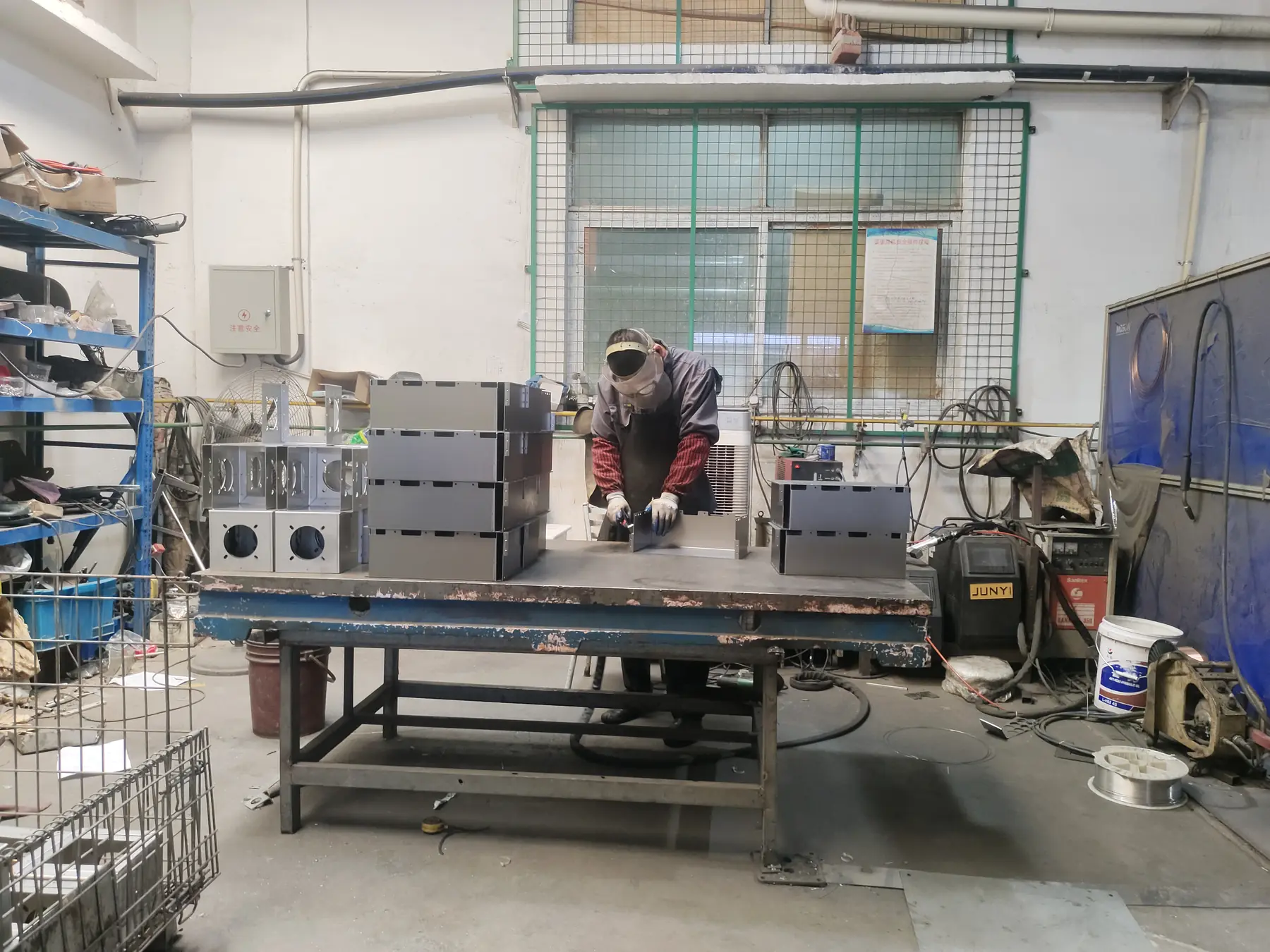
Scope
What This Capability Covers
The right joining method depends on material, thickness, load path, appearance, corrosion environment and access. We use the drawing review to decide what should be continuously welded, intermittently welded, fastened or redesigned as a formed feature. Process selection is confirmed per project rather than promised as a universal recipe.
Real production video
See This Capability on Our Shop Floor
These short clips show actual work at Fulei Metal. They support the process explanation; the controlled drawing and written quotation still define the final route.
Manufacturing route
How the Work Is Controlled
- 01
Confirm weld symbols, access and acceptance criteria
- 02
Prepare and fixture the joint from the approved revision
- 03
Use a controlled tack and welding sequence
- 04
Inspect the joint and key assembly geometry
- 05
Complete agreed dressing before surface finishing
Engineering checkpoints
Where OEM Projects Usually Need Clear Decisions
These points are reviewed against the real part and the buyer’s acceptance requirements.
Fit-up
Consistent gaps and contact surfaces reduce variation before heat is introduced.
Distortion
Sequence, restraint, weld length and cooling strategy are considered together with final flatness and door fit.
Cosmetic surfaces
Visible welds and ground areas must be identified because appearance changes time and cost.
Inspection basis
Visual acceptance, key dimensions and any additional project tests must be agreed before production.
Buyer input
What to Include in Your RFQ
Clear project information allows engineering questions, price and timing to be based on the same scope.
- Weld symbols or marked joint locations
- Material, thickness and service environment
- Critical flatness, squareness and mating dimensions
- Visible surfaces and grinding expectations
- Prototype and repeat-batch quantities
Discuss a real project
Let the Drawing Define the Process and Acceptance Plan
Send the controlled files, quantities and application context. We will identify missing information and prepare a practical basis for quotation.