
Understand sampling standards and AQL for efficient inspection. Learn about ISO 2859, sampling plans, acceptance levels, and statistical quality control.
Introduction
Sampling inspection uses statistical methods to inspect a representative sample from a production lot rather than inspecting every part. This approach is essential for high-volume production where 100% inspection is impractical. At Fulei Metal, we apply sampling standards to balance inspection cost with quality assurance.
What is Sampling Inspection?
Definition
Sampling inspection inspects a subset of parts from a production lot. The inspection results are used to make a decision about the entire lot. If the sample meets acceptance criteria, the lot is accepted. If not, the lot is rejected or subjected to 100% inspection.
Why Sample Instead of 100% Inspection?
Cost: 100% inspection is expensive for high-volume production. Time: 100% inspection slows production. Destructive testing: some tests destroy the part. Practicality: some inspections are difficult or time-consuming. Statistics: properly designed sampling provides high confidence at lower cost.
When to Use Sampling
High-volume production: many identical parts. Stable process: process is capable and controlled. Non-critical characteristics: defects are not safety-critical. Cost balance: cost of inspection vs. cost of defects. Standard practice: customer or standard specifies sampling.
When to Use 100% Inspection
Critical characteristics: defects could cause safety issues. Low volume: few parts, easy to inspect all. Process not capable: high defect rate expected. Customer requirement: customer specifies 100% inspection. Automated inspection: inspection is automated and fast.
AQL (Acceptance Quality Limit)
What is AQL?
AQL is the maximum defect rate that is considered acceptable for sampling purposes. It is the quality level that, for sampling inspection, represents the upper limit of a satisfactory process average. AQL is expressed as a percentage or defects per hundred units.
AQL Levels
Common AQL values: 0.65 (critical), 1.0 (stringent), 1.5 (moderate), 2.5 (general), 4.0 (lenient). Lower AQL = stricter inspection = higher quality requirement. AQL selection depends on: product criticality, customer requirements, cost considerations.
AQL for Different Defect Types
Critical defects: AQL 0.65 or lower. Safety-critical, function-critical. Major defects: AQL 1.0-2.5. Affects appearance or function. Minor defects: AQL 2.5-4.0. Cosmetic, does not affect function. Different defect types may have different AQLs in the same inspection.
ISO 2859 (Sampling Procedures)
Standard Overview
ISO 2859 is the international standard for sampling by attributes. It is based on MIL-STD-105E. It provides sampling plans for lot-by-lot inspection. It defines: sample size, acceptance number, rejection number, based on lot size and AQL.
Inspection Levels
General inspection levels: Level I (reduced), Level II (normal, default), Level III (tightened). Special inspection levels: S-1 through S-4 (for small samples or destructive testing). Level II is the default for most applications. Level I is used when less discrimination is needed. Level III is used when more discrimination is needed.
Switching Rules
Normal to tightened: if 2 out of 5 consecutive lots are rejected. Tightened to normal: if 5 consecutive lots are accepted. Normal to reduced: if 10 consecutive lots accepted, process is stable, and customer approves. Reduced to normal: if a lot is rejected or process becomes unstable. Switching rules ensure the sampling plan adapts to process performance.
Sampling Plans
Single sampling: inspect one sample, accept or reject lot. Double sampling: inspect first sample, if inconclusive inspect second sample. Multiple sampling: inspect up to 7 samples, decision after each. Sequential sampling: inspect one at a time, decision after each part.
Using ISO 2859
Step 1: Determine Lot Size
Count the number of parts in the lot. Lot size is the quantity submitted for inspection at one time.
Step 2: Select Inspection Level
Default: Level II (general). Use Level I for less critical or high-cost inspection. Use Level III for more critical. Use special levels for destructive or expensive testing.
Step 3: Select AQL
Based on: customer requirements, product criticality, defect type. Common: AQL 1.0 for major, AQL 2.5 for minor, AQL 0.65 for critical.
Step 4: Determine Sample Size
Use ISO 2859 table: lot size and inspection level give code letter. Code letter gives sample size. Example: lot 500, Level II, code letter H, sample size 50.
Step 5: Determine Acceptance/Rejection Numbers
Use ISO 2859 table: code letter and AQL give acceptance (Ac) and rejection (Re) numbers. Example: code H, AQL 2.5, Ac=3, Re=4. Accept lot if 3 or fewer defects. Reject lot if 4 or more defects.
Step 6: Inspect Sample
Randomly select sample from lot. Inspect each sample part per inspection plan. Count defects by type (critical, major, minor).
Step 7: Make Lot Disposition
Compare defects found to acceptance/rejection numbers for each defect type. If defects less than or equal to Ac: accept lot. If defects greater than or equal to Re: reject lot. If different defect types: lot must pass all types.
Step 8: Document Results
Record: lot size, sample size, AQL, defects found, lot disposition, inspector, date. Maintain records for quality tracking and customer requirements.
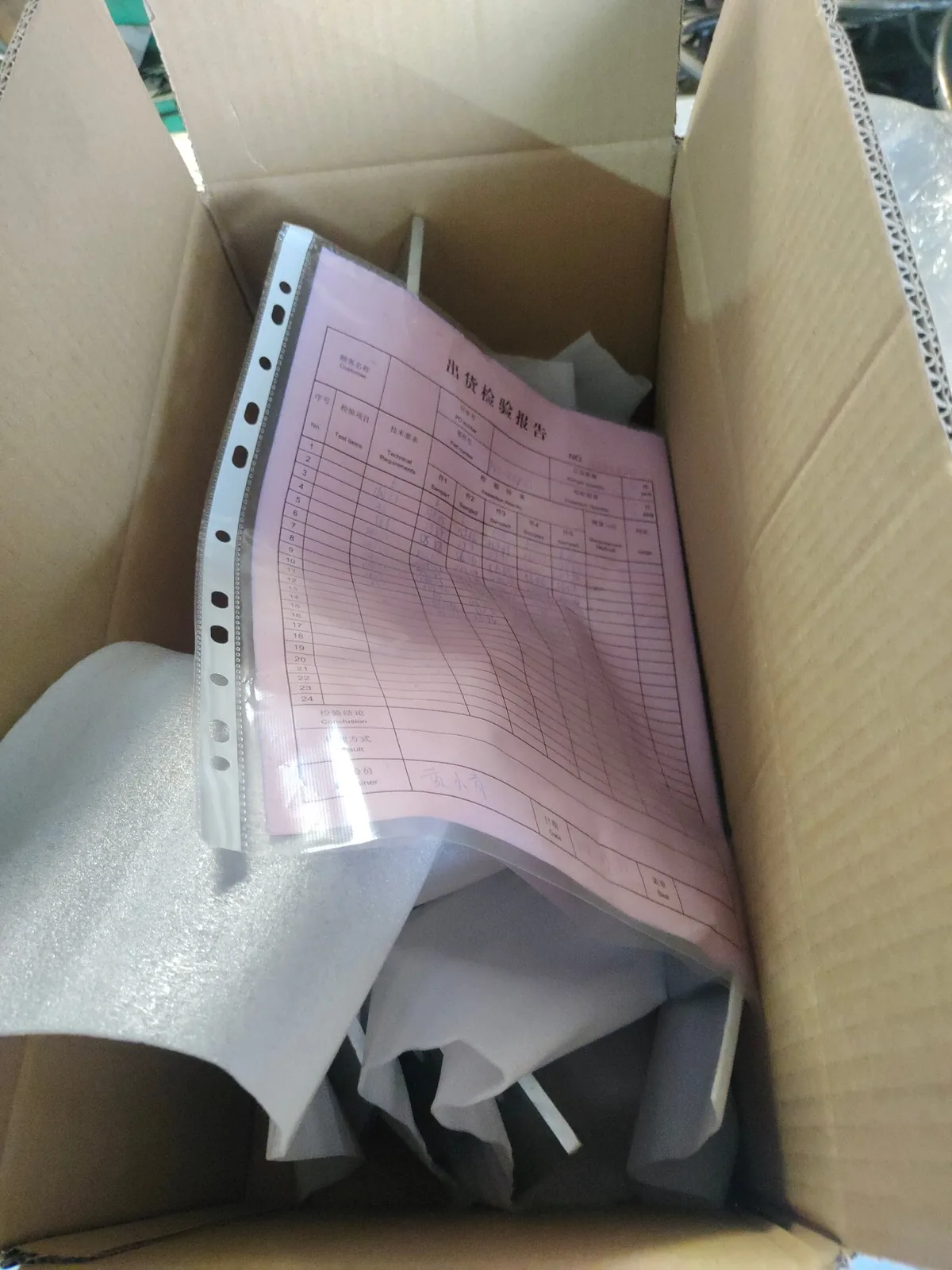
Lot Rejection
What Happens When a Lot is Rejected?
Rejected lots are: 100% inspected, sorted, reworked or scrapped. Good parts are re-submitted. Defective parts are reworked or scrapped. Re-inspection of reworked lot: may use tightened inspection.
Root Cause Investigation
Investigate why lot was rejected. Identify: defect type, defect cause, process problem. Implement corrective action. Verify corrective action is effective. Prevent recurrence.
Sampling Risks
Producer’s Risk (Alpha)
Risk of rejecting a good lot. The lot meets AQL but is rejected due to sampling variation. Typical: 5% at AQL. Producer’s risk is the probability of rejecting a lot at AQL quality.
Consumer’s Risk (Beta)
Risk of accepting a bad lot. The lot exceeds LQ (limiting quality) but is accepted due to sampling variation. Typical: 10% at LQ. Consumer’s risk is the probability of accepting a lot at LQ quality.
Operating Characteristic (OC) Curve
OC curve shows: probability of acceptance for different quality levels. Steep OC curve: good discrimination between good and bad lots. Flat OC curve: poor discrimination. Larger sample sizes give steeper OC curves.
Alternatives to AQL Sampling
LTPD (Lot Tolerance Percent Defective)
LTPD sampling focuses on consumer’s risk. Defines the quality level that should be rejected most of the time. Typically 90% rejection at LTPD. Used when consumer’s risk is the primary concern.
AOQL (Average Outgoing Quality Limit)
AOQL sampling ensures that the average quality of outgoing product does not exceed a specified limit. Combines sampling with 100% inspection of rejected lots. Guarantees long-term average quality.
Skip-Lot Sampling
Not every lot is inspected. Lots are inspected on a skip-lot basis after consistent good quality. Reduces inspection cost. Increases risk of missing a bad lot.
Statistical Process Control (SPC) vs. Sampling
SPC
Monitors process in real-time. Uses control charts. Detects process shifts before defects occur. Preventive approach. Focuses on process stability and capability.
Sampling Inspection
Inspects product after production. Accepts or rejects lots. Detects defects after they occur. Reactive approach. Focuses on product quality.
Complementary Approaches
SPC and sampling are complementary. SPC prevents defects by monitoring the process. Sampling catches defects that escape the process. Both should be used together for comprehensive quality control.
At Fulei Metal
Our sampling inspection program includes: ISO 2859 sampling plans. AQL levels per customer requirements. Documented sampling procedures. Random sample selection. Defect classification (critical, major, minor). Lot disposition and documentation. Root cause investigation for rejected lots. We use sampling inspection to efficiently verify product quality while maintaining statistical confidence for our global clients.
Conclusion
Sampling inspection is a powerful tool for efficient quality control in sheet metal manufacturing. At Fulei Metal, our application of sampling standards and AQL ensures that we balance inspection cost with quality assurance, providing confidence in our products while maintaining competitive pricing.
If you are sourcing this type of part, our quality inspection service page covers the tolerances, batch sizes and inspection we work to, and custom sheet metal fabrication shows the wider range we produce in Ningbo, China. For background reading before you request a quote, see Welding Inspection Methods and Quality Standards.
Setting the Sampling Plan Before Production Starts
Sampling only works if the plan is agreed in advance. A plan invented after a defect is found cannot be objective, however carefully it is written. The table first sets the sample size from the lot, then sets the level from the consequence.
| Lot size (pieces) | Sample size at general inspection level II | Accept / reject numbers |
|---|---|---|
| 2 – 8 | 2 | From the acceptance table for the AQL you specify |
| 9 – 15 | 3 | From the acceptance table for the AQL you specify |
| 16 – 25 | 5 | From the acceptance table for the AQL you specify |
| 26 – 50 | 8 | From the acceptance table for the AQL you specify |
| 51 – 90 | 13 | From the acceptance table for the AQL you specify |
| 91 – 150 | 20 | From the acceptance table for the AQL you specify |
| 151 – 280 | 32 | From the acceptance table for the AQL you specify |
| 281 – 500 | 50 | From the acceptance table for the AQL you specify |
| 501 – 1,200 | 80 | From the acceptance table for the AQL you specify |
| 1,201 – 3,200 | 125 | From the acceptance table for the AQL you specify |
| 3,201 – 10,000 | 200 | From the acceptance table for the AQL you specify |
Sample size follows ISO 2859-1 general inspection level II. The accept and reject counts come from the same standard’s acceptance table and depend on the AQL you choose — we confirm them on the inspection plan rather than assuming.
The plan also requires a homogeneous lot. A shipment that mixes several production runs, or parts made before and after a tooling repair, is not one lot – and sampling it as one gives a misleading answer.
Frequently Asked Questions
Which inspection level should we write into the purchase order?
Level II is the normal default and is what an unqualified reference to ISO 2859-1 means. Move to level III when the consequence of a defect is high — safety-relevant parts, parts that stop your line, parts with no downstream check. Move to level I only where you have a long history with the supplier and the parts have downstream protection.
Should critical dimensions sit inside the sampling plan?
No. Critical and safety-relevant dimensions are normally pulled out of the lot-based plan and inspected at a defined frequency or on every part. Sampling statistics assume defects are randomly distributed; a critical dimension that depends on one tooling feature is not randomly distributed, and a sample can easily miss it.
What happens if we find defects in the sample?
The lot is held rather than shipped, and the useful next step is to establish whether the cause is systematic. If it is a tooling or setup problem, screening the whole lot is the only safe route and the discussion becomes about who pays for it. That is why the sampling plan and the disposition rules should be agreed before the first lot, not after the first rejection.
Questions about a specific part are usually faster to answer against the drawing — send it through the route below.
Related at Fulei Metal: outgoing inspection · inspection report documentation · statistical process control (SPC) · quality inspection service