
An enclosure that traps heat will kill a heat pump. Compressors, inverters and control boards generate substantial heat, and outdoor summer temperatures add to the load. Thermal management is therefore not an afterthought — it is a core design discipline for every sheet metal enclosure we build.
Where the Heat Comes From
Three sources matter. The compressor itself radiates heat. The electrical compartment (inverter, PCB, capacitors) generates heat that must stay below roughly 60–70°C for component lifetime. And solar radiation on dark panels can push skin temperature 15–20°C above ambient. Your enclosure design must handle the sum of these.
Passive Cooling First: Louvers and Perforation
Before adding fans, optimize passive airflow. Louvers pressed into the lower and upper panels create a natural chimney effect — cool air enters low, warm air exits high. Key parameters:
- Perforation ratio: typically 30–50% of the panel area for adequate free airflow.
- Louver pitch and angle: 45° angled louvers block rain while allowing air; tighter pitch blocks more water but restricts flow.
- Placement: inlet low on one side, outlet high on the opposite side, so air crosses the hot components.
Active Cooling: Fans and Cutouts
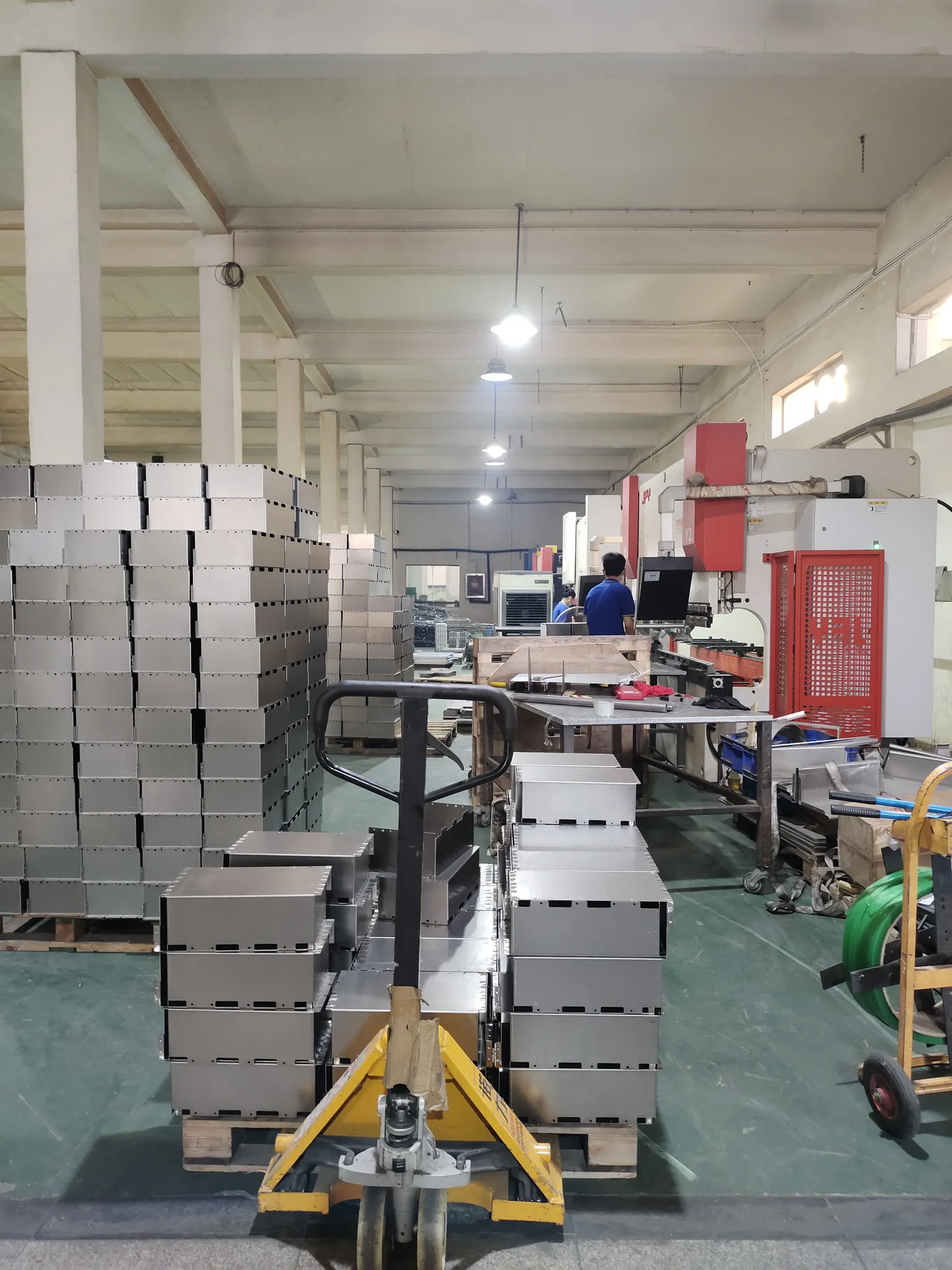
When natural convection is insufficient, add axial fans. Fan cutouts in the enclosure must be CNC-cut to the exact fan frame profile, with the flange formed inward or outward depending on flow direction. Remember to account for filter and finger-guard thickness in the cutout depth.
Testing Before Tooling
We recommend thermal simulation or a simple prototype test: run the unit at rated load in a 35°C chamber and log internal temperatures with thermocouples. The data tells you whether the louver area and fan selection are adequate — long before you commit to production tooling.
Fulei Metal provides DFM feedback on every enclosure drawing, including airflow and louver recommendations. Contact our engineers with your heat load figures and we will help you size the openings correctly.
For OEM buyers the practical next step is a drawing review — see our DFM engineering review for what we need and how fast we turn it around. This work sits inside our custom metal enclosure manufacturing capability, and Tolerance Management in Sheet Metal Assembly explains the technical background in more detail.
What stands behind this quotation
- Manufacturing since 20162,500 m² Ningbo plant — 3 laser cutting machines (including newer TRUMPF), 4 CNC press brakes and 10 welding stations.
- Shipped to more than 30 export marketsEnclosures, cabinets and formed parts supplied to OEM buyers across Europe, North America and Asia.
- 123 documented product casesMedical device housings, HVAC and heat pump enclosures, agricultural and livestock equipment, industrial hydraulics, material handling trolleys and EV charging cabinets.
- Factory evidence you can checkTUV Rheinland audit reference MIC-ASI243729 and Bureau Veritas reference MIC-ASR263630 available for buyer review under NDA.
Before you send drawings: an NDA is signed on request · first-article inspection is carried out before a batch continues · pricing is staged from prototype quantity to repeat volume · pre-shipment photos and packing records are prepared when the project needs them.