
Heat pumps are becoming the backbone of residential and commercial HVAC in Europe, North America and beyond. But the outdoor unit itself is only half the story — the enclosure protects the compressor, electronics and heat exchanger from rain, dust, UV and impact. If you are sourcing enclosures as an OEM, the choices you make at the design stage decide cost, lead time and field failure rates for years to come.
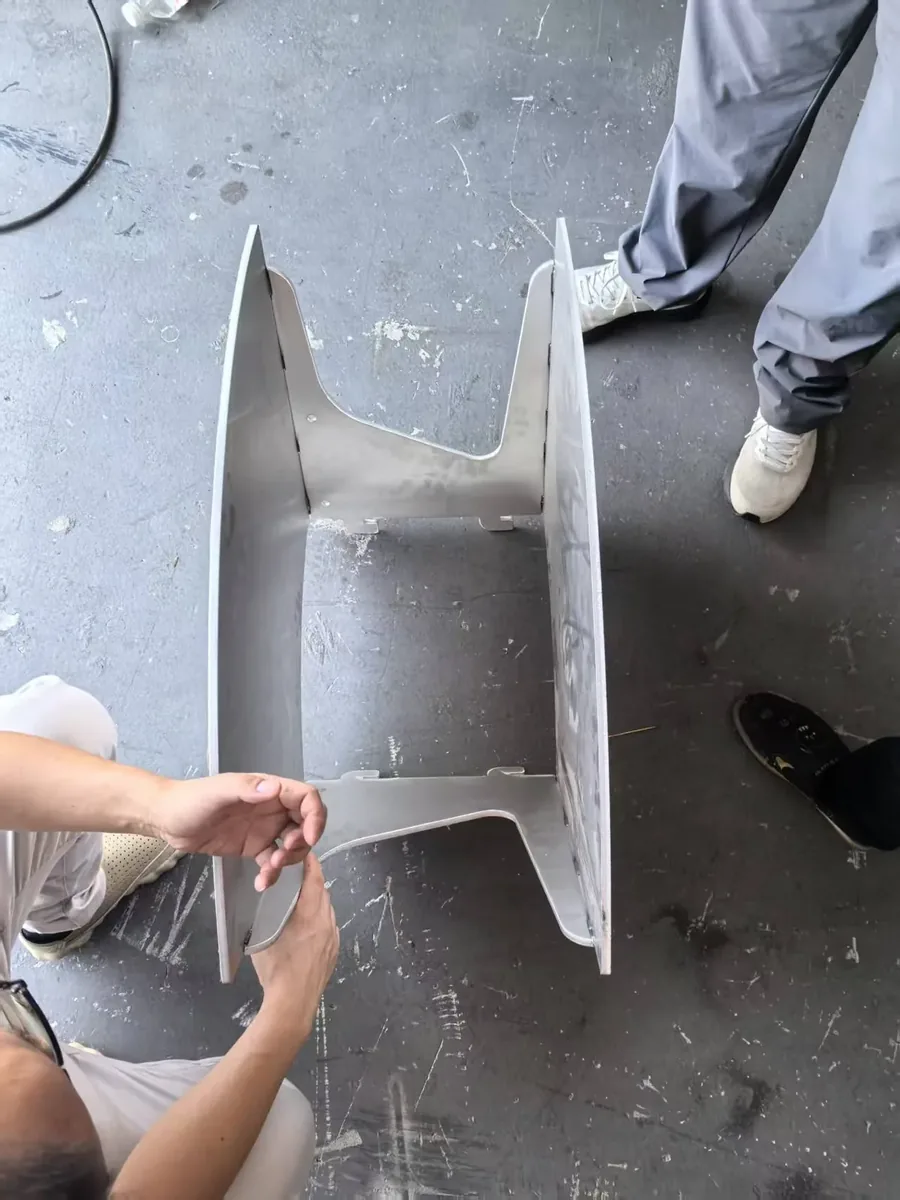
Start with the Operating Environment
Before any steel is cut, define where the unit will live. A coastal installation in the UK demands far better corrosion protection than a sheltered courtyard in central Europe. Ask yourself:
- Indoor or outdoor? Outdoor units need a minimum IP44 rating for splash protection, while coastal or high-rainfall sites benefit from IP54–IP65.
- Ambient temperature range? The enclosure must shed heat generated by the compressor while surviving summer peaks of 40°C+.
- Wind and snow load? Large vertical panels act like sails. Stiffening ribs and correct material thickness prevent flexing and fatigue.
Material: Galvanized Steel Is the Workhorse
For most heat pump enclosures, SGCC/SECC galvanized steel at 1.2–1.5 mm offers the best balance of strength, corrosion resistance and cost. For coastal or high-humidity markets, powder coating over zinc-plated steel adds a second barrier. Stainless steel (SUS304) is justified only for premium marine-grade units where the enclosure is a visible part of the product.
Ventilation and Noise: The Two Design Constraints
Heat pump compressors reject a lot of heat, so the enclosure needs engineered airflow. Louvers, perforated panels and fan cutouts must be positioned so the airflow path does not short-circuit. At the same time, enclosure panels resonate with compressor vibration — adding sound-deadening insulation and avoiding large flat unsupported panels keeps noise levels within local regulations (typically 55–65 dB at 1 m).
Finishing and Branding
Powder coating in your brand color is the standard finish. A textured or matte coating hides fingerprints and scratches better than gloss. Laser-cut logo panels and durable laser-etched rating labels turn a commodity box into a branded product that dealers recognize.
Why Choose Fulei Metal
Since 2016 we have manufactured enclosures for HVAC, electrical and livestock OEMs across the US, UK, Korea and Japan. Our TRUMPF laser cutters, CNC press brakes and TIG/MIG welding cells hold tolerances of ±0.1 mm on cut geometry and ±0.5° on bends, and every batch is inspected before shipment. Send us your drawings for a DFM review and a same-week quotation.
Fulei Metal builds components like this in-house. The DFM engineering review page explains how the process is set up and checked, while custom metal enclosure manufacturing covers the materials and finishes we normally run. Related reading: Network Cabinet Enclosure Manufacturing Guide.
What to Send So an Enclosure Can Actually Be Quoted
Heat pump enclosure enquiries tend to arrive with the outside dimensions and a photograph. What the quotation needs is the interface list: where the coil sits, how much free area the airflow needs, where the condensate leaves, and what has to be reachable without tools. Those four items set the panel layout, and they are all things the equipment designer already knows.
Airflow is the one that changes the drawing most. A louvered panel has a free-area percentage, and the opening has to deliver the airflow the unit requires rather than merely look ventilated. Give the required airflow and the fan curve if there is one; if not, give the model and we will work from the unit’s stated requirement. Where noise is also a constraint — and on residential units it usually is — the acoustic lining and the airflow fight each other, and the resolution has to be a decision on the drawing rather than a compromise discovered on site.
Can we use our existing enclosure drawings?
Yes. Send them with the airflow requirement and the service access list, and we will flag anything that will not form, will not seal, or will not let the unit be serviced. That review is part of the quotation, not a separate service.
Do you supply the heat pump or the controls?
No. We build the enclosure to the interfaces you specify. Anything that goes inside — the unit, the fan, the controls — is supplied by you or by your equipment vendor.
Where Enclosure Projects Usually Go Wrong
The recurring problems on this part type are not manufacturing problems, they are interface problems that surface late. Condensate is the first: a heat pump makes water, and an enclosure that traps it at the base will rust from the bottom up regardless of what the panels are made of. Drainage at the base and a fall on any horizontal internal surface are drawing details.
The second is service access. Panels that have to come off for a filter change or a coil clean need captive fixings and a defined removal order. Where they do not have it, the panels end up left off after the first service call — and the enclosure stops doing either of its jobs. The third is coating at the joints: the seam where two panels meet is the first place to show rust on an outdoor unit, and it needs the joint detail and the surface preparation specified together.
Inspection follows the buyer drawing and the approved sample, with general tolerances to ISO 2768 unless the drawing states otherwise. IP ratings quoted for enclosures of this kind are design targets on the drawing; where a buyer wants one verified, the test is arranged per order and the report ships with the batch. Coating and material documentation is issued per order — see traceability. For export packing of finished enclosures see export packaging standards.
What stands behind this quotation
- Manufacturing since 20162,500 m² Ningbo plant — 3 laser cutting machines (including newer TRUMPF), 4 CNC press brakes and 10 welding stations.
- Shipped to more than 30 export marketsEnclosures, cabinets and formed parts supplied to OEM buyers across Europe, North America and Asia.
- 123 documented product casesMedical device housings, HVAC and heat pump enclosures, agricultural and livestock equipment, industrial hydraulics, material handling trolleys and EV charging cabinets.
- Factory evidence you can checkTUV Rheinland audit reference MIC-ASI243729 and Bureau Veritas reference MIC-ASR263630 available for buyer review under NDA.
Before you send drawings: an NDA is signed on request · first-article inspection is carried out before a batch continues · pricing is staged from prototype quantity to repeat volume · pre-shipment photos and packing records are prepared when the project needs them.