
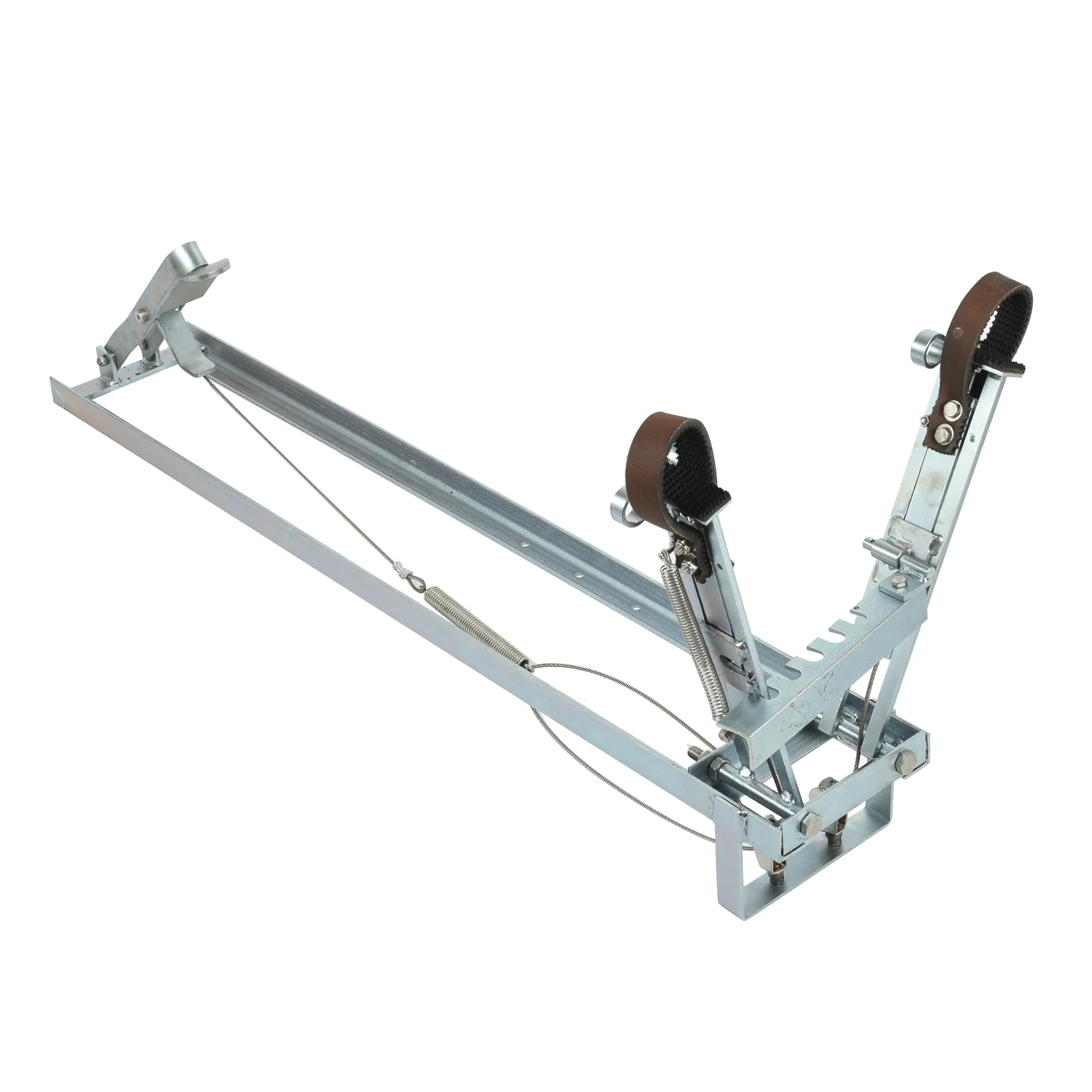
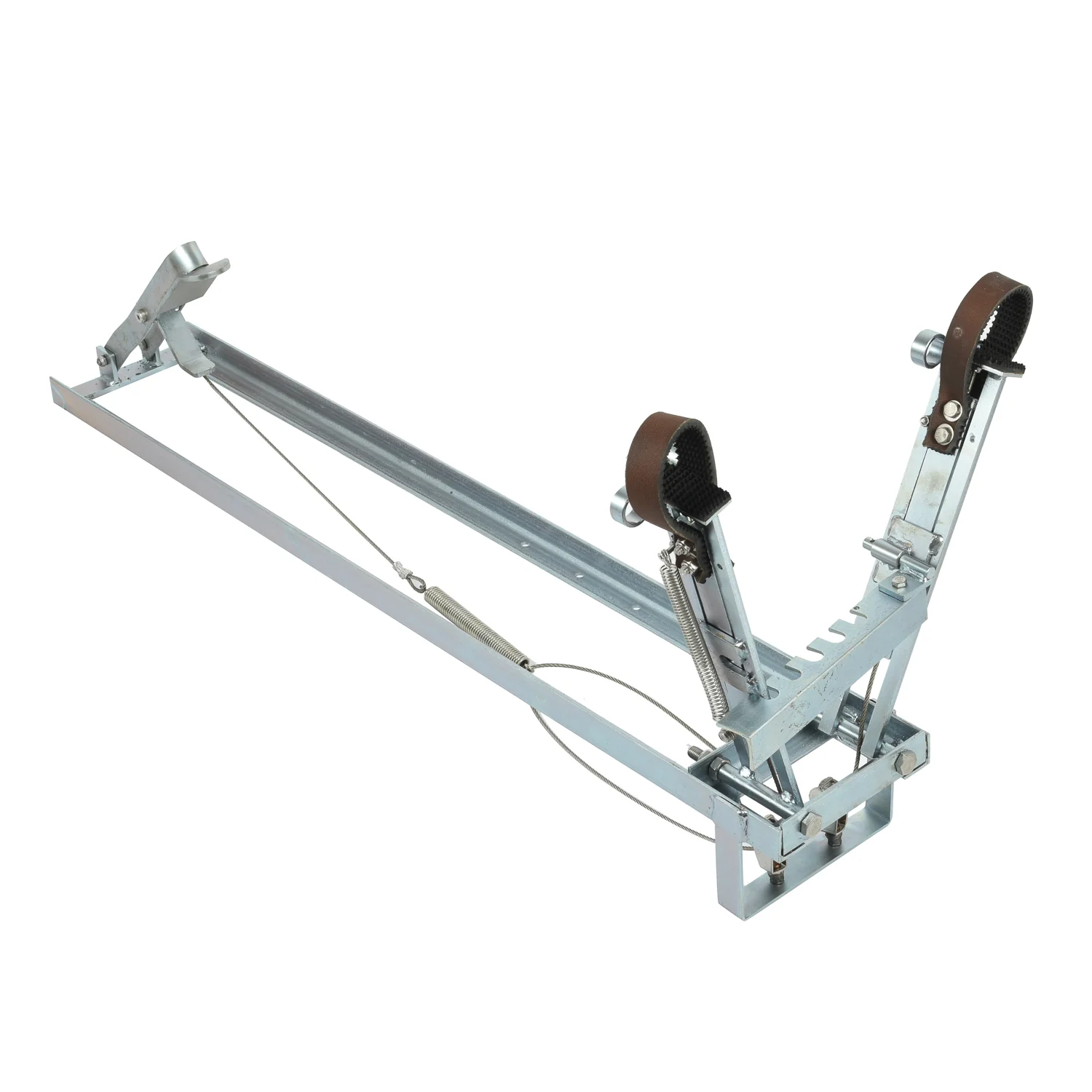


Livestock Loading Ramp
SKU: FL-LF-014
Portable livestock loading ramp. Anti-slip surface, foldable design.
| Material | Aluminum + galvanized steel (lightweight) |
|---|---|
| Manufacturing Process | Laser cutting + welding + galvanizing |
| Surface Finish | Hot-dip galvanized + anti-slip pattern |
| Tolerance | ±2mm |
| Length | 3000mm |
| Width | 800mm |
| Capacity | 1000kg |
| Weight | 85kg |
| Foldable | Yes |
| MOQ | 20 units |
| Lead Time | Quoted after drawing review and process confirmation |
| Sample Time | Quoted after drawing review and process confirmation |
| Sample Fee | USD 280 |
| Price Range | USD 380-450/unit |
| Applications | Livestock transport, farms, veterinary clinics |
| Compliance | ISO 1461 |
| Export Markets | USA, Canada, Australia |
How This Livestock Loading Ramp Is Fabricated and Checked
A loading ramp has one safety feature – the deck – and one handling requirement: 1000 kg of animal on a ramp that somebody has to move. That is why the deck is aluminium and the structure is steel, and it is also where the design is easiest to get wrong.
| Stage | What happens | What is verified before the job moves on |
|---|---|---|
| Side rail and structure forming | Steel side rails and frame sections cut and formed | Section straightness and the frame length, because the ramp has to sit on the ground along its whole length rather than on two points |
| Deck forming | Deck formed with an anti-slip pattern, or with the pattern formed into the deck itself | The pattern depth and coverage. A deck with smooth patches is the failure that matters, and it is a safety issue rather than a cosmetic one |
| Deck fixing | Deck fixed to the frame using the designed fasteners | Fixings that do not stand proud of the deck, and that the fixing pattern supports the deck between supports rather than only at the edges |
| Welding | Frame and rail joints welded | Weld condition at the joints that carry the ramp load, and at the hinge or the ground contact points |
| Drain provision for galvanising | Holes formed in every closed steel section | That the steel drains. The aluminium deck is handled separately and is not galvanised |
| Hot-dip galvanising of the steel parts | Steel frame and rails dipped and cooled | Zinc thickness and drain condition, and that the hinge points are cleared afterwards |
| Material interface and final assembly | Deck assembled to the frame with the interface between aluminium and galvanised steel treated as designed | That the joint between the two metals has the specified fasteners and is drained rather than permanently wet |
| Load check | The ramp loaded and the deck and fixings checked | That the deck does not lift or deflect at the rated load, and the anti-slip surface is intact |
Revisions That Skip New Tooling on Livestock Loading Ramp
Length, load and how the ramp is stored decide the structure; the deck decides the safety.
| What can be changed | What it affects | What it does not affect |
|---|---|---|
| Length, width and load rating | Frame section, deck thickness and the number of deck supports | The material split between steel and aluminium |
| Anti-slip pattern style | Grip in wet and dirty conditions, and how easy the deck is to clean | The deck material |
| Folding, fixed or detachable | How the ramp is stored and moved between sites | The deck |
| Side rails and kerbs | Whether an animal can step off the side | The frame |
| Finish | Corrosion life in a farmyard environment, and appearance | Nothing structural |
| Towing or lifting provision | How the ramp is moved when it is not in use | The frame |
Livestock Loading Ramp: Common Buyer Questions
How is the anti-slip surface made?
It is formed into the deck rather than applied, for the simple reason that an applied surface is something that can come off, and on a livestock ramp the deck is where the safety is. Formed louvres or perforations also let water and slurry pass through instead of standing on the surface.
Why is the deck aluminium rather than steel?
Weight. A ramp that takes 1000 kg and has to be moved by hand between pens cannot be made entirely in steel at a practical weight, so the deck is aluminium and the structure that carries the load is galvanised steel. The two materials are then treated as an interface rather than as one part.
Is there a problem where the two metals meet?
There can be, because aluminium and galvanised steel behave differently when wet. The practical measures are the right fasteners, keeping the joint drained, and a washer or a coating at the interface where the site is aggressive. It is worth deciding at design stage rather than finding it as corrosion at the deck fixings a year later.
The deck is the safety feature and the material split is the weight decision. Send the load, the length and how the ramp is stored through the RFQ form and the structure is sized to them. Related: welding, surface finishing and material certification.
Anti-Slip on a Ramp Has to Survive Mud, Not Just Water
An anti-slip surface for livestock has a harder job than an anti-slip surface for people. It has to work when it is wet, when it is carrying mud and manure, and when an animal is hesitant and pushing backwards rather than walking forward. A bonded grit coating wears off under hooves and under the pressure-washing that follows, and once it is gone the ramp is slick. A raised pattern formed into the deck – embossed or perforated plank – does not wear off, because it is the material rather than something added to it.
- A pattern that is too shallow fills with mud and stops working. Depth and pitch have to suit what the animals bring onto the ramp with them.
- Open patterns let material fall through, which keeps the walking surface working and makes wash-down faster.
- Aluminium deck on a galvanized frame keeps the weight down, but the joint between the two metals is a galvanic couple and needs isolating – we raise it when the drawing specifies mixed metals.
An 85 kg Ramp Is a Weight Target Before It Is a Structure
A portable loading ramp has a stated capacity and a stated weight, and the weight is the harder of the two to hit. The ramp is 3000 mm long, has to be carried and positioned by two people, and folds for storage. That means every kilogram saved in the deck is a kilogram that can go into the frame – or into the hinge, which is the part that gets abused. The folding point is where the ramp stops being a beam and becomes a mechanism: the hinge has to carry the full load across the joint when the ramp is deployed, and it has to survive being folded and unfolded with one end dragging on the ground.
Handle position is the other detail that gets left off drawings. Handles are not a convenience on a portable ramp, they are how two people lift 85 kg of awkward length without injury, and their position determines how the load is shared. Send us the length, the width, the capacity, who handles it and how often it is moved, and the section, hinge and handle layout follow from that. Lead time is quoted after drawing review and process confirmation.
Payment Terms
How a project is paid for is agreed before production starts, and the structure that applies to your order is stated on the quotation and on the order confirmation, so there is no ambiguity later.
- 30% advance payment with the order and the 70% balance before shipment — our standard structure.
- 70% advance payment with the order and the 30% balance before shipment — used for some projects.
- 100% payment in advance before production starts — used for some projects.
If your finance team works to a fixed structure, say so in the first enquiry and we will confirm what applies to your order before you commit. Request a quotation.
Questions buyers ask before sending drawings
The questions that come up most often before a project starts, answered the way we answer them by email.
What do you need from me to quote Livestock Loading Ramp?
2D drawings as PDF, DWG or DXF, or 3D files as STEP, IGES or SolidWorks, together with material grade, sheet thickness, surface finish, quantity and destination country. If the drawing is not finished yet, send a photo, a sketch or the existing part instead — we review what can be measured from it and reply with the questions that still need answering.
How long does a quotation take?
Enquiries are answered within one business day. Simple laser-cut and bent parts are quoted within 24 hours. Welded frames, assembled units and multi-part structures are quoted after the drawing review and process confirmation, and the date is confirmed in our reply.
Is there a minimum order quantity?
Prototypes are made from a single piece and small batches of 10–50 pieces are routine. Prototype, first batch and repeat volume are quoted together so the numbers stay consistent as the project scales.
Can you work from a sample or a photo if I have no drawing?
Yes. Send the part itself, clear photographs with a rule or caliper in frame, or a dimensioned sketch. We measure what can be measured, list what is still undefined, and confirm it with you before production.
Need a Similar Part?
Most enquiries that start on a page like this are not an order for Livestock Loading Ramp — they are a search for a factory that can make something like it. Send us your drawing, 3D model or sample and we will review the manufacturing process and the quotation requirements, then come back with a process plan, a price and a lead time.
We work from 2D drawings, STEP / DWG / DXF / PDF files, or a physical sample if that is all you have.
No complete drawings yet? Describe the part, send photos or a sketch, or send a sample — we can start from there. Discuss your project.
Trade Terms and Delivery
We quote under the standard Incoterms your logistics team already works with, and build the packing and documentation around the one you choose.
- EXW — you collect from our Ningbo facility and run export clearance through your own forwarder.
- FOB Ningbo — we deliver to the vessel at Ningbo port and handle export clearance.
- CIF — we cover carriage and insurance to your named destination port.
- DDP — we handle carriage, insurance, import clearance and duties through to your door.
Send your destination country, target delivery date and preferred trade term together with the drawing. Request a quotation.
Quotation Time
We quote from your drawings. How long that takes depends on what the part asks for:
- Simple parts — quoted within 24 hours. Laser-cut blanks and bent components, supplied with complete 2D or 3D drawings. Mon–Fri, GMT+8.
- Complex assemblies — quoted after the drawing review. Payment kiosks, multi-part welded frames, enclosures with purchased hardware, or anything needing a coating or assembly trial. We confirm a quotation date once the scope is clear.
Production lead time is quoted separately, after drawing review and process confirmation. Send your drawings.
What stands behind this quotation
- Manufacturing since 20162,500 m² Ningbo plant — 3 laser cutting machines (including newer TRUMPF), 4 CNC press brakes and 10 welding stations.
- Shipped to more than 30 export marketsEnclosures, cabinets and formed parts supplied to OEM buyers across Europe, North America and Asia.
- 123 documented product casesMedical device housings, HVAC and heat pump enclosures, agricultural and livestock equipment, industrial hydraulics, material handling trolleys and EV charging cabinets.
- Factory evidence you can checkTUV Rheinland audit reference MIC-ASI243729 and Bureau Veritas reference MIC-ASR263630 available for buyer review under NDA.
Before you send drawings: an NDA is signed on request · first-article inspection is carried out before a batch continues · pricing is staged from prototype quantity to repeat volume · pre-shipment photos and packing records are prepared when the project needs them.