
Trust · Information handling
How We Protect Your Information
Sending a drawing to a new supplier is a business risk, not just an admin step. Your geometry, tolerances, hardware, finish and commercial terms are the output of your own engineering work. This page sets out exactly what we treat as confidential, who inside our company can see it, how files are used and retained, and what we will never do with a customer’s project.
Confidential by default. Your drawings are used only for your own project, are never shared, resold or reused. We do not publish customer company names, drawings, part dimensions or load values, and we do not show one customer’s design to another buyer.
Why buyers ask before sending a drawing
For OEM equipment builders, enclosure manufacturers and industrial integrators, a released drawing is the thing competitors would most like to see. It contains the part geometry, the material and thickness, the hardware call-outs, the finish specification and often the assembly context. A supplier that treats those files casually can leak a product before launch, expose a pricing structure, or reuse a design for a competing buyer.
There is a second, more practical risk: a supplier that does not control file versions may quote against an outdated revision, or build a first article from a drawing that was never formally released. Information handling is therefore also a quality issue. Our approach is to keep the chain from received file to released build short, named and reviewable.
What we treat as protected information
| Category | Examples | How it is handled |
|---|---|---|
| Design files | 2D drawings, 3D models, flat patterns, DXF/DWG files, revision notes | Used only to review, quote and manufacture your order. Kept against your project, not pooled into a shared library. |
| Technical specifications | Tolerances, bend radii, material grades, hardware part numbers, finish and colour references | Treated as project-specific. Not carried over to another customer’s part. |
| Commercial information | Quantities, pricing, payment terms, delivery schedules, project names | Limited to the people who need them to quote and run the order. |
| Samples and first articles | Physical samples, bend samples, approved finish panels, inspection pieces | Identified against your project. Not displayed as generic product examples. |
| Photographs | Workshop photos, part photos, packing photos taken for your order | Reviewed before use. Anything showing a customer identifier is not published. |
| Identity | Company name, contact names, end customer, brand or logo, destination | Not used in public case material, product pages, blog posts or social content. |
How your files are handled, step by step
- ReceiveFiles arrive with the enquiry and are attached to your project. We note the revision we are working against and ask if anything is unclear rather than filling the gap with an assumption.
- ReviewThe drawing is examined during the free DFM pre-review. Open questions go back to you in writing, with the revision referenced.
- AccessAccess is limited to the sales engineer handling your enquiry and the production and quality personnel who must work on your order. It is not broadly available across the company.
- UseFiles are used only for the project they were sent for: quoting, programming, forming, joining, inspection and packing of your parts. They are not used as reference material for another buyer’s design.
- Retain and releaseProject files are kept so that repeat orders and revisions can be matched to the correct build. If you ask us to return or delete files at the end of a project, tell us and we will confirm what is retained for record-keeping and what can be removed.
Revision control is part of confidentiality. If you issue a new revision, please mark it clearly and reference the superseded one. We will quote and build against the revision stated in the confirmation, and flag any mismatch before production starts.
Who can see your project
| Role | Needs access to | Purpose |
|---|---|---|
| Sales engineer | Drawings, specifications, commercial terms, correspondence | Quoting, scope definition, revision control and being your single point of contact. |
| Process / programming | Flat patterns, material, bend data, hardware call-outs | Cutting, leveling and bending preparation for your order. |
| Production & assembly | The released drawing and the operations assigned to them | Forming, riveting, hardware insertion, welding and assembly. |
| Quality | Critical dimensions, tolerances and the agreed inspection scope | Dimensional records, hardness test reports where requested, and first article checks. |
| Finishing partner, where used | Only the information needed for that finishing step | Powder coating, anodizing, passivation or plating. We agree the scope of any external step with you before the order is released. |
We do not give a buyer access to another buyer’s files, and we do not use one customer’s parts as samples to win another customer’s enquiry.
What we never do
Not reused
We do not reuse your geometry, flat patterns, tooling approach or hardware selection for a different customer’s part. General manufacturing knowledge is ours; your product-specific detail stays yours.
Not resold or shared
We do not sell, license, forward or publish your drawings, models or specifications, and we do not pass them to another buyer or a competing supplier.
Not shown to other buyers
Customer-specific parts, samples and assemblies are not displayed as product examples, in quotations to other buyers, or in factory visit material.
Not published
We do not publish customer company names, part dimensions, load values or identifying marks. Our product cases describe process routes, materials and joining methods, not customer identities.
Samples, first articles and photographs
Custom work involves physical objects that reveal as much as a drawing: bend samples, approved finish panels, first articles and packed assemblies. These are treated as project material. A sample made for your project is not put on a sample shelf to demonstrate capability to another buyer.
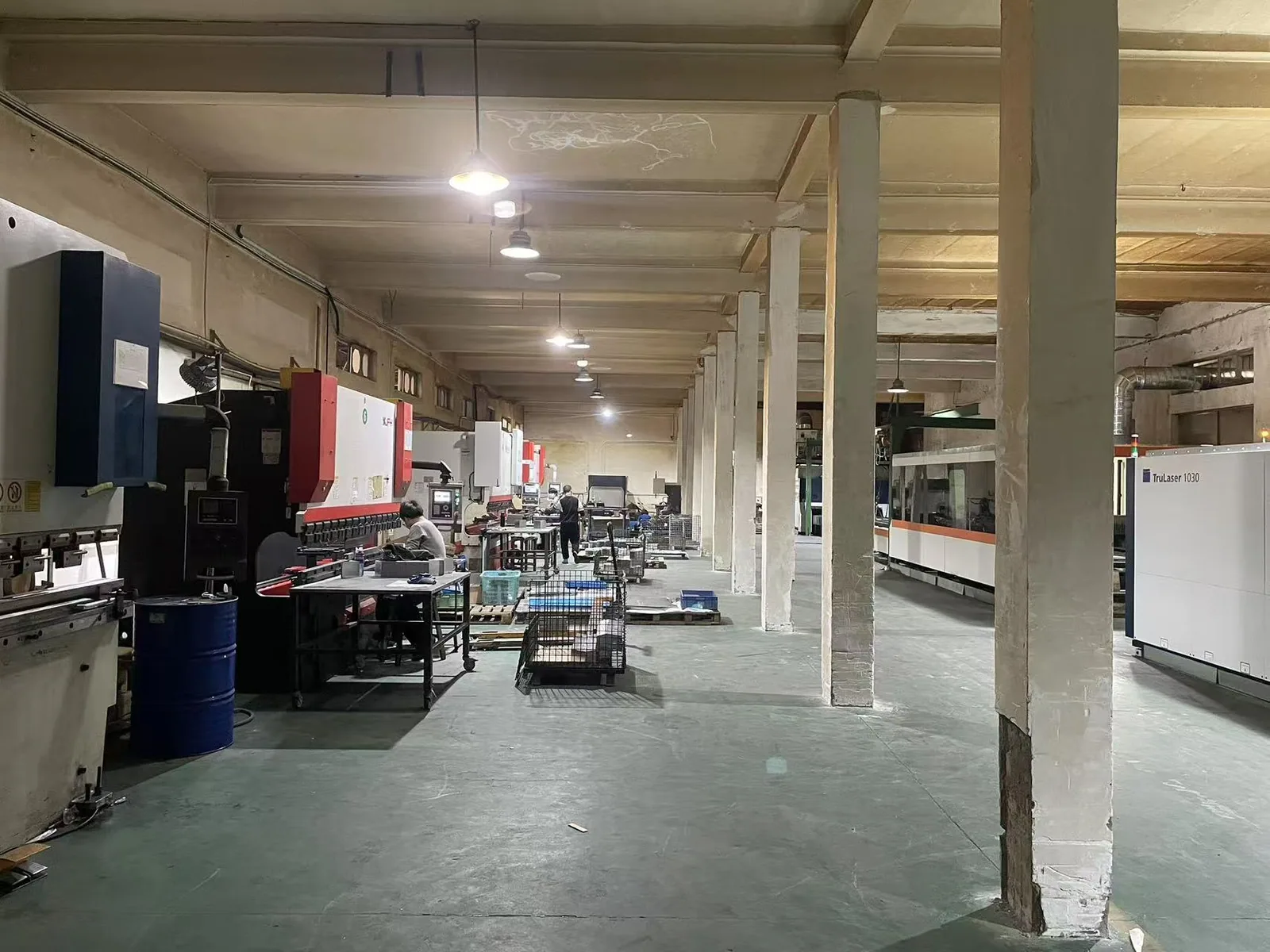
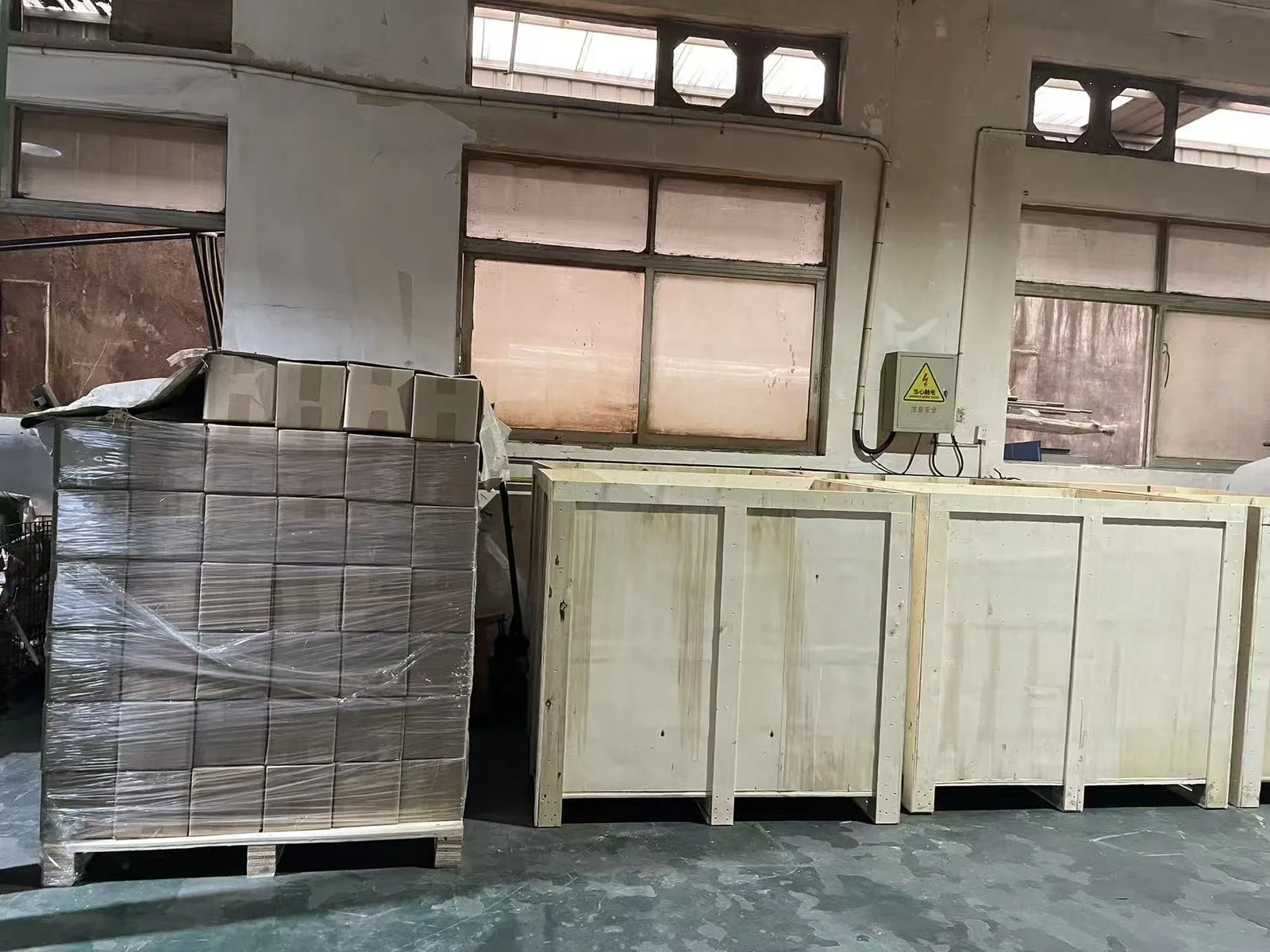
We do take shop-floor photographs to document equipment and working practice, for example the capabilities and evidence page. Those images show our own machines and process samples. Before any photograph is used publicly we check it for customer identifiers, part markings, paperwork and people, and we exclude anything that could identify a customer’s product. Where a photograph is taken specifically for your order, it is shared with you for that order and is not added to public material.
External finishing steps
Powder coating, anodizing, passivation and plating are carried out by finishing partners; cutting, leveling, bending, riveting, hardware insertion, welding, assembly, inspection and export packing are in-house. An external step should never mean an uncontrolled hand-off of your whole drawing package.
- We state in the quotation which steps run outside our workshop, so the split is visible before you commit.
- We agree the scope of any external step with you before the order is released.
- Only the information needed for that step is shared; a finishing partner does not receive your commercial terms or your full project correspondence.
- Colour and finish references are agreed against an approved sample panel, not a screen image, and are treated as project-specific.
What stays yours, and what stays ours
| Yours | Ours |
|---|---|
| What you provide: drawings, models, specifications, product-specific detail, samples, approved finish references and your identity. | What we already know and develop independently: general fabrication methods, process sequencing, workshop practice and equipment know-how. |
| Your design and the product it describes remain under your ownership. | We remain free to fabricate enclosures and parts for other customers using our own engineering knowledge, without carrying over your product-specific detail. |
This distinction is why we can serve several buyers in the same industry without any one buyer’s design becoming another buyer’s starting point.
Evidence your compliance or quality team can request
- A written scope of which process steps run in-house and which run through finishing partners.
- The revision reference we quoted and built against.
- Dimensional records against the agreed inspection scope.
- A hardness test report, which can be issued on request.
- Approved finish or colour sample references for the order.
- Packing photographs for the shipment, reviewed for identifying marks before they are shared.
- Third-party audit references, available on request.
If your process requires a specific written undertaking, documented control or approval step before files are sent, raise it at RFQ stage. We will review it with you and confirm what can be applied before you release the drawing package.
FAQ
- Do you publish customer projects or company names?
- No. We do not publish customer company names, drawings, part dimensions or load values. Our documented cases describe process routes and materials, not customer identities.
- Will my part be shown to other buyers as a sample?
- No. Customer-specific parts, samples and assemblies are not used as product examples, displayed in factory visit material, or shown to win another buyer’s enquiry.
- Who inside your company can see my drawing?
- The sales engineer handling your enquiry and the production and quality personnel who must work on your order. Access is limited to the people who need it, not broadly available.
- Do you share my full drawing with a finishing partner?
- Powder coating, anodizing, passivation and plating run through finishing partners. We agree the scope of any external step with you before the order is released, and only the information needed for that step is shared. The split is stated in the quotation.
- Can I ask you to return or delete my files?
- Yes. Tell us at the end of a project and we will confirm what is retained for record-keeping and what can be removed. Keeping the correct revision is important for repeat orders, so we will make the retained set explicit rather than ambiguous.
- How do you handle drawing revisions?
- We note the revision we are working against, reference it in the quotation, and flag a mismatch before production starts. Please mark new revisions clearly and reference the superseded one.
- Can you sign our supplier confidentiality terms?
- If your process requires a specific written undertaking or documented control before files are sent, raise it at RFQ stage. We will review it with you and confirm what can be applied before the drawing package is released.
- Do you use customer designs in blog posts or case studies?
- No. Our blog and case material describe methods, selection logic and process routes. They do not contain customer geometry, identifiers, dimensions, load values or brand markings.
- What if a photograph taken for my order contains identifying marks?
- Photographs are reviewed for customer identifiers, part markings, paperwork and people before public use. Anything that could identify a customer’s product is excluded. Photos taken specifically for your order are shared with you for that order.
- Who do I contact about an information handling question?
- Contact Violet Gao at violet@fuleimetal.com or through the contact page. For a technical scope question, include the project reference and the revision you are asking about.
Send the drawing with confidence
Tell us the revision, the finish and the records your quality team expects. We will confirm the scope, list the open questions, and state in writing which steps run in-house before you release the full package.
Contact us about a project See our capabilities and evidence