
Galvanized Steel Cable Tray System Description
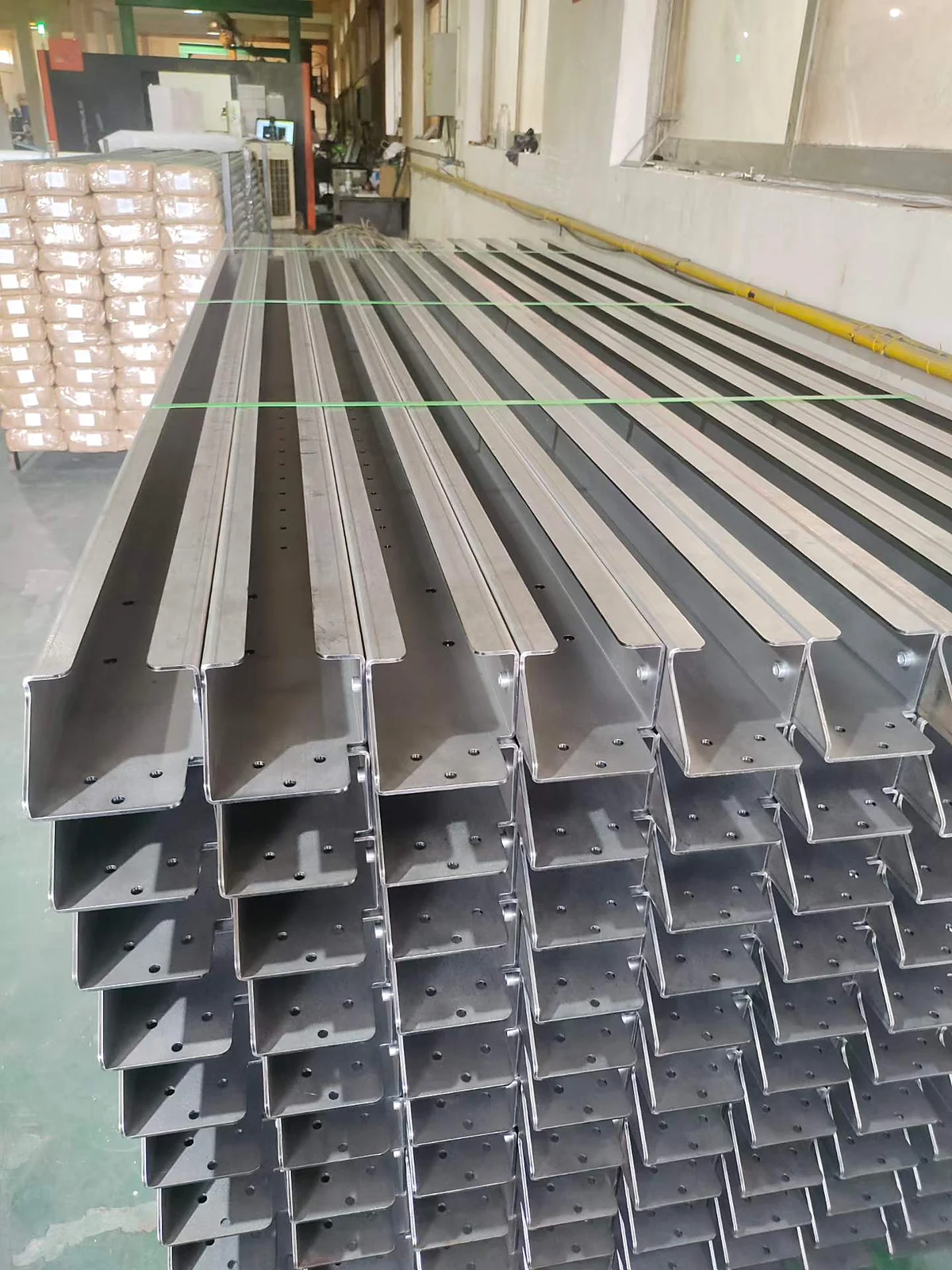
Our cable tray system is manufactured from galvanized steel sheet, designed for heavy-duty cable management in industrial environments. Available in ladder, trough, and solid-bottom configurations, each tray features precision-punched mounting holes, roll-formed edges for rigidity, and compatible fittings (elbows, tees, reducers). The hot-dip galvanized finish (70-100μm) ensures long-term corrosion protection in humid, chemical, and outdoor environments. All trays are load-tested per NEMA VE 1 standards.
Specs for Galvanized Steel Cable Tray System
| Parameter | Value |
|---|---|
| Material | Q235 Galvanized Steel Sheet |
| Sheet Thickness | 1.0mm / 1.2mm / 1.5mm / 2.0mm |
| Width | 100mm / 150mm / 200mm / 300mm / 400mm / 600mm |
| Height | 50mm / 75mm / 100mm / 150mm |
| Length | 2000mm / 3000mm (standard) |
| Type | Ladder / Trough / Solid bottom |
| Galvanizing | Pre-galvanized / Hot-dip galvanized |
| Load Class | NEMA VE 1 Class 12A / 20A / 20C |
Materials for Galvanized Steel Cable Tray System
- Q235 Pre-galvanized Steel
- Q235 Hot-dip Galvanized Steel
- 304 Stainless Steel (optional)
Processes Behind Galvanized Steel Cable Tray System
- Laser Cutting
- Roll Forming
- Punching
- Hot-dip Galvanizing
Manufacturing Notes for Galvanized Steel Cable Tray System
Cable tray performance comes down to two things: the section stiffness that lets it span between supports, and the galvanizing that lets it last outdoors. Both are fixed at the sheet stage.
- Sheet thickness: 1.0mm to 2.0mm depending on span and load class. Thickness is chosen from the support spacing you specify, not from habit — a 1.0mm tray at 1.5m support centres will sag visibly under a loaded cable run.
- Roll-formed edges: The side rails are roll-formed rather than bent on a press brake, which gives a continuous stiffening return along the full length and keeps the profile consistent over a 3m run.
- Perforation and fittings: Mounting holes and rung slots are punched on a CNC turret so hole positions repeat along the tray, and matching elbows, tees and reducers are made from the same programme.
- Galvanizing: Pre-galvanized sheet for indoor runs, hot-dip galvanizing at 70–100μm for outdoor, humid or chemically exposed installations. Cut edges on pre-galvanized trays are cold-repaired with a zinc-rich compound.
Surface Finishes for Galvanized Steel Cable Tray System
- Pre-galvanized (Z275)
- Hot-dip Galvanized (70-100μm)
- Powder Coated (optional)
How to Order Galvanized Steel Cable Tray System
- MOQ: 500 meters per width
- Lead Time: Quoted after drawing review and process confirmation
- Sample Policy: 1-2 meter sample sections available at material cost + shipping
- Packaging: Bundle wrapped with steel straps on wooden pallet
Where Galvanized Steel Cable Tray System Is Used
- Power plants
- Chemical facilities
- Data centers
- Factory cable management
- Commercial building infrastructure
Checking Galvanized Steel Cable Tray System Before It Ships
Trays are inspected per batch, and because trays are installed in runs, straightness and hole alignment matter as much as individual dimensions.
- Incoming material: Zinc coating weight verified on the incoming coil; sheet thickness checked with a micrometer.
- Dimensional and alignment: Length, width, height and hole pitch checked against the drawing on the first article. Hole alignment is checked by bolting three trays together end to end.
- Straightness: Each tray checked against a straight edge; a tray that will not sit flat over 3m is rejected before galvanizing, since distortion after hot-dip is far harder to correct.
- Load validation: Sample trays load-tested to the declared NEMA VE 1 class at the specified support spacing before the batch is released.
- Galvanizing: Coating thickness measured at several points with a magnetic gauge; adhesion checked and the surface inspected for bare patches or excess zinc build-up at the ends.
Key Features of Galvanized Steel Cable Tray System
- NEMA VE 1 compliant load ratings
- Compatible fittings: elbows, tees, crosses, reducers
- Roll-formed edges for safe cable handling
- Corrosion-resistant for indoor and outdoor use
- Easy snap-on cover available for protection
Fulei Metal builds components like this in-house. The DFM engineering review page explains how the process is set up and checked, while custom sheet metal fabrication covers the materials and finishes we normally run. Related reading: Tool Management for Sheet Metal Assembly.
Galvanized Steel Cable Tray System: Common Questions
Which support spacing should we specify?
Send us the cable load per metre and the span between supports and we will confirm the correct thickness and load class. As a rule, heavier loads or wider spacing push you up one thickness step rather than requiring a different profile.
Can you supply the fittings as well as the straight sections?
Yes. Elbows, tees, reducers, couplers and wall brackets are produced from the same punching programme so hole patterns match the straight lengths. Mixed loads ship together.
Pre-galvanized or hot-dip galvanized?
Pre-galvanized for indoor and covered plant rooms; hot-dip for outdoor, wash-down, coastal or chemical environments. Hot-dip gives 70–100μm and is the right choice where the tray will see moisture.
MOQ for Galvanized Steel Cable Tray System
50 pieces for a mid-size fabricated part. For a project with several profiles and fittings, the MOQ applies per profile rather than to the order as a whole.
Ladder, Trough or Solid Bottom: Fill Ratio Decides It
The three tray types are not three grades of the same product, they are three answers to different questions. A ladder tray is mostly air – cables sit on rungs, heat leaves easily, and dust does not collect. A solid-bottom tray is the opposite: maximum support and maximum containment, and heat has to go somewhere else. The deciding input is fill ratio, meaning how much of the tray’s cross-section the cables occupy, and whether the cables generate heat worth removing.
- Power cables that run warm need air around them. Packing them into a solid-bottom tray at a high fill ratio traps heat and the derating that follows is the expensive part of the mistake.
- Data cables need support against sag over long runs more than they need cooling, which is why a trough or a closely rung ladder is the usual choice.
- Separating power from data in the same tray route is what usually drives a design to two trays rather than one wide one.
What Galvanizing Thickness Means After the Tray Is Punched
A hot-dip galvanized finish in the 70 to 100 micron range is a coating on steel that was fabricated first and dipped afterwards. That sequence is the whole point: the punched mounting holes, the sheared ends and the welds are all coated, because they were already there when the tray went into the bath. The consequence for the buyer is what happens on site. Every field cut, every extra hole drilled to suit a fixing that moved, exposes bare steel at that point, and it needs a cold galvanizing repair or the corrosion starts there.
Section thickness also matters. Thicker steel carries a thicker zinc layer, so a heavy-gauge tray and a light-gauge tray from the same bath do not end up with the same coating mass. Where the route runs outdoors or in a wet area, that difference is worth specifying rather than assuming. Send us the route environment and the support spacing – support spacing drives the section, and the section drives the coating. Lead time is quoted after drawing review and process confirmation.
What stands behind this quotation
- Manufacturing since 20162,500 m² Ningbo plant — 3 laser cutting machines (including newer TRUMPF), 4 CNC press brakes and 10 welding stations.
- Shipped to more than 30 export marketsEnclosures, cabinets and formed parts supplied to OEM buyers across Europe, North America and Asia.
- 123 documented product casesMedical device housings, HVAC and heat pump enclosures, agricultural and livestock equipment, industrial hydraulics, material handling trolleys and EV charging cabinets.
- Factory evidence you can checkTUV Rheinland audit reference MIC-ASI243729; ISO 9001 certificate available for buyer review before you commit.
Before you send drawings: an NDA is signed on request · first-article inspection is carried out before a batch continues · pricing is staged from prototype quantity to repeat volume · pre-shipment photos and packing records are prepared when the project needs them.
Get a quote for this part
Send a drawing, or just the size and quantity. A sales engineer replies within 24 hours, Monday to Friday (China time).