At Fulei Metal in Ningbo, we run three laser cutting machines: a Trumpf TruLaser we’ve had since 2019, and two Chinese fiber lasers — a 6 kW and a 12 kW — that we’ve added over the past four years. People ask me all the time whether the Trumpf is really worth 4–5x the price of a Chinese fiber laser. After five years of running both, side by side, every day, here’s the honest answer.
The short version
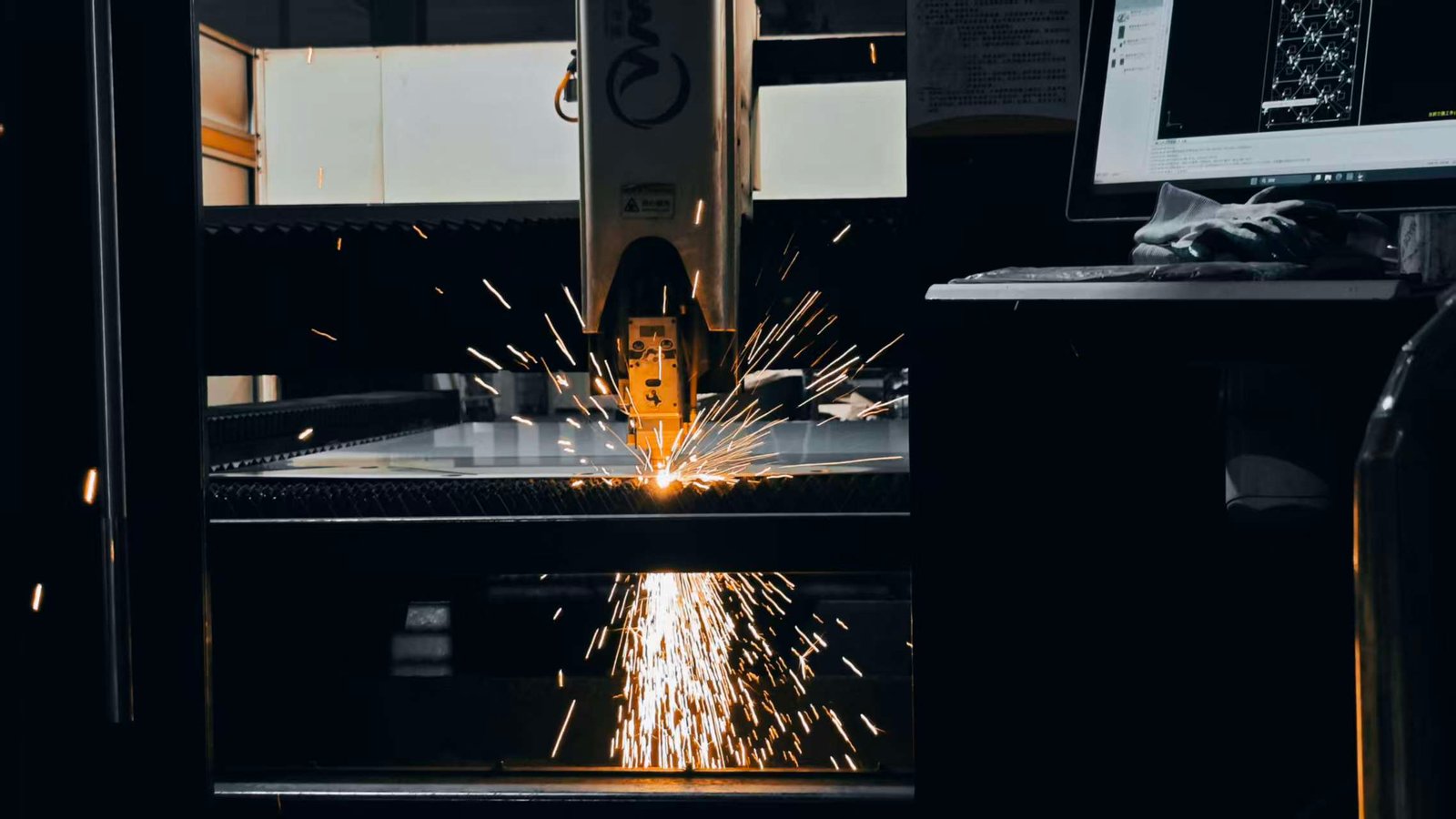
The Chinese fiber lasers have closed most of the gap. For 80% of OEM sheet metal work, a modern Chinese fiber laser will deliver results that are indistinguishable from a Trumpf in the finished part. The remaining 20% — fine holes, sharp internal corners, thick stainless, complex bevels — is where the Trumpf still earns its premium. Here’s how we decide which machine gets which job.
What we measured over five years
From January 2021 to December 2025, we tracked every job on every machine. Here’s the data, anonymized and aggregated:
| Metric | Trumpf TruLaser 3030 (4 kW) | Chinese 6 kW Fiber | Chinese 12 kW Fiber |
|---|---|---|---|
| Jobs run | 2,847 | 3,612 | 1,194 |
| Uptime (operating / available) | 96.8% | 93.4% | 91.1% |
| Mean cut time (3 mm SS, 1 m linear) | 14.2 s | 12.8 s | 9.1 s |
| Dimensional repeatability (σ, 10 mm hole) | 0.018 mm | 0.029 mm | 0.034 mm |
| Edge roughness Ra (3 mm SS, N2 cut) | 3.2 μm | 4.1 μm | 4.6 μm |
| Smallest reliable hole (3 mm SS) | 0.4 × thickness | 0.5 × thickness | 0.6 × thickness |
| Annual maintenance cost (USD) | $8,400 | $3,200 | $5,100 |
| Mean time between failures | 1,840 hours | 920 hours | 640 hours |
What this means in practice
1. The Chinese fiber lasers are genuinely faster for thick plate
The 12 kW machine cuts 12 mm stainless about 30% faster than the Trumpf. This matters when you’re running thousands of brackets a month. For thick mild steel, the speed advantage is even larger. If your product is “lots of 6–20 mm plate,” a high-wattage Chinese laser is the right call economically.
2. The Trumpf is more consistent on thin gauge and fine features
On 1 mm and 2 mm stainless, the Trumpf’s edge quality and dimensional repeatability are noticeably better. For our library cart frames (1.2 mm cold-rolled steel) and go-kart chassis tubes (laser-cut slot features), the Trumpf consistently hits tighter tolerances without operator intervention. This translates to less downstream rework in bending and welding.
3. Uptime matters more than people think
The Trumpf’s mean time between failures is roughly 2–3x the Chinese machines. In a 24/6 operation, this compounds. Over a year, the Trumpf might give us an extra 8–10 days of production versus a Chinese machine that needs more frequent service. At our revenue per machine, that difference easily covers the higher purchase price within 3 years.
4. Service and support are not equal
Trumpf’s local service team in Ningbo and Shanghai responds within 4 hours and stocks parts. The Chinese laser brands we run have decent remote support but slower parts availability — sometimes 3–5 days for a less common part. This has gotten dramatically better over five years, but it’s still a real factor.
When to specify Trumpf vs. Chinese fiber for your project
Here’s the rule of thumb we use internally when we route jobs:
- Use Trumpf when: thin stainless (≤2 mm), fine features (small holes, sharp internal corners), tight tolerances (±0.05 mm or better), cosmetic edges visible in the finished product, or material that must not have dross or heat-affected zone discoloration.
- Use Chinese fiber when: thick plate (≥6 mm), high-volume repeat work where edge cosmetics don’t matter, mild steel, aluminum, structural parts that will be welded anyway.
For a typical OEM project — say, 2 mm cold-rolled steel brackets with bend tolerances of ±0.2 mm — both machines will deliver a part that meets spec. The choice comes down to volume, lead time, and unit cost.
What this means for you as a buyer
If you’re a B2B buyer evaluating Chinese OEM factories, here’s the takeaway:
- Don’t over-weight “Trumpf = quality” marketing claims. A factory running a Chinese fiber laser can deliver excellent parts if they know how to program and maintain it.
- Do ask what the factory does with jobs that need a Trumpf. The right answer is either “we have a Trumpf” or “we have a partner factory with a Trumpf we route those jobs to.” A factory that claims one machine can do everything is overpromising.
- Ask to see first-article samples and measurement reports. Don’t ask what machines they have — ask what they can demonstrate. A modern Chinese fiber laser with a skilled operator can match a Trumpf on most common OEM work.
At Fulei Metal, we run all three machines because that’s the right answer for the range of products our customers ask us to make. The Trumpf is the specialist. The Chinese fibers are the workhorses. Both have their place.
One more thing: programming matters more than the machine
I want to close with something I think is more important than any of the data above. A skilled operator on a Chinese fiber laser will outperform an inexperienced operator on a Trumpf, every time. The cutting parameters database, the nesting software, the choice of assist gas and pressure, the focal position, the pierce strategy — these are the actual levers that determine cut quality, speed, and cost. Equipment matters, but people matter more.
If you want to see how we run a real project through both machines, send us a drawing and we’ll cut a sample on each and ship you both. You’ll see the difference (or not) for yourself.
Need a Laser Cutting Sample?
Send us your drawing and we’ll cut a sample on our Trumpf and our Chinese fiber laser so you can compare side-by-side. Free for serious projects.